
Lost in the Amazon for 11 days, a 74-year-old Alzheimer's patient survived on berries and natural water. Rescuers found him after tracking his footprints and discovering shelters made from palm leaves.
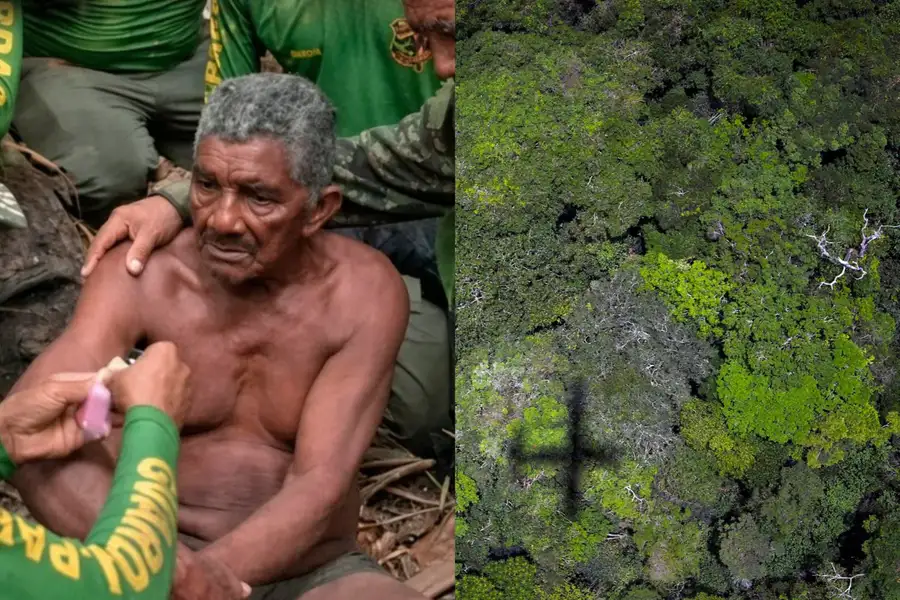
Brazil: A 74-year-old man with Alzheimer's disease has been rescued after surviving for 11 days in the Amazon rainforest in Brazil's northeastern state of Amapa.
Janarino Ferreira dos Santos was found alive by park rangers and volunteers on November 20, after disappearing from his home near Macapa, the state capital. He was located in a dense patch of rainforest approximately 10 km (6 miles) from the city.
According to rescue workers, Santos had left his home on the edge of the forest while his relatives were visiting a neighbour. A search operation began the following day, involving family members, volunteers and public safety teams.
Footprints and palm-leaf shelters helped rescuers find him
A breakthrough came when the search team identified Santos' footprints and noticed that he appeared to have been walking in circles.
Park ranger Aniel Cardoso, who participated in the rescue, said the team also discovered makeshift beds constructed from acai palm leaves. One shelter appeared to have been made several days earlier, while another contained freshly removed leaves.
These discoveries led the rescuers to believe that Santos might still be alive and could be nearby.
The search party eventually spotted him sitting in a thick section of the forest. He was barefoot and wearing only his underwear.
Cardoso told local media that Santos was unable to speak or walk and was extremely thirsty when they found him.
How he survived in the rainforest
Despite his medical condition and the difficult surroundings, Santos survived by eating berries and other fruits and drinking water from natural sources.
Rescuers also found evidence that he had used leaves from acai palm trees to create sleeping shelters where he could rest during the nights.
Cardoso said Santos had worked in the rainforest when he was younger and was familiar with the environment. That previous experience may have helped him navigate the forest and find food and shelter.
The area where he was found presented several dangers, including caimans and venomous snakes, while flooded stretches and swampy ground made movement difficult.
Finding Santos was only part of the challenge. Getting him out of the forest proved difficult because of dense vegetation, flooded areas and unstable ground.
The rescuers improvised a stretcher using ropes, trees and vegetation to carry him through the difficult terrain.
Earlier search efforts had involved firefighters and specialised teams using ground searches, helicopters, drones and thermal cameras.
As the search continued without a breakthrough, Santos' granddaughter also appealed on social media for authorities and volunteers to continue looking for him.
His condition after the rescue
Santos was admitted to a hospital in Macapa following the rescue and was recovering there on Wednesday, November 25.
According to the rescuers, he was expected to remain in hospital for another three days.
The rescue was particularly significant for the search teams because another man who had gone missing in the rainforest near Macapa approximately two months earlier had been found dead.
Cardoso described finding Santos alive as a deeply gratifying experience.
Published: 25 Nov 2026, 08:45 pm IST


ABOUT THE AUTHOR

Related Topics
Disclaimer: Kindly avoid objectionable, derogatory, unlawful and lewd comments, while responding to reports. Such comments are punishable under cyber laws. Please keep away from personal attacks. The opinions expressed here are the personal opinions of readers and not that of Mathrubhumi.