
Gold has become significantly cheaper after a strong rally earlier this year. But what is causing the sudden fall, how much does gold cost in India today, and should jewellery buyers take advantage of the lower rates?
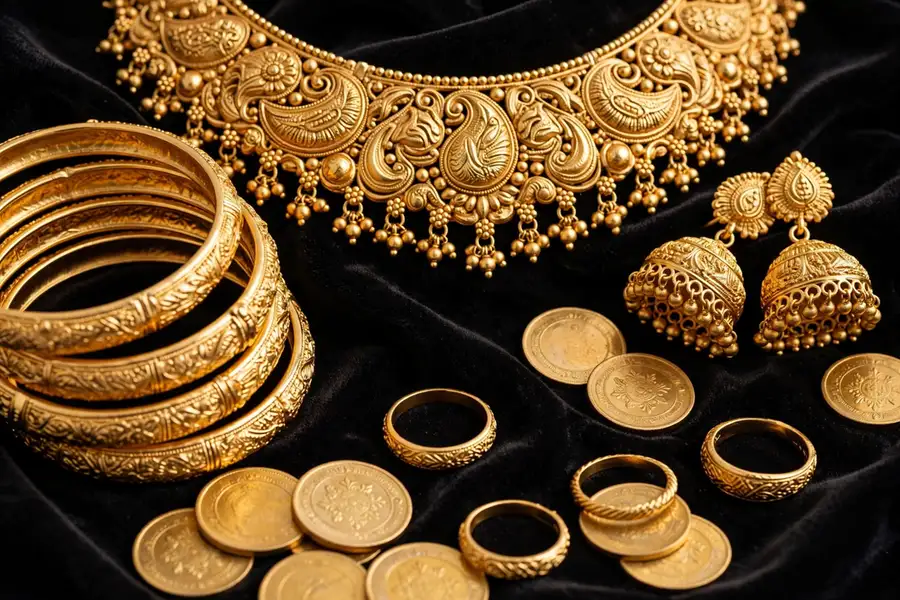
Gold has long been considered a safe place to put money, particularly during periods of economic uncertainty. But even this traditionally popular investment is not protected from sharp price movements.
After a strong rally earlier this year, gold is now experiencing a significant correction. On November 20, international spot gold was trading near $3,546 per ounce, while MCX gold futures in India were around ₹1,27,548 per 10 grams in early trade.
Reuters reported that international gold was down approximately 8.9% for the week, marking its steepest weekly decline in eight months. The fall came as investors prepared for the possibility of another US interest rate hike in December.
For ordinary buyers, the impact is easier to understand: the price of gold has fallen considerably from its recent levels, but that does not necessarily mean jewellery will become equally cheap. Retail bills also include taxes and making charges.
So, why is gold falling? Here are five key reasons explained in simple terms.
1. Investors expect the US Federal Reserve to increase interest rates
One of the biggest reasons behind the gold sell-off is the possibility of another interest rate hike in the United States.
The US Federal Reserve is the country's central bank. It changes interest rates to influence borrowing, spending and inflation. When inflation remains high, the Fed may increase rates to make borrowing more expensive and slow down price rises.
Markets have increasingly expected the Fed to raise rates at its December meeting. Reuters reported that traders were pricing in a 97.3% probability of a 25-basis-point increase.
But what does this have to do with gold?
Gold does not pay interest. If banks and government bonds begin offering more attractive returns, investors may prefer those options instead of holding gold.
In simple terms, when investors can earn more from interest-bearing investments, gold becomes less attractive to some of them. This has contributed to the recent fall.
2. The US dollar has become stronger
Another major reason is the rising value of the US dollar.
International gold is generally priced in dollars. When the dollar becomes stronger, buyers using other currencies have to spend more of their local money to purchase the same amount of gold.
This can make gold less affordable and reduce demand in international markets.
The dollar's recent strength has been linked to expectations of higher US interest rates. Reuters reported that it was trading near a 19-month high as gold prices came under pressure.
For Indian buyers, there is another factor: the rupee-dollar exchange rate. Even if international gold prices fall, a weaker rupee can make imported gold more expensive in India.
3. Government bonds are becoming more attractive
Gold does not provide regular income. Investors make money from it mainly when its market price increases.
Government bonds, on the other hand, can offer interest payments. When bond yields rise, investors may find them more attractive than gold.
This is known as the opportunity cost of holding gold. In simple terms, it means the money an investor could have earned by choosing another investment instead.
As US Treasury yields rose alongside expectations of tighter monetary policy, some investors shifted their attention towards interest-bearing assets. This added to the pressure on gold.
4. Investors are booking profits after the earlier rally
Gold prices had risen sharply earlier in 2026. Investors who bought gold at lower prices may now be selling some of their holdings to secure their profits.
This is called profit-booking.
There is another reason selling can accelerate. Traders often set automatic instructions to sell an investment if its price falls below a particular level. These are known as stop-loss orders.
When gold prices fall below widely watched levels, such automatic selling can add to the downward pressure.
In simple terms, one round of selling can trigger more selling, making a price correction sharper than expected.
Reuters has also reported forced liquidation and wider market volatility as factors affecting precious metals.
5. Investors are reassessing the global economic outlook
Gold is often bought during periods of uncertainty because it is viewed as a store of value. However, its price is also affected by interest rates, currencies, investment flows and demand.
The current market environment has encouraged investors to reconsider where they keep their money. A stronger dollar and expectations of higher interest rates have weakened gold's appeal in the short term.
However, this does not mean that all institutional investors have stopped buying gold. Central banks and gold-backed investment funds remain important parts of the market.
Gold prices in India on November 20: 22K and 24K rates
The international fall has also affected gold prices in Indian cities. According to the city-wise retail rates reported on November 20, the indicative prices were:
City-wise gold rates on November 20, 2026
Prices are for one pavan (8 grams), before GST and making charges.
| City | 22K per pavan | 24K per pavan | Today's fall per pavan |
|---|---|---|---|
| Mumbai | ₹92,080 | ₹1,00,456 | ₹3,760 / ₹4,096 |
| Delhi | ₹92,200 | ₹1,00,576 | ₹3,760 / ₹4,096 |
| Chennai | ₹92,080 | ₹1,00,456 | ₹3,760 / ₹4,096 |
| Kolkata | ₹92,080 | ₹1,00,456 | ₹3,760 / ₹4,096 |
| Bengaluru | ₹92,080 | ₹1,00,456 | ₹3,760 / ₹4,096 |
| Hyderabad | ₹92,080 | ₹1,00,456 | ₹3,760 / ₹4,096 |
| Pune | ₹92,080 | ₹1,00,456 | ₹3,760 / ₹4,096 |
| Ahmedabad | ₹92,120 | ₹1,00,496 | ₹3,760 / ₹4,096 |
Kochi – separate city rate tracker
| Gold purity | Price per pavan | Today's fall |
|---|---|---|
| 22K | ₹95,840 | ₹1,880 |
| 24K | ₹1,04,552 | ₹2,056 |
For a quick comparison, the Mumbai rate works out to approximately ₹11,724 per gram for 22K gold and ₹12,790 per gram for 24K gold.
What about the final jewellery bill?
The displayed gold rate is not necessarily the amount a customer pays at the jewellery shop. The final bill can include:
Gold value: The price of the gold based on its weight and purity.
Making charges: The amount charged for designing and manufacturing the jewellery.
GST: A 3% GST is applicable to jewellery purchases under the prevailing tax rules.
For example, a 10-gram 22K gold ornament in Mumbai would have a basic gold value of approximately ₹1,17,242 at the quoted rate. Making charges and applicable GST would be added to arrive at the final bill.
Silver prices are falling too
Gold is not the only precious metal facing a sell-off. Silver prices have also declined as investors react to expectations of higher interest rates and a stronger dollar.
On November 20, MCX silver futures were trading near ₹1,57,600 per kg in early trade, down approximately 1.95% from the previous settlement. International silver was trading near $42 per ounce, with one market update reporting a fall of around 7% during the session.
Silver is different from gold because it is used not only for investment and jewellery but also in industries such as electronics and solar energy. Its price can therefore be influenced by both financial-market conditions and expectations about industrial demand.
Are central banks still buying gold?
Despite the recent price decline, central-bank demand remains an important part of the gold market.
The World Gold Council reported that central banks added a net 321 tonnes of gold to their reserves in the third quarter of 2026. Their purchases during the first nine months of the year reached 675 tonnes.
China's central bank also continued buying gold. It added 26 tonnes in October, taking its reported holdings to 2,435 tonnes.
Gold-backed exchange-traded funds (ETFs) have also shown continued demand. The World Gold Council reported that global gold ETFs attracted $2.7 billion in October, with holdings increasing by 19 tonnes to 4,275 tonnes.
These figures show that the recent fall does not mean all major investors have lost interest in gold. Short-term selling and longer-term demand can exist at the same time.
Will gold prices fall further? Levels traders are watching
One important international price level being watched is $3,500 per ounce. It is a round-number level that traders may pay attention to, but it is not a guaranteed floor.
In India, market analysts have identified around ₹1.25 lakh per 10 grams as a support level for MCX gold, while ₹1.35 lakh has been cited as an immediate resistance level.
- Support: A price area where buying interest may emerge and slow a fall.
- Resistance: A price area where selling may increase and make it harder for prices to rise.
These levels are not predictions or guarantees. Gold can move below support or above resistance depending on market conditions.
The US Federal Reserve's December policy decision, the dollar's movement and inflation data will be important factors to watch in the coming weeks.
Should you buy gold now or wait?
The answer depends on why you are buying gold. A family purchasing jewellery for a wedding has different priorities from someone investing in gold for financial returns.
If you are buying jewellery
A fall in prices may make this a more affordable time to plan a purchase. However, trying to identify the exact lowest price is difficult.
One practical approach is to divide a planned purchase into smaller instalments rather than buying everything at once. This spreads the risk of prices moving further up or down.
Before buying, compare the gold rate, making charges and final bill across jewellers. Also check the purity and hallmarking details.
If you are investing in gold
Investors considering gold ETFs or gold mutual funds should remember that prices can remain volatile after a sharp fall.
Rather than assuming that gold will immediately recover, they can assess their investment goals, risk tolerance and the amount of gold already held in their portfolios. Investing gradually may also reduce the risk of committing a large amount at an unfavourable price.
Neither buying immediately nor waiting guarantees a better return.
What happens next?
Gold's recent fall is largely linked to changing expectations about US interest rates, the stronger dollar and investors moving money into other assets.
The December Federal Reserve meeting could provide greater clarity on the direction of US monetary policy. Until then, gold prices may continue to fluctuate.
For Indian buyers, the rupee-dollar exchange rate will also matter. A fall in international prices does not always translate into an identical reduction in domestic jewellery rates.
The key point is that lower gold prices may offer some relief to buyers, but they do not automatically mean the market has reached its bottom.
Is this a good time to buy gold?
The recent correction has changed the mood in the gold market, but it is important to understand the difference between a short-term price fall and gold's longer-term investment role.
Higher interest rates can make gold less attractive because it does not generate regular income. A stronger dollar can also reduce demand by making bullion more expensive for buyers using other currencies.
At the same time, central banks continue to hold and add to their gold reserves. This suggests that gold still has a role in reserve management and investment portfolios, even when prices fall sharply.
For jewellery buyers, the immediate concern is affordability. For financial investors, the focus is on risk, diversification and the possibility of further volatility.
Rather than treating the fall as an automatic buying signal, consumers should compare current rates, understand the additional charges and make decisions based on their needs.
(Disclaimer: Gold and silver prices are subject to frequent market fluctuations and may change during the day. The rates mentioned in this article are indicative figures reported for November 20, 2026, and may vary by city, jeweller, purity and market timing. Retail jewellery bills may include GST, making charges and other applicable costs. Support and resistance levels are market references, not guaranteed price predictions. This article is intended for general information and should not be treated as financial or investment advice. Readers should check the latest rates with authorised jewellers or market sources and consult a qualified financial adviser before making investment decisions.)
Published: 20 Nov 2026, 10:17 am IST


Related Topics
Disclaimer: Kindly avoid objectionable, derogatory, unlawful and lewd comments, while responding to reports. Such comments are punishable under cyber laws. Please keep away from personal attacks. The opinions expressed here are the personal opinions of readers and not that of Mathrubhumi.
