
Concurrently, overall imports of merchandise and services expanded by 18.75 percent during the month to reach $92.09 billion.
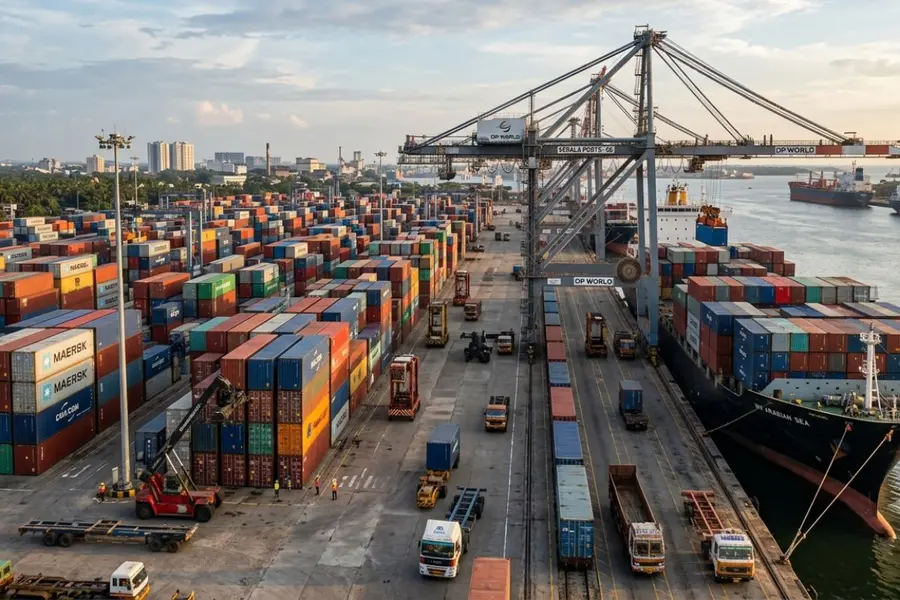
New Delhi: Driven by robust gains across electronic goods, petroleum products, and engineering items, India's total exports of merchandise and services jumped 25.41 percent year-on-year to hit $82.68 billion in August, according to official Commerce Ministry figures released on Tuesday.
Concurrently, overall imports of merchandise and services expanded by 18.75 percent during the month to reach $92.09 billion.
Cumulative figures for the first five months of the fiscal year (April–August 2026–27) show total exports estimated at $399.27 billion—a 15.55 percent growth compared to $345.55 billion registered in the corresponding period last year. Total imports for the same April–August span rose 18.01 percent to $459.65 billion.
Merchandise performance breakdown
Standalone merchandise exports for August 2026 stood at $43.81 billion, up from $34.74 billion in August 2025. Merchandise imports for the month rose to $70.67 billion, compared to $61.96 billion in the year-ago period.
Key drivers powering August's merchandise export growth included:
-
Electronic Goods: Surged 89.82% to $5.55 billion (up from $2.93 billion in August 2025).
-
Petroleum Products: Rose 63.27% to $6.81 billion (up from $4.17 billion).
-
Engineering Goods: Grew 24.86% to $12.32 billion (up from $9.87 billion).
-
Organic & Inorganic Chemicals: Increased 16.38% to $2.80 billion.
-
Textiles (including Handlooms): Advanced 13.79% to $1.12 billion (up from $0.99 billion).
Five-month trade deficit
For the cumulative April–August 2026–27 period, total merchandise exports reached $215.91 billion compared to $183.21 billion in April–August 2025–26. Merchandise imports for the period expanded to $363.00 billion against $307.09 billion recorded in the previous financial year.
Also read: How did India overtake UAE, Saudi Arabia to become Kenya's top fuel supplier?
Consequently, the merchandise trade deficit for the April–August 2026–27 period widened to $147.09 billion, compared to $123.88 billion logged during the same five-month stretch in 2025–26. (IANS)
Published: 15 Sept 2026, 09:38 pm IST
Related Topics
Disclaimer: Kindly avoid objectionable, derogatory, unlawful and lewd comments, while responding to reports. Such comments are punishable under cyber laws. Please keep away from personal attacks. The opinions expressed here are the personal opinions of readers and not that of Mathrubhumi.
