
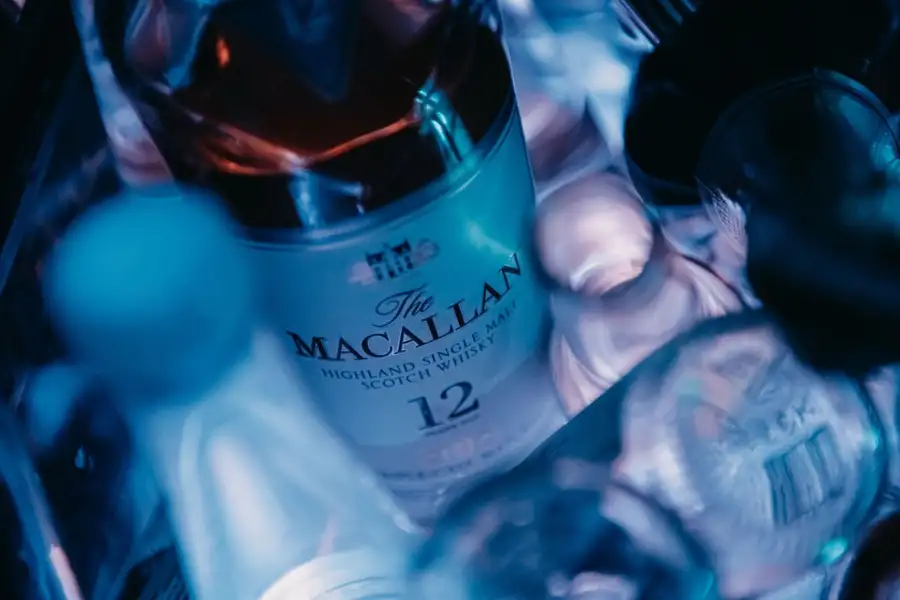
New Delhi: Economic think tank GTRI on Wednesday urged the Central Board of Indirect Taxes and Customs (CBIC) to issue guidelines on the classification of Scotch whisky and other bulk spirits to resolve the ongoing customs classification row under the India-UK trade pact.
The ongoing dispute over import duty concessions on Scotch whisky under the India-UK CETA (Comprehensive Economic Trade Agreement) concerns customs classification.
Indian customs authorities have sparked a major tariff dispute over bulk Scotch whisky imports, threatening a key concession of the India–UK trade pact nearly four months after the pact took effect on July 15.
Under the agreement, India halved its basic customs duty on qualifying Scotch whisky from 150 per cent to 75 per cent, with plans to lower it to 40 per cent by the 10th year.
Importers declare bulk Scotch under HS 22083092, the tariff code for Scotch imported in containers larger than two litres.
In international trade parlance, HS (Harmonised System) codes are internationally standardised numerical codes developed by the World Customs Organization (WCO) to classify goods traded across borders. They help customs authorities identify products and determine applicable import duties, taxes and trade regulations.
Global Trade Research Initiative (GTRI) Founder Ajay Srivastava said that in early November, the Directorate of Revenue Intelligence (DRI) instructed Customs to reclassify certain bulk Scotch shipments as beverage-making preparations under HS 21069051-a new tariff line India introduced on May 1, 2026, through the Finance Act.
"Because HS 21069051 is excluded from the trade pact, moving bulk Scotch into this category doubles the basic customs duty from 75 per cent back to 150 per cent. Combined with a 5 per cent consumption levy calculated on the import value plus duty, the total tax burden surges to 162.5 per cent of the shipment's value," he said.
To preserve regulatory certainty and honor treaty commitments, Srivastava said that Customs and the DRI must reconsider this reclassification and align their enforcement with India's tariff architecture, international customs rules, and binding Indian court precedents.
"Even if customs authorities entertain any doubt over whether a bulk shipment satisfies the specific criteria for whisky under HS 22083092, the Harmonized System provides a built-in fallback within Heading 2208 itself-specifically the residual spirits line, HS 22089099-rather than pushing the product into Chapter 21 under HS 2106," he added.
He elaborated that India's customs tariff already contains an explicit, dedicated classification structure for Scotch whisky imported in bulk containers holding more than 2 litres under code 22083092 and to understand where it fits, the classification must be read in stages.
He also said that a Certificate of Age and Origin issued by UK HM Revenue and Customs (HMRC) expressly confirms the identity of the bulk liquid as Scotch whisky under HS 2208 before any water is added or bottles are filled in India.
Indian judicial and customs-tribunal precedent has consistently anchored bulk, high-strength Scotch whisky inside Harmonized System Heading 2208, even when the spirit is imported in wooden casks for post-import dilution and blending rather than as ready-to-drink bottled liquor, Srivastava said.
Indian import data for 2025-26 shows that virtually all spirits from the U.K.-including bulk spirits and Scotch-enter India under HS 2208 (USD 408 million), compared to a negligible USD 4 million under HS 2106, he said.
"The CBIC should issue formal classification guidelines for the import of Scotch and other bulk spirits in line with Heading 2208 and settled court rulings," Srivastava said.
(Except for the headline, this story has not been edited by Mathrubhumi and is published from a syndicated feed.)
Published: 25 Nov 2026, 06:22 pm IST


Disclaimer: Kindly avoid objectionable, derogatory, unlawful and lewd comments, while responding to reports. Such comments are punishable under cyber laws. Please keep away from personal attacks. The opinions expressed here are the personal opinions of readers and not that of Mathrubhumi.
