
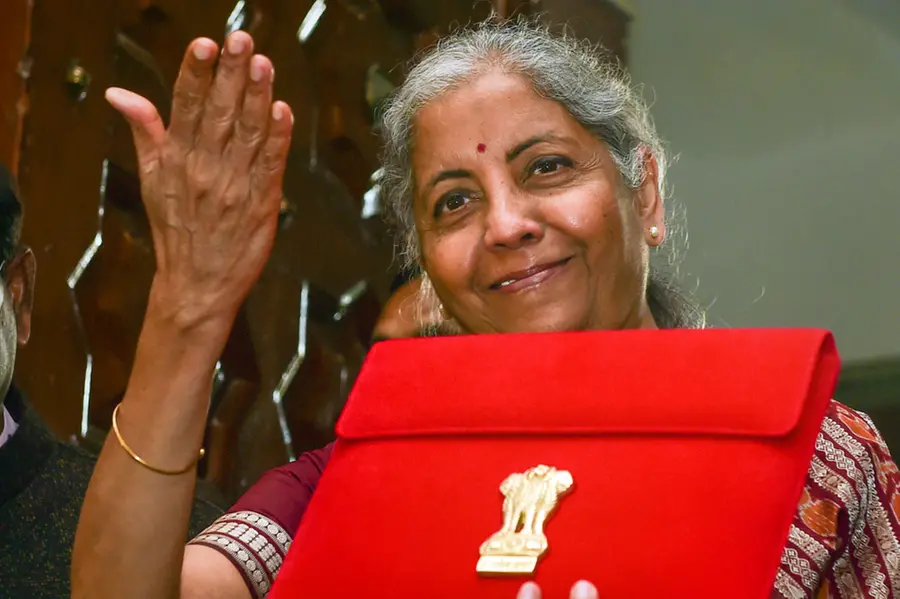
India's Finance Minister will soon present the much-anticipated budget speech on 23 July. For those who find themselves puzzled by economic or budget-related jargon, here's a handy guide to 15 key terms that are crucial to understanding the budget:
1. Direct and Indirect Taxes
Direct Taxes are levied directly on individuals and corporations, such as income tax and corporate tax. Indirect Taxes are applied to goods and services, like excise duty and customs duty, and are paid by consumers.
2. Fiscal Deficit
When the government's non-borrowed receipts fall short of its entire
expenditure, it borrows money from the public to meet the shortfall. The excess of total expenditure over total non-borrowed receipts is called scal decit.
3. Revenue Deficit
The gap between revenue expenditure and revenue receipts, indicating a shortfall in the government's current receipts compared to its current expenditures.
4. Fiscal Policy
It is the use of government spending and taxation to influence the economy, aiming to promote growth and reduce poverty.
5. Vote on Account
A temporary grant by the Parliament to cover short-term expenditure until the new financial year begins.
6. Excess Grants
When expenditure exceeds the original and supplementary grants, it requires regularization by Parliament through the Excess Grant process under Article 115 of the Constitution of India. It will have to go through the whole process as in the case of the Annual Budget, i.e. through presentation of Demands for Grants and passing of Appropriation Bills.
7. Re-appropriations
Re-appropriation allows the government to reallocate funds within the same grant. This provision can be sanctioned by a competent authority at any time before the close of the financial year to which such grant or appropriation relates. The Comptroller & Auditor General and the Public Accounts Committee review these re-appropriations and comment on them for taking corrective actions.
8. Outcome Budget
Introduced in 2006-07, the outcome budget is like a progress card that reports on the advancement and outcomes of various government programs. It includes details on whether the money has been spent for the purpose it was sanctioned including the outcome of the fund usage.
9. Guillotine
It is a process where the Speaker of the Lok Sabha puts all outstanding demands for grants to vote once the discussion period ends, regardless of whether they were discussed. It is generally because parliament has very limited time for scrutinising the expenditure demands of all the ministries.
10. Cut Motions
Cut motion is a proposal moved by a Member of Parliament against a specific allocation for a government department or ministry in the Union Budget. These motions are usually to oppose and seek a reduction or clarity in various demands for grants presented by the government
11. Contingency Fund of India
A reserve fund for the President to make advances for urgent and unforeseen expenditures.
12. Consolidated Fund of India
The main account is where all government revenues, loans, and receipts are deposited, and from which most government expenses are drawn other than certain exceptional items met from the Contingency Fund and Public Account. No money can be appropriated from the fund except per the law.
13. Public Account
Under provisions of Article 266(1) of the Constitution of India, the Public Account is used to handle funds where the government acts as a banker, such as Provident Funds and Small Savings. These funds must be returned to depositors and do not require parliamentary approval for expenditure as they do not belong to the government.
14. Minimum Alternative Tax (MAT)
A minimum tax that companies must pay, even if their taxable income is under zero tax limits.
15. Disinvestment
The shares in public sector undertakings by the government are earning assets. If these shares are sold to get cash, then earning assets are converted into cash, So it is referred to as disinvestment.
Published: 21 Jul 2024, 02:56 pm IST
Related Topics
Disclaimer: Kindly avoid objectionable, derogatory, unlawful and lewd comments, while responding to reports. Such comments are punishable under cyber laws. Please keep away from personal attacks. The opinions expressed here are the personal opinions of readers and not that of Mathrubhumi.
