
The boats are traditionally treated with deep reverence and are regarded as living entities.
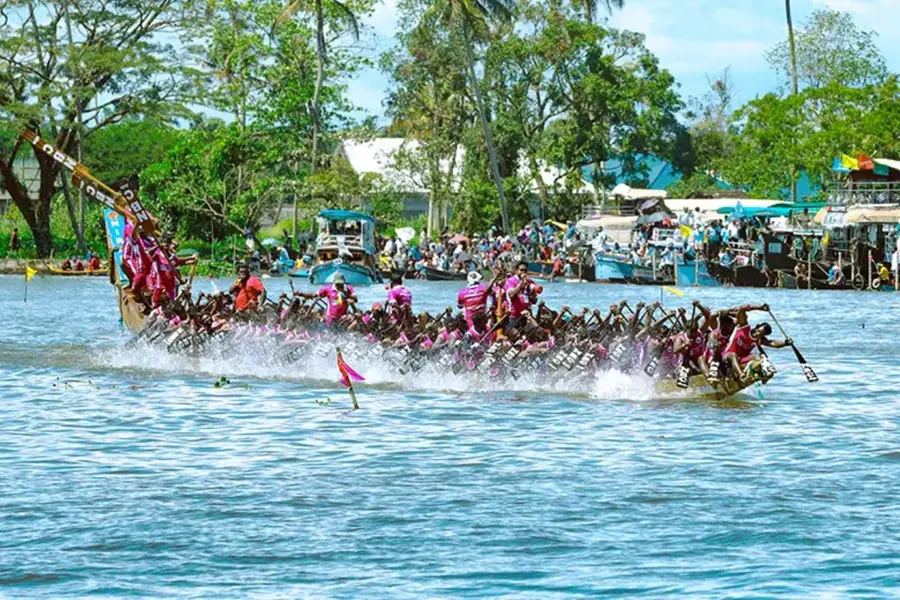
Kerala’s backwaters are usually alive with the rhythm of oars and the roar of cheering crowds at this time of year. But preparations for the prestigious 2026 Nehru Trophy Boat Race have been far from smooth.
Nearly 20 massive snake boats are set to compete on Punnamada Lake this Saturday, as rowers and boat clubs navigate a difficult monsoon, financial pressures and months of demanding preparation.
Rowers train despite severe monsoon
Training for the traditional vallam kali began months ago, with several teams conducting intensive residential camps.
Clubs such as the United Boat Club and Punnamada Boat Club brought together hundreds of rowers. Some travelled from as far as Manipur and Uttarakhand to train alongside experienced local oarsmen.
The teams trained twice a day, working towards maintaining a precise rhythm of around 90 strokes a minute.
Then the monsoon intensified.
Heavy flooding this month transformed parts of Alappuzha district. Roads were submerged, while houses in villages such as Kainakary were left partly underwater as swollen paddy fields turned into vast stretches of water.
The difficult conditions, however, did not bring training to a halt.
Floodwaters become an unlikely training ground
Oarsmen continued their drills even as floodwaters surrounded their villages. For teams preparing to race in boats stretching about 100 feet, the swollen waterways became an unlikely extension of their training ground.
The persistence comes as the Pamba River continues to swell and several parts of Kuttanad remain vulnerable to the impact of heavy rain.
For many villagers, the race is not simply a sporting event. It is closely tied to the identity and traditions of the region.
Boat teams face a ₹1.5-crore financial burden
Alongside the challenges posed by the weather, boat clubs and owners face a significant financial burden.
Running a single team for the season can cost up to ₹1.5 crore, including expenses for rowers’ wages and diet as well as boat maintenance and conditioning.
Boat owners and village committees often meet much of the cost through local contributions and donations. Government assistance, meanwhile, remains limited compared with the tourism value associated with the event.
The Kerala government’s decision to increase the prize money for the winning team to ₹25 lakh has added to the competitive spirit surrounding this year’s race.
Snake boats carry deep cultural significance
The connection between the communities and their snake boats extends well beyond competition.
The boats are traditionally treated with deep reverence and are regarded as living entities. They are blessed by priests from Hindu, Christian and Islamic faiths, reflecting the communal traditions associated with the sport.
Even when a boat is retired, it is given a ritual cremation.
That reverence has helped preserve the cultural significance of the race across generations. In Kuttanad, villagers continue to regard the boat races as an important part of their collective identity.
Kuttanad prepares for another fierce race
As teams complete their final preparations, the conditions surrounding Punnamada remain challenging.
The floods have tested the communities that organise and participate in the race, while the cost of maintaining competitive teams continues to put pressure on clubs and boat owners.
Yet training has continued through the difficult monsoon.
On Saturday, the long wooden snake boats will return to Punnamada Lake, with teams competing for the Nehru Trophy. The increased prize money announced by the Kerala government has added another incentive this year. The winning team will receive ₹25 lakh, raising the stakes for the competing clubs. The familiar rhythm of hundreds of oars striking the water is set to once again dominate the Alappuzha backwaters.
Published: 19 Aug 2026, 07:02 pm IST
Disclaimer: Kindly avoid objectionable, derogatory, unlawful and lewd comments, while responding to reports. Such comments are punishable under cyber laws. Please keep away from personal attacks. The opinions expressed here are the personal opinions of readers and not that of Mathrubhumi.
