
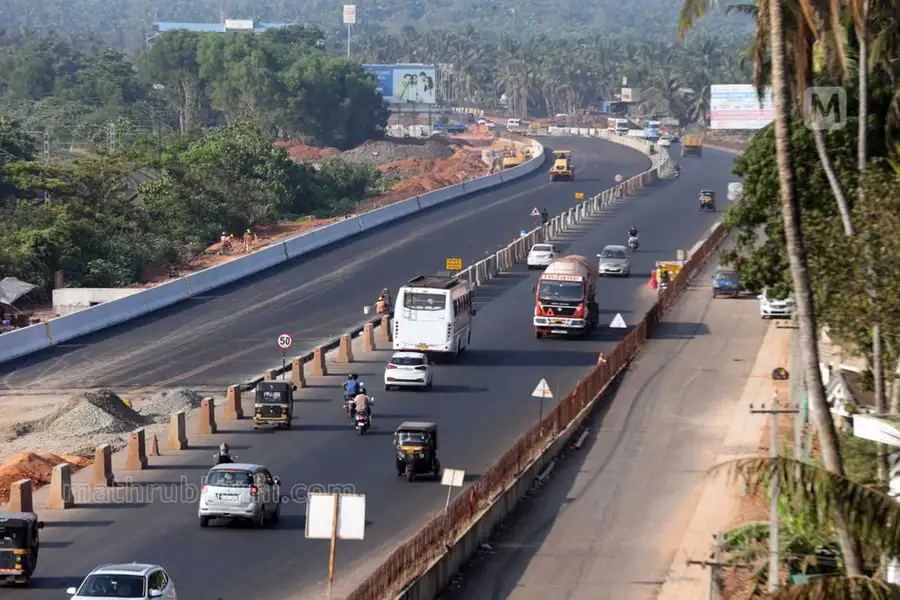
Unlike other parts of the country, the construction of six-lane national highways in the state requires acquisition of land with a width of 60 metres to develop future highway development. The Ministry of Road Transport and Highways (MORTH) demands effective implementation and adhering strictly to these guidelines within the state.
In the future, this regulation will extend to PWD roads within the state, requiring land acquisition at a width of 45 meters for the development of four-lane roads.
According to the revised norms, for both 4-lane and 6-lane roads, instructions are given to construct a 2.5-metre-wide paved shoulder and, in certain regions, a 1.5-metre-wide earthen shoulder. The current overall width of the bridge is not mandated under the current guidelines. In hilly and plain areas, roads are to be widened.
Construction of footpaths on bridges without service roads is made mandatory. Crash barriers along road sides have also been made mandatory to prevent collision risks.
In Kerala, construction is underway for a six-lane NH 66 spanning 45 meters, each with a paved shoulder measuring 1.5 meters in width. Due to space constraints that prevent full compliance with existing safety measures, concessions are being sought from the Ministry of Road Transport and Highways (MORTH) for the construction of these highways.
The six-lane NH 66 that extends from Kasaragod to Thiruvananthapuram is a signal-free roadway and is 45 metres wide. According to the rules of the Indian Road Congress, a storage lane for vehicles to enter and exit the main road is to be provided.
There won't be storage lanes since these are 6-lane highways. Flip roads are to be constructed to enter the main road from service roads. Normally, vehicles enter the flip road through the storage lane and enter the main lane at a minimum speed. However, due to lack of space, any of these cannot be implemented. Warning boards and sign boards will be installed instead.
Published: 16 Apr 2024, 11:15 am IST


Related Topics
Disclaimer: Kindly avoid objectionable, derogatory, unlawful and lewd comments, while responding to reports. Such comments are punishable under cyber laws. Please keep away from personal attacks. The opinions expressed here are the personal opinions of readers and not that of Mathrubhumi.
