
Kerala High Court orders husband to return 40 sovereigns, pay maintenance; dismisses imitation gold claim.
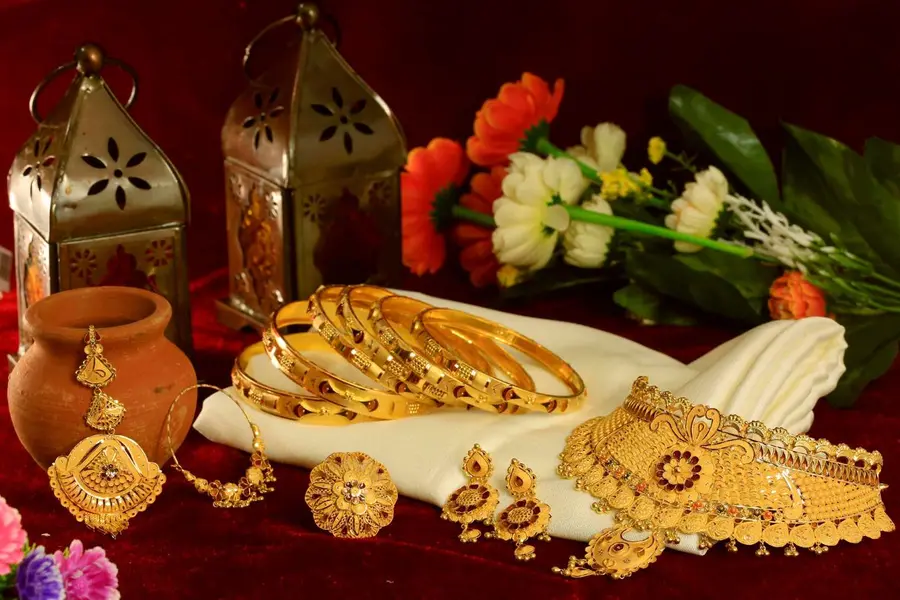
The Kerala High Court recently upheld a family court order directing a husband to return 40 sovereigns of gold ornaments and pay maintenance, observing it is “common knowledge” that brides entrust jewellery to husbands for safekeeping after marriage. The ruling dismissed claims the ornaments were imitation gold while partly allowing the husband’s appeal by clearing his mother of liability.
Claims of misappropriation and counter-demands
The dispute began when Mumtaz Beegum sought the return of 45 sovereigns of gold and ₹50,000 from her husband Nishad and his mother. She alleged 40 sovereigns were “sold for the purpose of purchasing an autorickshaw for the appellant and for constructing a residential building”.
Following alleged ill-treatment, she said she was forced to leave her matrimonial home and sought past and future maintenance.
Nishad denied wrongdoing and filed a counter-claim for 16 sovereigns and ₹5,00,000 he claimed to have given his wife. He argued items such as the ‘ara-patta’ and ‘thadavala’ were actually “mukkuponnu” — imitation gold used only “to add beauty to the ceremony”.
Evidence and financial disparities
The Division Bench of Justice Sathish Ninan and Justice P. Krishna Kumar examined the couple’s financial position at their 1999 wedding. Nishad admitted he was then working as a coolie earning only “Rs.150/- to Rs.250/- per day,” while the respondent’s father worked abroad.
Photographic evidence (Ext.B1 series) supported the wife’s claim about the ornaments. Judges found the husband’s claim of providing large amounts of gold and cash “not convincing”, citing his limited means to “mobilise such funds prior to the marriage”.
Verdict and liability clarified
The court affirmed the Family Court’s directive to return 40 sovereigns, household articles and ₹50,000, and upheld monthly maintenance of ₹4,000 as “fair and reasonable” given the husband’s later overseas employment.
However, his mother was cleared. Judges said there was “no convincing evidence to show that she was directly involved in the misappropriation”. While the husband remained liable, the mother-in-law was “exonerated from any liabilities arising under the decree”.
Published: 18 Feb 2026, 04:02 pm IST
Related Topics
Disclaimer: Kindly avoid objectionable, derogatory, unlawful and lewd comments, while responding to reports. Such comments are punishable under cyber laws. Please keep away from personal attacks. The opinions expressed here are the personal opinions of readers and not that of Mathrubhumi.
