
The government spends around ₹120 crore per month to sustain KSRTC, including ₹80 crore for pensions and ₹50 crore for salaries.
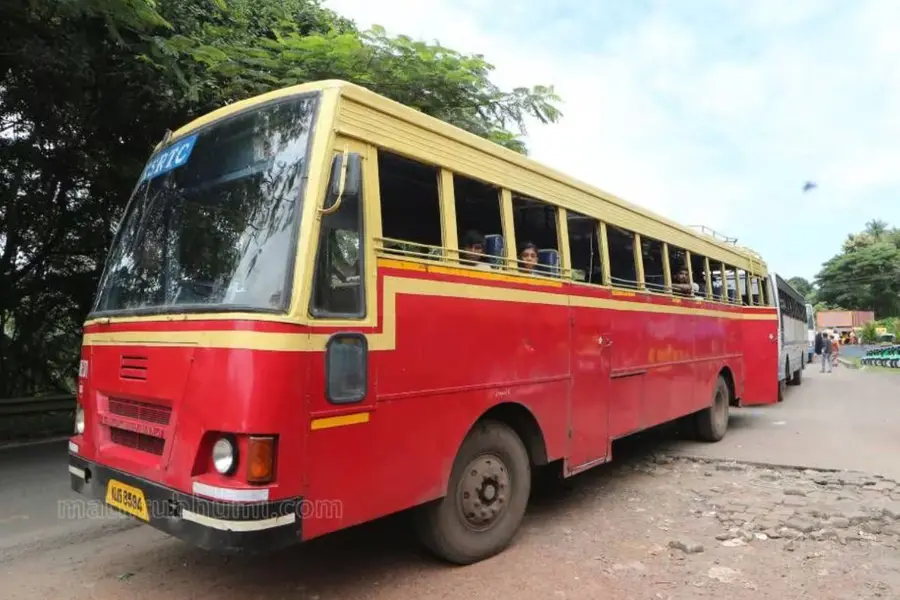
Diesel price increase over the past two weeks alone will create an additional monthly burden of ₹10 crore for the state-run Kerala State Road Transport Corporation (KSRTC). With free travel also announced, managing the crisis arising from rising diesel prices has become the main challenge.
More than half of the corporation’s revenue is spent on fuel, making any increase in fuel prices a severe blow.
Delay in shift to e-buses
Although under a central policy, public transport is expected to fully shift to e-buses by 2035, and several states have already moved to electric buses, Kerala—despite being the first in the country to announce an EV policy—has not made significant progress.
KSRTC in 2023 procured 165 buses, but no second-phase purchase has been undertaken after that. Plans to convert Thiruvananthapuram, Kochi and Kozhikode into green cities have also not been implemented.
Large share of fleet due for scrapping
Of the 4,500 buses in operation, 2,014 buses are over 15 years old and are due for scrapping. If the Centre tightens regulations, these may have to be withdrawn immediately, requiring new buses to be introduced.
In the past 10 years, 2,594 buses have been scrapped, while 834 buses were purchased. Ten-year-old buses are also being used for super-class services.
Heavy government financial support
The state government spends around ₹120 crore per month to sustain KSRTC, including ₹80 crore for pensions and ₹50 crore for salaries. The ₹1,200 crore allocated in the budget annually is also spent in this manner.
Over the past five years, the government has provided ₹8,319 crore, but only ₹165 crore has been used for purchasing buses. Without increasing the number of buses, revenue cannot be raised, and raising funds for this remains a challenge.
Recruitment freeze and workforce imbalance
There has been no significant PSC recruitment in KSRTC over the past 10 years. In 2016, recruitment was stopped after the employee-to-bus ratio increased sharply, prompting cost-cutting measures. The ratio stood at 10 employees per bus.
In 2016, there were 42,000 employees for 4,200 buses. While the fleet size has not increased, the workforce now stands at around 27,000 employees. Permanent staff has reduced from 32,000 to 22,000, while temporary staff has declined from 12,000 to 5,000.
As staff strength has been reduced to the national average, youth groups expect the recruitment freeze to be revoked.
Road safety concerns remain high
Around 10 people die on the roads every day, with more than half being young people. In 2025, a total of 3,733 lives were lost in around 50,000 road accident incidents, with 57,000 people injured. Rising vehicle numbers, inadequate road infrastructure, driving under the influence of drugs, unscientific traffic reforms, and insufficiently trained drivers are among the contributing factors.
Automated vehicle testing centres are being set up after a long delay, but scientific reforms in driving tests have yet to be implemented.
Corruption concerns in motor vehicle department
While efforts have been made to improve public access to services of the Motor Vehicles Department, corruption has reportedly continued to grow at the same rate.
Although the system was shifted to the Vahan and Sarathi software in 2018, applications cannot be submitted without intermediaries, with the platform described as highly complex and frequently affected by technical glitches.
Despite repeated attempts by successive transport commissioners to simplify procedures, reforms have not succeeded.
Published: 31 May 2026, 09:15 am IST
Related Topics
Disclaimer: Kindly avoid objectionable, derogatory, unlawful and lewd comments, while responding to reports. Such comments are punishable under cyber laws. Please keep away from personal attacks. The opinions expressed here are the personal opinions of readers and not that of Mathrubhumi.
