
With electricity demand rising much faster than domestic generation capacity, the Kerala State Electricity Board (KSEB) is increasingly dependent on costly power purchases from outside the state
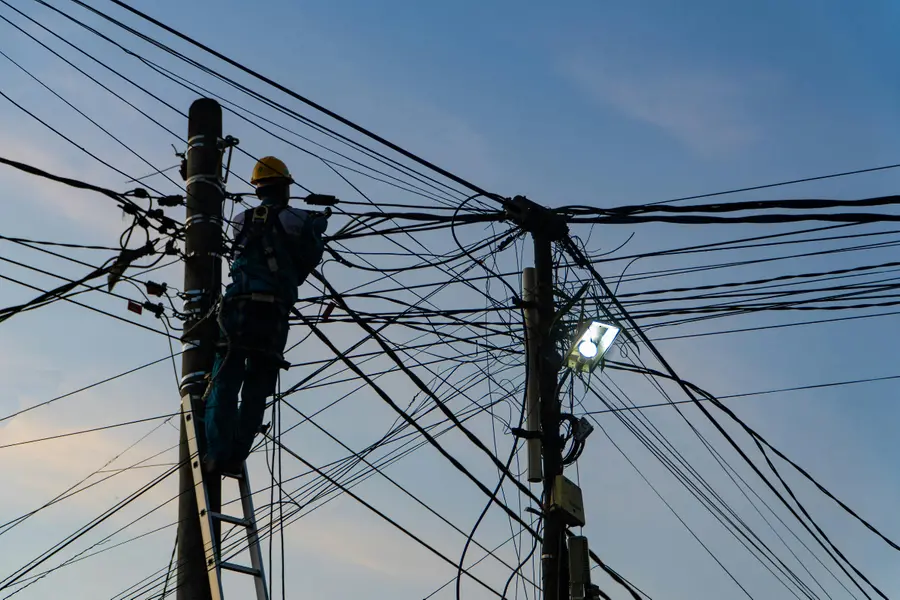
Thiruvananthapuram: Kerala is facing a growing electricity crisis as soaring temperatures, changing weather patterns and the rapid adoption of air conditioners push power consumption to record levels. Over the past five years, electricity sales in the state have increased by nearly 800 crore units, while around 30 lakh air conditioners have been sold during the same period.
With electricity demand rising much faster than domestic generation capacity, the Kerala State Electricity Board (KSEB) is increasingly dependent on costly power purchases from outside the state. The widening gap between demand and supply has raised concerns over the sustainability of Kerala's power sector.
The situation has become particularly challenging during periods of extreme heat, when air conditioner usage increases sharply. Even the monsoon season has witnessed pressure on the power distribution network, with load restrictions becoming necessary at times.
Electricity consumption rises by nearly 800 crore units
According to KSEB figures, electricity sold to consumers increased from 2,349 crore units in the 2021-22 financial year to 3,147 crore units in 2025-26, marking an increase of 798 crore units over five years.
The board expects electricity sales to climb further to around 3,500 crore units in 2026-27 if the current trend continues.
Rising temperatures and the increasing use of air conditioners are among the major factors driving the surge. The growing number of washing machines, microwave ovens and large televisions has also contributed to higher household electricity consumption.
Kerala adds an average of four lakh new electricity connections every year, further increasing the burden on the state's power infrastructure.
30 lakh air conditioners sold in five years
The rapid expansion of air conditioner usage has emerged as a significant contributor to Kerala's rising electricity demand.
Around 4.8 lakh air conditioners were sold in the state in 2023. Sales crossed seven lakh units in 2024 before declining to approximately five lakh in 2025.
Between 2021 and March 2026, an estimated 30 lakh air conditioners were sold across Kerala.
Nearly 60 per cent of the air conditioners sold in the state are one-tonne models. A one-tonne air conditioner with a power rating of 1,200 watts consumes approximately 1.2 units of electricity when operated continuously for an hour at its rated power.
The widespread adoption of cooling appliances has increased electricity demand, particularly during evening hours when household consumption reaches its peak.
Kerala's electricity consumption over five years
| Financial year | Electricity sold to consumers |
|---|---|
| 2021-22 | 2,349 crore units |
| 2022-23 | 2,492 crore units |
| 2023-24 | 2,760 crore units |
| 2024-25 | 2,814 crore units |
| 2025-26 | 3,147 crore units |
The figures indicate that electricity sales increased by nearly 34 per cent between 2021-22 and 2025-26.
Daily electricity demand reaches record levels
Kerala's annual electricity consumption has also reached unprecedented levels.
According to figures cited from the Central Electricity Authority and KSEB, annual electricity consumption has reached approximately 27,581 gigawatt-hours (GWh), while average daily demand has exceeded 93.6 million units.
Daily consumption has increased by approximately 10 million units compared with earlier levels.
Domestic consumers account for the largest share of electricity usage in Kerala. The sharp increase in demand during evening peak hours has emerged as a major challenge for the state's electricity distribution network.
The growing reliance on electrical appliances, particularly air conditioners, has made it increasingly difficult to manage peak demand without additional power purchases.
Hydropower generation struggles to meet demand
Kerala has traditionally relied on hydropower as its principal source of domestic electricity generation. However, changing rainfall patterns and fluctuations in reservoir storage have affected the availability of hydroelectric power.
Although the cost of generating electricity from existing hydropower projects is relatively low, insufficient water availability can prevent these facilities from operating at full capacity.
As electricity demand continues to rise, the contribution of domestic hydropower generation has become increasingly inadequate to meet the state's overall requirements.
This has forced Kerala to depend heavily on electricity purchased from outside the state.
Kerala buys nearly 75% of its electricity from outside
Kerala currently purchases nearly three-fourths of its electricity requirements from external sources.
The dependence becomes particularly expensive during evening peak hours, when electricity prices on power exchanges increase sharply.
KSEB sometimes has to pay more than Rs 10 per unit to purchase electricity during periods of high demand.
Such purchases place an additional financial burden on the board, which is already facing substantial accumulated losses.
The combination of rising demand, limited domestic generation and expensive power purchases has raised concerns about the long-term financial stability of Kerala's electricity sector.
Electricity tariffs and surcharges set to increase
Consumers in Kerala could face higher electricity bills from April 1, 2027, following changes to the tariff policy notified by the Kerala State Electricity Regulatory Commission.
The policy provides for recovering approximately Rs 5,000 crore in accumulated losses incurred by KSEB through surcharges over four years.
Under the new framework, electricity tariffs for the five years from 2027-28 to 2031-32 will be determined by the commission.
Surcharges will be applicable during four of these years.
For industrial consumers, the surcharge will be calculated as a specified percentage of their electricity bills. Other consumer categories will face surcharges linked to fixed charges and electricity tariffs.
Peak-hour electricity charges could rise
The revised tariff policy also proposes extending the period classified as peak electricity consumption hours.
Currently, peak hours run from 6 pm to 10 pm. Under the new policy, the period will extend from 6 pm to 11.30 pm.
The policy also recommends expanding the installation of time-of-day (ToD) meters to additional consumer categories, allowing electricity charges to vary according to the time of consumption.
Consumers using electricity during peak hours could face higher charges, while lower rates are proposed for consumption between 8 am and 6 pm and between 11.30 pm and 8 am.
The changes are intended to encourage consumers to shift electricity-intensive activities away from peak hours and reduce pressure on the distribution network.
Can solar power and battery storage prevent a crisis?
Experts believe Kerala must increase electricity generation while investing in energy conservation and battery storage systems to address its growing power requirements.
Battery energy storage systems could allow surplus solar electricity generated during the day to be stored and used during evening peak hours.
This would help KSEB reduce its dependence on expensive electricity purchased from power exchanges.
Kerala has already witnessed significant growth in rooftop solar installations, which have helped ease pressure on the conventional electricity supply system.
The Union government's PM Surya Ghar scheme has further encouraged households to adopt rooftop solar systems by offering subsidies of up to Rs 78,000 for eligible installations with a capacity of three kilowatts or more.
However, solar generation alone may not be sufficient to meet the state's rapidly increasing evening demand without adequate energy storage facilities.
With electricity consumption expected to rise further in the coming years, Kerala faces the challenge of balancing growing household demand, affordable tariffs and reliable electricity supply.
Expanding renewable energy capacity, strengthening power infrastructure and introducing large-scale energy storage systems could prove crucial in preventing a more severe electricity crisis.
Published: 30 Oct 2026, 04:32 pm IST


ABOUT THE AUTHOR

Related Topics
Disclaimer: Kindly avoid objectionable, derogatory, unlawful and lewd comments, while responding to reports. Such comments are punishable under cyber laws. Please keep away from personal attacks. The opinions expressed here are the personal opinions of readers and not that of Mathrubhumi.