
Kerala's 52-day monsoon trawling ban has ended, with hundreds of fishing boats returning to sea amid hopes of a rich catch.
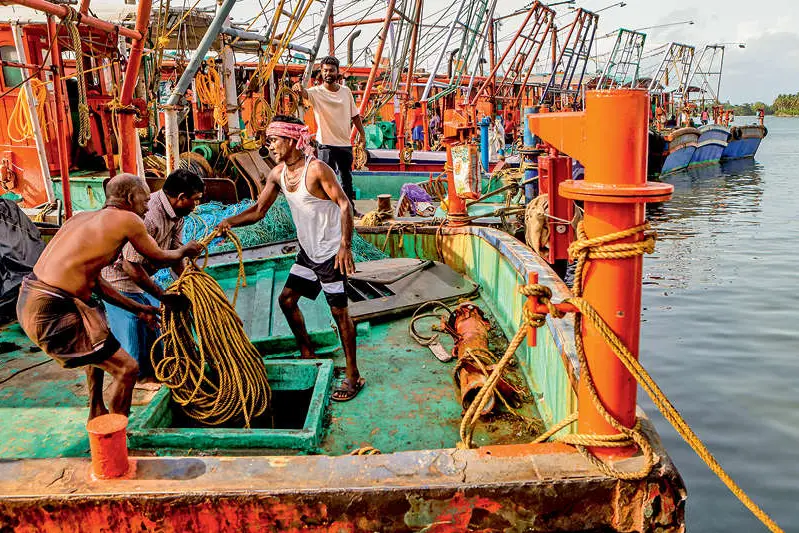
Kollam: Kerala's 52-day annual monsoon trawling ban ended at midnight on Friday, with hundreds of fishing boats returning to sea in the hope of a bountiful catch after nearly two months of restricted operations.
In Kollam district alone, around 1,000 mechanised fishing boats are expected to resume operations. Fishermen are optimistic about the possibility of a chaakara (mudbank phenomenon), as traditional fishermen reported good catches during the ban period.
Also Read

Fishing boats that underwent repairs during the ban were brought near the Neendakara bridge before midnight on Friday.
More than half of the workforce in the fishing sector consists of migrant workers. Thousands of workers from other states are employed on fishing boats, at harbours and in ice factories. Most had returned to their native places when the trawling ban began, but nearly 80 per cent have returned over the past few days. The remaining workers are expected to arrive shortly. Businesses around the harbours have also resumed operations with the reopening of fishing activities.
Boats refurbished before returning to sea
Engines were serviced, hulls repainted, and new fishing nets, boards and other equipment were installed before the vessels returned to the water.
Boat owners said refurbishing a single vessel and purchasing new equipment costs between ₹4 lakh and ₹5 lakh.
More than 700 mechanised boats operate from the Shaktikulangara and Neendakara harbours, while more than 200 boats are based at Azheekal harbour in Kollam district.
Boats have also been stocked with fuel, food supplies and ice. Vessels that remain at sea for up to a week carry as many as 400 blocks of ice to preserve the catch.
Sandbars raise safety concerns
Fishermen have expressed concern over sandbars that have formed in Ashtamudi Lake during the ban period. Many boats were anchored in the lake during the restrictions, and operators fear the accumulated sandbars could obstruct navigation and increase the risk of accidents as the vessels return to sea.
The sandbars, formed due to low water levels, are usually removed through dredging. However, fishermen said dredging was not carried out this time.
Published: 01 Aug 2026, 11:23 am IST
ABOUT THE AUTHOR
Related Topics
Disclaimer: Kindly avoid objectionable, derogatory, unlawful and lewd comments, while responding to reports. Such comments are punishable under cyber laws. Please keep away from personal attacks. The opinions expressed here are the personal opinions of readers and not that of Mathrubhumi.