
Dalit activist’s complaint against filmmaker Adoor Gopalakrishnan sparks debate on caste prejudice in Kerala’s arts.
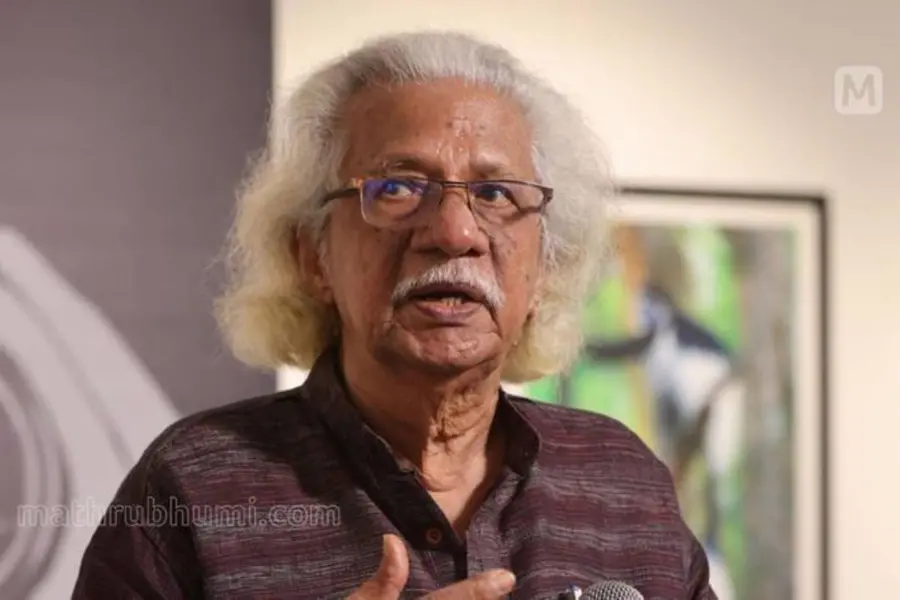
A complaint by Dalit activist and research scholar Dinu Veyil accusing veteran filmmaker Adoor Gopalakrishnan of caste prejudice triggered a wave of backlash from anti-caste voices and cultural commentators in Kerala, reopening uncomfortable questions around caste hegemony and elite control in the state’s artistic spaces.
The controversy centres around remarks made by Gopalakrishnan at the Kerala Film Policy Conclave, where he urged for three months of intensive training for filmmakers from marginalised backgrounds and women who were selected for grants under a Kerala Film Development Corporation (KFDC) scheme.
Veyil, who alleged that the remarks violated the Scheduled Castes and Scheduled Tribes (Prevention of Atrocities) Act, filed a complaint earlier this week. While police concluded that there were no legal grounds to register a case, the remarks have continued to draw fire from multiple quarters.
‘Caste is a deeply entrenched social disease’
“I do not believe the Adoor episode is an isolated incident,” Dinu Veyil told Mathrubhumi English. “Caste is a deeply entrenched social disease in our society, and Adoor’s public remarks make it clear that he, too, is a carrier of the same. Despite having over 60 years of experience in the film industry, he has not been able to liberate himself from caste-based stereotypes.”
Veyil argued that statements from individuals with immense cultural capital do not exist in isolation. “When individuals with such immense cultural capital and influence make casteist statements, it doesn’t exist in a vacuum -- it reinforces and amplifies casteist prejudices that already exist against oppressed communities.”
In response to Gopalakrishnan’s self-presentation as a Gandhian voice in the cultural sphere, Veyil drew a sharp ideological distinction. “When we examine the Gandhian perspective on caste, we often overlook the fact that it does not seek to dismantle the caste system itself. Instead, it tries to reform or polish its internal mechanisms -- essentially maintaining the structure while softening its appearance. In stark contrast, Dr BR Ambedkar emphasized that the annihilation of caste must be the ultimate goal. That is the fundamental ideological divide between Gandhi and Ambedkar.”
Although Gopalakrishnan has claimed that his statements were made with “good intentions” and has previously spoken in favour of e-grants for SC students, Veyil said the issue is not about policy nuance but about structural bias.
“His remarks go beyond that. They carry a derogatory tone towards Scheduled Caste and Scheduled Tribe communities—suggesting they misuse public funds, or need to be ‘taught’ how to handle them. Such statements don’t just reflect bias; they risk promoting social ill-will and reinforcing dangerous stereotypes.”
“This reflects a deeply entrenched savarna saviour complex --one that positions the marginalised as needing discipline or moral correction. What Adoor’s remarks reveal is not just ignorance, but a refusal to engage with the critical anti-caste thinking developed by leaders like Ambedkar.”
“Honestly, I think Adoor Gopalakrishnan would benefit from reading Annihilation of Caste. I’d be more than happy to gift him a copy—if he is genuinely willing to read and reflect.”
Veyil questioned the assumptions of meritocracy in elite artistic spaces. “Certainly, in a caste-driven society, the idea of ‘meritocracy’ is not neutral—it is deeply shaped by caste and class privilege. This is especially visible in sectors like cinema and the arts, where dominant groups often define what qualifies as ‘real’ or ‘serious’ art.”
Pointing to the selection process of the KFDC fund, he said: “He suggested that selected candidates should be put through three months of intensive training, implying that they lack the competence to direct films. This completely invisibilizes the rigorous selection process involved -- three rounds of screening, interviews, expert juries from Kerala’s film field, and ongoing mentorship from some of India’s leading filmmakers.”
“Many of the selected individuals are already trained in prestigious film institutions or have existing filmographies. Yet, such blanket remarks from Adoor reveal a persistent belief that people from marginalised backgrounds are not ‘meritorious’ enough -- a belief rooted in casteist assumptions, not fact.”
Veyil called out the filmmaker’s apparent double standards: “Adding to the hypocrisy is the fact that the National Film Development Corporation (NFDC), which Adoor himself has been closely associated with, provides funding and support to filmmakers from all backgrounds. Yet, Adoor has never questioned or criticised NFDC’s processes or beneficiaries. His selective scrutiny of schemes targeted at SC/ST and women filmmakers exposes a clear bias.”
“In such a context, the gatekeeping of artistic merit is not about purity of form or aesthetics -- it’s about maintaining savarna hegemony. Puritanism in art becomes dangerous when it is used to silence or exclude marginalised voices under the guise of quality control.”
On whether government institutions themselves exhibit caste blindness, Veyil said, “Affirmative policies must be designed and implemented through a human rights-based perspective. We are no longer living under princely states or colonial-era benevolence; we live in a constitutional democracy where the state is both legally and morally bound to protect its citizens and ensure their welfare and dignity.”
He cited the Keraleeyam event as a case in point. “The way members of Scheduled Tribe communities were showcased bordered on ethnographic exhibitionism. Rather than portraying Adivasi people as equal citizens with diverse contributions to Kerala’s cultural, literary, and administrative life, the event chose to highlight only stereotypical or so-called ‘primitive’ aspects of their identity.”
“It reduced living, breathing communities to objects of curiosity—effectively turning them into a human museum.”
“This portrayal strips away their dignity and reinforces the age-old casteist imagination that views Dalit and Adivasi communities as backward or exotic. It ignores the vast contributions made by Adivasi individuals in literature, arts, politics, and civil service. Not representing those achievements—and instead focusing only on ‘tribal’ aesthetics—serves to dehumanise and essentialise a community that deserves to be seen in its full complexity.”
‘Adoor needs remedial training in democracy’
Dr Ajay S Sekher, Associate Professor of English and Founding Coordinator of the Centre for Buddhist Studies at SSUS Kalady, said: “Adoor who argues to give special training for Dalit filmmakers is actually in urgent need of remedial training in modern democratic and Constitutional values and principles like the fundamental right of representation for the people.”
“Social representation or community participation is no one’s charity but a fundamental right of each human being. His views are elitist, exclusionary, anti-democratic and othering or inferiarising the people who are unrepresented or underrepresented in cultural and political institutions, practices and processes like filmmaking.”
Sekher described the filmmaker’s views on the working classes of Chala Market as “criminal and antisocial in mindset”, and called out his “contempt for Pushpavathy” as “another cultivated sanctioned ignorance paraded in public”.
He connected the episode to wider casteist tendencies: “The next birth Brahmin dream of the self-proclaimed elite or 'Unnatakolajata' union minister from Kerala who has never read Manusmriti, and the obnoxious casteist and racist assaults of Mohiniyattam dancer Kalamandalam Sathyabhama against RLV Ramakrishnan, or the public exhibition of untouchability by Devaswom priests against minister K Radhakrishnan are all casteist and Brahmanical hegemony parading as Caste Hindu common sense.”
“It all began with Mani Pilla abusing the CM in public with caste slurs and forgiven by Pinarayi. Such casteist and genocidal slurs were initiated in Kerala by Mannam in the 1950s when he abused Sankar, Chathan Master, Sahodaran, and K Sukumaran, making a mockery of the Constitution.”
“When Mannam is given a public holiday and the canonisation of a neo-‘Navodhana’ leader continues, such casteist hegemonic culture will be the imperative and the new normal.”
‘This isn’t just about one remark’
High Court lawyer Dhanuja MS said: “This isn’t just about one person’s opinion or remark. The way the same was rendered also matters -- the tone, the attitude, and the intentional denial of space to those who suffered the history of discrimination.”
“When some ‘public figures’ who are expected to accept the concept of inclusion and diversion, derogate the affirmative action and hint corruption based on caste or gender, it eternalizes the ingrained inequalities that the society for a long time had tried hard to break apart.”
Quoting Berthe Morisot -- “It is important to express oneself, provided the feelings are real and are taken from your own experience” -- she added, “Indeed, art is a space of freedom, ideation, and ubiquity. Yet, in Kerala, in the name of purity and standards, the so-called ushers of art and cinema have often denied the voices of the marginalised.”
“Those voices have been deeply suppressed under the shadow of elitism and caste hegemony, where cultural expression becomes an entitlement reserved only for those who are historically advantaged.”
Dhanuja pointed out that Adoor’s remarks “are not remote musings. It reflects a constant discomfort from certain ‘cultural elites’ toward affirmative action. Surprisingly such kind of discomfort arises only in the cases of Dalit, Adivasi, and women filmmakers.”
“Stating that the government grants to SC/ST and women filmmakers may invite ‘corruption’ not only condemns beneficiaries but also strengthens the vicious stereotype that marginalised communities are unworthy of state support or artistic agency.”
She underscored that the Constitution guarantees equality and dignity through Articles 15, 17, and 21, and that the SC/ST (Prevention of Atrocities) Act prohibits actions that stereotype or demean SC/ST individuals. “When public personalities use platforms to spread hate and water the dangerous stereotypes, it also stands against pluralism.”
“Art belongs to all. The true spirit of cultural excellence lies not in exclusion, but in embracing and accepting the diverse voices that carry the weight of lived experience, struggle, and resistance.”
“Remember—public platforms come with public accountability. The fight for representation, dignity, and fairness is not charity, it’s constitutional.”
‘Caste whispers, it doesn’t always shout’
Reflecting on the mixed media and public response, Veyil said: “I truly appreciate those who have taken a strong and clear stand against Adoor Gopalakrishnan’s remarks. Their voices have been essential in pushing back against casteist narratives that often go unchallenged in elite cultural spaces.”
“But we’ve also seen a section of people asking, ‘What exactly is casteist in Adoor’s statement?’—and that reveals a serious lack of social understanding.”
“To those individuals, I would say this: caste does not operate only through slurs or overt violence. It is embedded in our everyday ideas about who is ‘deserving,’ who is ‘qualified,’ and who needs to be ‘trained’ or ‘corrected’. Adoor’s remarks carried a clear subtext of meritocratic elitism and anti-labour bias—yet many failed to recognise it.”
“This reflects a broader failure to cultivate what C. Wright Mills called the sociological imagination—the ability to see the relationship between personal beliefs and wider social structures.”
“Those who couldn’t grasp the caste, class, and gender implications of Adoor’s statements urgently need sensitisation. They need to be educated -- not just in the constitutional values of equality and dignity -- but particularly in the principle of fraternity, which demands mutual respect and solidarity across differences.”
Published: 09 Aug 2025, 12:05 pm IST
Disclaimer: Kindly avoid objectionable, derogatory, unlawful and lewd comments, while responding to reports. Such comments are punishable under cyber laws. Please keep away from personal attacks. The opinions expressed here are the personal opinions of readers and not that of Mathrubhumi.
