
The petition was filed through the girl's mother. The minor is a student of a private school in Prayagraj and had completed Class X, seeking admission to Class XI at the same institution.
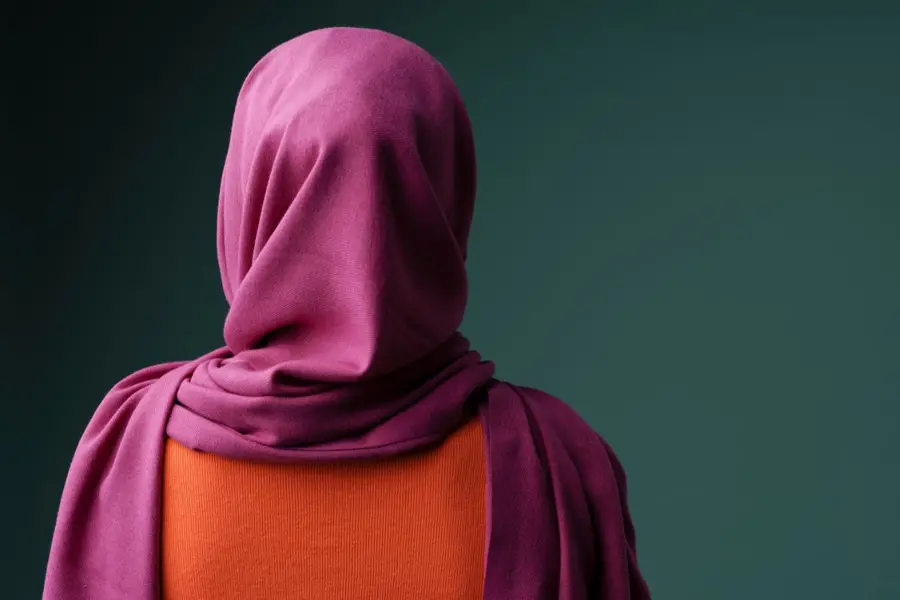
Prayagraj: The Allahabad High Court has dismissed a minor Muslim student's plea seeking permission to wear a hijab with her prescribed school uniform, holding that she failed to provide sufficient material to establish that wearing a headscarf is an essential religious practice of Islam.
A Bench of Justice JJ Munir and Justice Indrajeet Shukla also held that a student cannot insist on altering a prescribed dress code when it is "uniform, bona fide, nondiscriminatory and intended to maintain discipline and institutional identity".
Allahabad HC relies on Karnataka High Court's hijab verdict
The court said it had "no reason" to take a different view from the Karnataka High Court's 2022 Full Bench judgment, which held that wearing hijab by Muslim women does not constitute an essential religious practice in Islam.
The Allahabad High Court described the Karnataka judgment as "persuasive authority of great value", while noting that the verdict was later considered by the Supreme Court in Aishat Shifa, where the top court delivered a split verdict.
The Bench noted that there is currently no authoritative Supreme Court ruling that has finally settled the issue.
Petitioner sought permission to wear headscarf with uniform
The petition was filed through the girl's mother. The minor is a student of a private school in Prayagraj and had completed Class X, seeking admission to Class XI at the same institution.
She sought directions to the school authorities to allow her to wear a headscarf along with the prescribed uniform. The petition claimed that wearing a headscarf is an essential part of Islamic practice and that the girl had been wearing one since Class VI at the same school.
The court, however, noted that other students did not wear headscarves.
"We have perused the photographs from various classes relating to the petitioner. Except for her, no other girl student is donning the headscarf, even those belonging to the same religious community as the petitioner."
The Bench also rejected the claim that wearing a headscarf is an essential Islamic practice.
"Wherever this issue has arisen, the high courts have been unanimous in opinion that wearing a headscarf is not an essential part of the Islamic faith for a woman to don in the absence of which faith would be jeopardised," the court added.
Court says uniform rules must apply equally
In its judgment passed on August 21, the High Court further observed, "It is to be noted that the assertion in the writ petition that wearing a headscarf is an essential religious practice is a bare assertion."
The court said an unaided private educational institution has the authority to enforce a uniform dress code on its premises, provided the rules are fair, non-discriminatory and aimed at maintaining discipline and institutional identity.
It held that compliance with a prescribed school uniform is mandatory and that an individual student cannot claim a legal right to modify it by adding a headscarf.
The court further observed that if a uniform is applicable equally to all students, allowing individual students to alter or disregard it based on personal preference would undermine the very concept of a uniform.
According to the court, permitting such individual modifications could effectively shift the authority to determine school discipline from the institution to individual students.
Published: 25 Aug 2026, 10:25 am IST
ABOUT THE AUTHOR

Related Topics
Disclaimer: Kindly avoid objectionable, derogatory, unlawful and lewd comments, while responding to reports. Such comments are punishable under cyber laws. Please keep away from personal attacks. The opinions expressed here are the personal opinions of readers and not that of Mathrubhumi.