
Gautam Adani's US criminal case has been dismissed, but the judge criticised the Justice Department's handling of the decision and examined whether a $10 billion US investment pledge played a role.
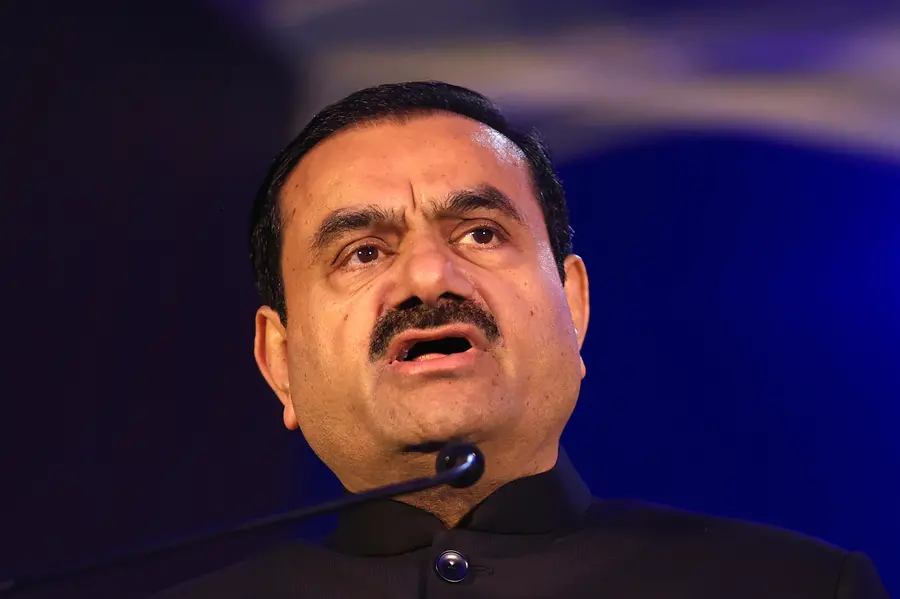
A US federal judge has dismissed the criminal case against Indian billionaire Gautam Adani after the Justice Department sought to abandon the prosecution, while questioning the unusual way the decision was reached.
US District Judge Nicholas Garaufis in Brooklyn dismissed the criminal case against Adani on Monday after reviewing the Justice Department's request to drop the charges.
Also Read

The decision formally ends the criminal prosecution against Adani, but the judge made clear that the dismissal should not be viewed as a ruling on the merits of the original allegations.
The case had attracted international attention because it involved one of India's wealthiest businessmen and allegations linked to a major solar energy project.
Judge questions Justice Department's handling
While allowing the case to be dismissed, Garaufis raised concerns about how the Justice Department reached its decision.
The judge particularly questioned the role of Principal Associate Deputy Attorney General Trent McCotter, who worked with Adani's defence lawyers while deciding whether the prosecution should be abandoned.
Garaufis said the process was unusual because it did not involve the prosecutors and federal agents who had originally investigated the case.
He described the irregularities surrounding the decision as concerning and said McCotter appeared to have relied on his own judgement rather than the professional views of officials involved in the investigation.
What did the Justice Department say?
McCotter said the decision to drop the charges followed meetings with Adani's defence lawyers, discussions with other Justice Department lawyers and his own research and analysis.
The department argued that the case was primarily foreign, difficult to prove and inconsistent with its current enforcement priorities.
The judge acknowledged that courts have a limited role in reviewing a federal prosecutor's decision to discontinue a criminal case.
$10 billion US investment pledge examined
One of the issues examined by the judge was Adani's earlier pledge to invest $10 billion in the United States.
Adani had previously promised the investment, and his lawyers told the Justice Department that the pledge could potentially form part of a resolution of the criminal case.
Adani later acknowledged in a court filing that his lawyers had discussed the possibility with the department.
Garaufis ultimately found that the investment pledge did not influence the Justice Department's decision to dismiss the charges.
However, he said the issue raised broader questions about how monetary offers or investment commitments could affect the administration of justice.
What were Adani's original charges?
US prosecutors charged Adani in 2024 with allegedly agreeing to bribe Indian government officials to help an Adani Group subsidiary secure approval for a solar energy project.
Prosecutors also accused Adani of misleading US investors by providing assurances about the company's anti-corruption practices.
Adani and the Adani Group have consistently denied wrongdoing.
Adani himself did not appear in a US court to respond to the criminal charges.
Adani welcomes the decision
Following the dismissal, Gautam Adani said he welcomed the court's decision.
"I welcome the U.S. Court's decision with humility and deep respect for the judicial process," Adani said in a statement posted on X.
The dismissal removes the criminal prosecution against Adani, although separate legal matters involving the Adani Group remain distinct from this case.
Separate SEC settlement
The criminal case is separate from civil proceedings brought by the US Securities and Exchange Commission.
In that matter, Gautam Adani agreed to pay $6 million, while his nephew Sagar Adani agreed to pay $12 million.
Separately, Adani Enterprises agreed to pay $275 million to the US Treasury Department to settle alleged violations of Iran sanctions.
These separate settlements are not the same as the criminal case that has now been dismissed.
Judge seeks more information on other defendants
Garaufis also asked the Justice Department to provide additional information before deciding whether charges against other defendants connected to the case should also be dismissed.
The judge stressed that his decision to dismiss Adani's case should not be interpreted as an endorsement of the Justice Department's decision or as a finding on whether the original allegations had merit.
Why the ruling matters
The ruling gives Adani a significant legal reprieve in the United States, ending the criminal prosecution that had been pending since 2024.
At the same time, the judge's criticism puts the Justice Department's handling of the case under scrutiny.
The episode also highlights the distinction between a criminal case being dismissed and a defendant being formally cleared of the underlying allegations. In this case, the court ended the prosecution without ruling on the merits of the original bribery and fraud allegations.
Analysis and explainer
The Adani case has two separate developments that need to be understood together. First, the criminal prosecution against Gautam Adani has been dismissed. Second, the judge has questioned the process through which the Justice Department decided to abandon the case.
The $10 billion US investment pledge became an important point of scrutiny because Adani's lawyers acknowledged discussing it with prosecutors as a possible part of resolving the case. The judge concluded that the pledge did not drive the Justice Department's decision, but his comments show why the issue attracted judicial attention.
For Adani, the immediate consequence is the end of the US criminal prosecution. However, the separate SEC settlement and Iran-sanctions matter remain legally distinct.
The ruling therefore does not amount to a judicial finding that the original allegations were false. Instead, it ends the criminal case while leaving questions about prosecutorial decision-making at the centre of the judge's order.
Published: 11 Aug 2026, 09:26 am IST
ABOUT THE AUTHOR
Related Topics
Disclaimer: Kindly avoid objectionable, derogatory, unlawful and lewd comments, while responding to reports. Such comments are punishable under cyber laws. Please keep away from personal attacks. The opinions expressed here are the personal opinions of readers and not that of Mathrubhumi.