
Supreme Court asks Tamil Nadu to identify land for Navodaya schools while Centre-state talks continue over language policy and the three-language formula.
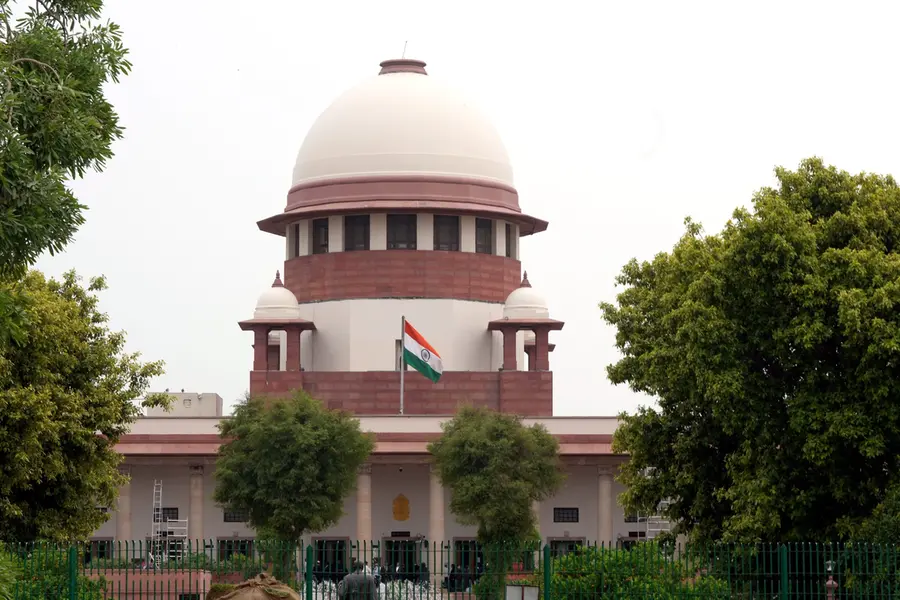
New Delhi: The Supreme Court has rejected Tamil Nadu’s plea seeking recall of an interim direction related to the establishment of Jawahar Navodaya Vidyalayas in the state, while asking the Centre and Tamil Nadu to continue discussions on the language issue.
A Bench led by Justice BV Nagarathna asked Tamil Nadu to identify suitable land within three months for setting up Navodaya schools. During the hearing, the court also urged the state to reconsider its opposition to the schools and stressed the importance of dialogue between the Centre and the state.
The court observed that “Hindi cannot be kept out of the state's soil” and questioned Tamil Nadu’s position that the state could refuse to implement a Central government scheme because of its language policy.
The Supreme Court has also encouraged continued discussions between representatives of the Centre and Tamil Nadu, with the issue of language policy remaining part of the ongoing proceedings.
ALSO READ | Kerala rain alert: 7 districts may get rain in next 3 hours; Check 5-day forecast
Why Tamil Nadu is opposing the schools
Tamil Nadu has argued that the Navodaya Vidyalaya scheme is linked to the three-language formula and therefore conflicts with the state’s established two-language policy.
The state has maintained that Tamil and English are compulsory under the Tamil Nadu Tamil Learning Act, 2006, while a third language can be offered as an optional subject. Its argument before the Supreme Court is that the state cannot be compelled to implement a Central scheme when participation is considered optional.
Tamil Nadu has also expressed concern that introducing the Navodaya system could increase the prominence of Hindi in the state.
What the Centre has said
The Centre has argued that Navodaya schools in non-Hindi-speaking regions do not necessarily use Hindi as the principal medium of instruction.
During the earlier proceedings, the Centre told the court that regional languages or English are used as mediums of instruction in such regions. The court was also informed that Tamil is taught in Navodaya schools and that Tamil can be used as the medium of instruction up to Class VIII in Tamil Nadu.
Navodaya Vidyalayas are centrally funded residential schools primarily intended to provide education to students, particularly from rural areas.
Why land is at the centre of the dispute
Under the arrangement discussed in the earlier proceedings, the state is expected to provide suitable land for the schools, while the Centre bears the cost of construction and infrastructure.
The Supreme Court has now given Tamil Nadu three months to identify appropriate land in every district. At the same time, the Centre and the state have been asked to continue their discussions over the language-related concerns.
Tamil Nadu is currently the only state without a Jawahar Navodaya Vidyalaya.
ALSO READ | NSE IPO day one: GMP, subscription and anchor investment explained
How the dispute began
The issue has been before the courts for several years. In 2017, the Madras High Court directed Tamil Nadu to permit the establishment of Navodaya schools after considering submissions from the Centre concerning the language pattern followed in these institutions.
The state subsequently challenged the position, leading to the continuing proceedings before the Supreme Court.
The latest hearing therefore concerns both the implementation of the court's direction regarding land and the broader dispute over language policy.
Three-language formula versus Tamil Nadu’s two-language policy
The dispute is closely connected to the wider debate over India’s three-language formula.
Tamil Nadu has historically followed a two-language approach centred on Tamil and English. The state has opposed the imposition of a third language, particularly Hindi, in its school education system.
The Centre’s position is that the Navodaya scheme can operate in Tamil Nadu without requiring Hindi to replace Tamil or English as the principal language of education.
The Supreme Court’s latest intervention seeks to keep the question of establishing the schools separate from the continuing discussions over language policy, while asking both sides to engage with each other.
What happens next
Tamil Nadu has been given three months to identify suitable land for Navodaya schools. The Centre and the state are also expected to continue discussions on the language issue.
The matter is scheduled to come up again before the Supreme Court on December 14.
Published: 17 Sept 2026, 02:45 pm IST
ABOUT THE AUTHOR

Disclaimer: Kindly avoid objectionable, derogatory, unlawful and lewd comments, while responding to reports. Such comments are punishable under cyber laws. Please keep away from personal attacks. The opinions expressed here are the personal opinions of readers and not that of Mathrubhumi.