
The Supreme Court on Wednesday directed the Centre and the Delhi government to submit comprehensive responses within 10 days to petitions alleging the detention of political leaders and other protesters during the October 10 demonstrations against Chief Election Commissioner Gyanesh Kumar in Delhi.
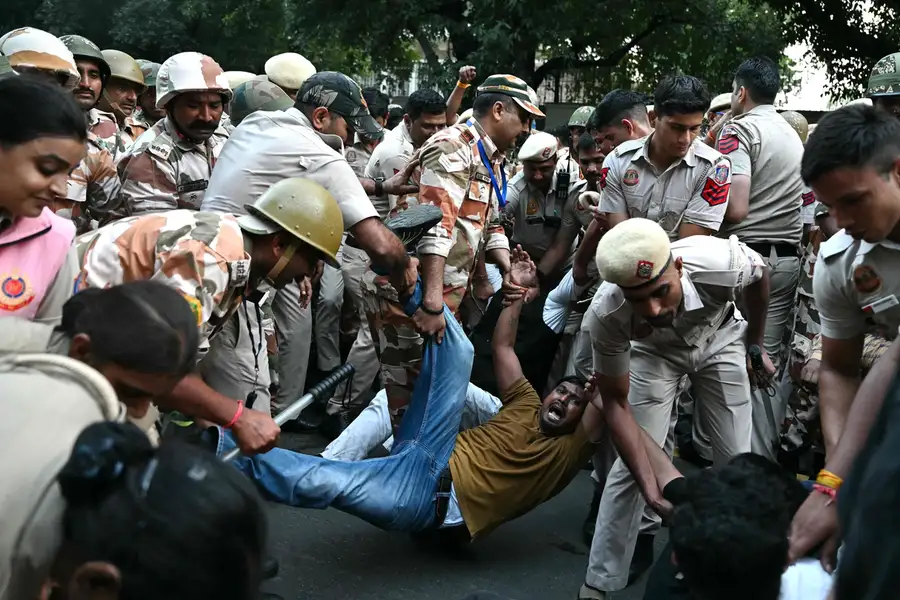
New Delhi: The Supreme Court on Wednesday sought comprehensive responses from the Centre and the Delhi government to petitions alleging the detention of political leaders and protesters during the October 10 anti-CEC demonstrations in the national capital.
A bench comprising Chief Justice of India Surya Kant and Justices Joymalya Bagchi and V Mohana directed both governments to file their responses within 10 days. The petitioners have been given a week thereafter to submit their rejoinders, if any.
The order was passed after Additional Solicitor General Aishwarya Bhati informed the bench that affidavits had been filed in only some of the petitions concerning the alleged detentions.
The petitions raise concerns over the action taken against protesters, particularly political leaders, during demonstrations against Chief Election Commissioner Gyanesh Kumar.
Delhi Police contests habeas corpus plea over Mamata Banerjee
During the proceedings, the Supreme Court was informed that Delhi Police had described a habeas corpus petition filed by Trinamool Congress MP and lawyer Menaka Guruswamy as infructuous.
The petition concerned the alleged removal of former West Bengal Chief Minister Mamata Banerjee from the protest site during the October 10 demonstrations.
Delhi Police told the court that no one had been arrested or detained during the protests, and therefore the petition had become infructuous.
A habeas corpus petition is a legal remedy through which a person can seek judicial intervention against alleged unlawful detention or restraint of liberty.
Supreme Court had earlier raised concerns over peaceful protests
The Supreme Court had held a special sitting on October 11, a day after the protests, and said people gathering peacefully should not be illegally detained.
The court had also asked the Centre to ensure that Delhi Metro services continued to operate normally and that internet services were not disrupted, subject to law-and-order requirements.
The latest direction seeks a consolidated response from the Centre and the Delhi government to the allegations raised in the petitions.
What triggered the Delhi protests?
The protest call was given by the Cockroach Janta Party (CJP) and some student organisations against Chief Election Commissioner Gyanesh Kumar. The demonstrators had raised allegations of irregularities in the functioning of the Election Commission.
The planned mass mobilisation at Jantar Mantar on October 11 was prevented following a major security deployment and restrictions in the capital.
According to the report, more than 7,000 protesters were detained during the security operation. Those reportedly detained included CJP leader Abhijit Dipke, several opposition leaders and YouTuber Dhruv Rathee.
The petitions before the Supreme Court concern allegations of detention and restrictions imposed during the protests.
Supreme Court examines allegations involving protest rights and personal liberty
The case brings two constitutional concerns into focus: the right to assemble peacefully and the protection of individual liberty against unlawful detention.
The Supreme Court's earlier observations on October 11 stressed that peaceful gatherings should not result in illegal detentions. Its latest order seeks detailed responses from the Centre and Delhi government before the court considers the allegations raised in the petitions.
The dispute over the habeas corpus petition concerning Mamata Banerjee also highlights the difference between the police's account of events and the allegations made by the petitioner. Delhi Police has told the court that no one was detained, while the petition had raised concerns about her alleged removal from the protest site.
The direction to file comprehensive affidavits does not amount to a finding that the detentions were unlawful. The responses and subsequent rejoinders will help the court examine the claims and the circumstances surrounding the police action.
Published: 25 Nov 2026, 04:37 pm IST


ABOUT THE AUTHOR

Related Topics
Disclaimer: Kindly avoid objectionable, derogatory, unlawful and lewd comments, while responding to reports. Such comments are punishable under cyber laws. Please keep away from personal attacks. The opinions expressed here are the personal opinions of readers and not that of Mathrubhumi.