
PM Modi’s “dimagi Naxal” remark has triggered a fierce social media battle, with critics reclaiming the term while supporters defend it as a warning against ideological extremism.
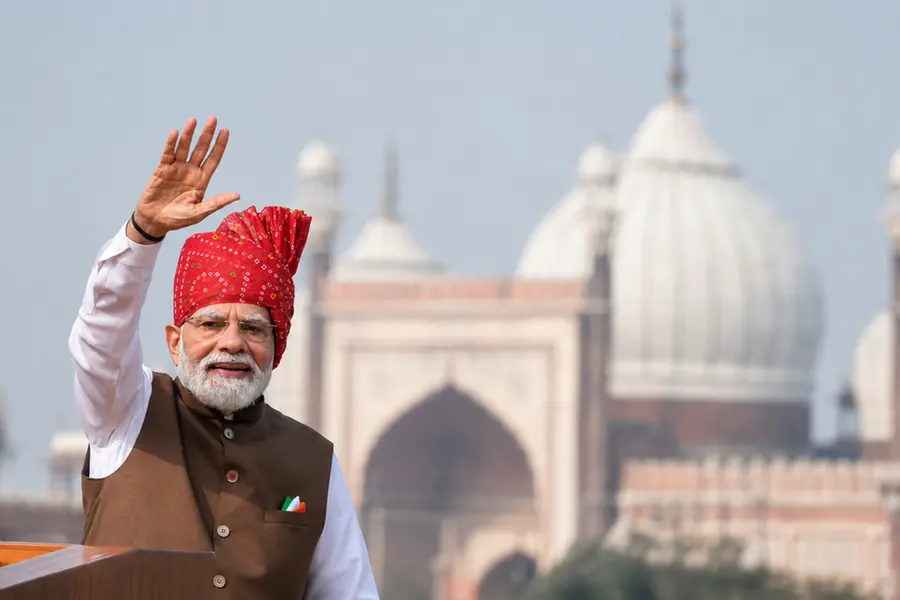
New Delhi: Prime Minister Narendra Modi’s reference to 'Dimagi Naxals' in his Independence Day address has triggered a sharp social media battle, with supporters defending the remark as a warning against ideological support for Naxalism, while critics have turned the phrase into a political slogan and, in some cases, embraced the label themselves.
Addressing the nation from the Red Fort on August 15, Modi said armed Naxalism had been significantly weakened but warned that people carrying a 'dimagi' or ideological Naxal mindset remained a threat.
He said such people needed to be 'identified' and 'isolated', arguing that they could create unrest and push young people towards violence and anarchy.
The remark has since moved beyond political statements and become a subject of intense sparring on X and Instagram, with sharply contrasting interpretations of what the Prime Minister meant.
On X, several users critical of the government argued that the phrase could be used to stigmatise students, young people and citizens who question the government.
X user Priya Purohit wrote that she no longer trusted Modi and described herself as a 'Dimagi Naxal Gen-Z woman'.
In another post, a user argued that people questioning the government and demanding better schools should not be described as Naxals. 'If this is a dimagi Naxal, so I am also a proud dimagi naxal,' the user wrote.
Another X post mocked the controversy by suggesting that the term had effectively become a new political identity.
A separate post referred to the 'Dimagi Naxal' label as a new addition to the political vocabulary and argued that ideological extremism needed to be eliminated at its roots.
The BJP camp, however, has been using the same phrase to target what it describes as ideological support for Maoism and Naxalism.
One X user argued that the Prime Minister had not targeted ordinary critics but was referring to people who support Naxalism or work against India's interests.
Another post invoked former Prime Minister Manmohan Singh's 2006 description of Naxalism as the country's biggest internal security challenge while attacking Congress over P Chidambaram's subsequent claim that he was 'proud' to be a 'dimaagi Naxal'.
The BJP has also used Chidambaram's comment to accuse Congress of double standards.
The online debate has spilled onto Instagram as well, where posts supporting Modi's remarks have attempted to define who qualifies as a 'dimagi Naxal'.
One Instagram post described a 'dimagi naxal' as someone who supports Naxalism, backs Pakistan during Operation Sindoor, spreads what the post calls fake news against the armed forces, opposes India's development and is against Sanatan Dharma.
The post said that possessing at least two of those characteristics would qualify someone as a 'dimagi naxal'.
Another Instagram post took a mocking approach, saying Modi had used the phrase without naming anyone and asking why the 'Left-liberal lobby' had reacted if the description was not directed at them.
A third Instagram graphic said, 'Throw an insult and owner will pick it up,' and claimed that Modi had merely used two words, 'Dimaagi Naxal', without naming any individual, yet an entire ecosystem had reacted.
In contrast, another Instagram post sought to reclaim the expression. It defined a 'dimagi naxal' as an educated, tax-paying citizen who uses their intellect to identify patterns, challenge groupthink and demand answers and accountability from the government.
The post argued that critical thinking should be seen as a strength rather than a threat.
The result is a phrase that has acquired sharply different meanings depending on the political camp using it.
For Modi's supporters, 'dimagi Naxal' refers to ideological sympathisers of Maoism who can keep extremist ideas alive even after the decline of armed insurgency.
For his critics, the phrase has become a symbol of what they see as an attempt to delegitimise dissent and criticism.
With memes, political posts and self-described 'proud dimagi Naxal' reactions appearing alongside posts defending the Prime Minister, the phrase has quickly become another flashpoint in India's deeply polarised online political discourse.
Published: 17 Aug 2026, 03:46 pm IST
ABOUT THE AUTHOR

Related Topics
Disclaimer: Kindly avoid objectionable, derogatory, unlawful and lewd comments, while responding to reports. Such comments are punishable under cyber laws. Please keep away from personal attacks. The opinions expressed here are the personal opinions of readers and not that of Mathrubhumi.