
PM Modi celebrated Diwali with security personnel in Bastar, praised their sacrifices against Maoist terrorism and recalled his earlier warning against 'dimagi naxals'.
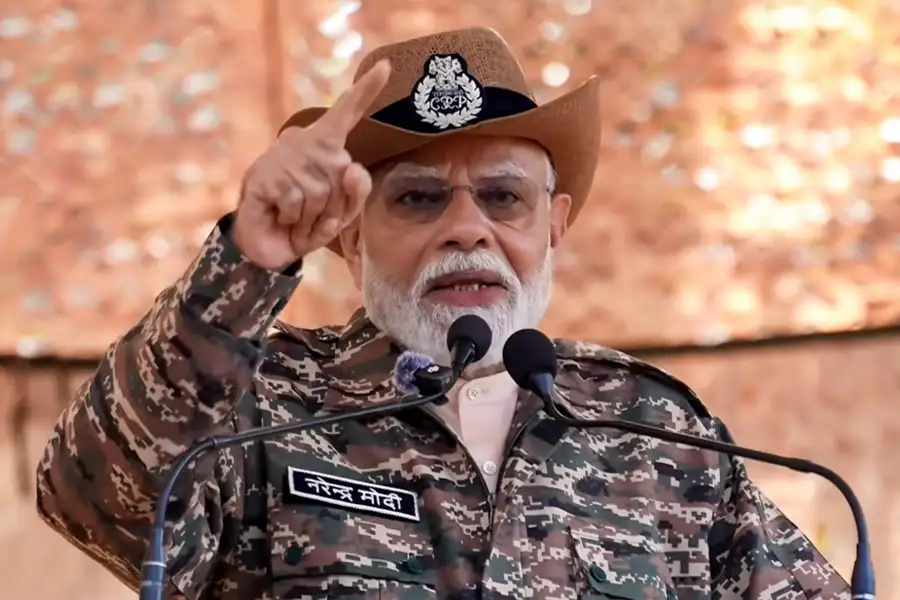
New Delhi: Prime Minister Narendra Modi on Sunday celebrated Diwali with security personnel in Chhattisgarh's Bastar, paying tribute to their sacrifices in the fight against Left-Wing Extremism and asserting that strong internal security was essential to protect the country's borders.
Addressing the personnel, Modi credited his government's approach towards countering Maoist insurgency for breaking the backbone of Naxal terrorism.
The Prime Minister also invoked his earlier warning against 'dimagi naxals', a term he had used during his Independence Day address to describe people he alleged continued to support Maoist ideology despite the decline of armed Naxalism.
‘I have also come here on behalf of 140 crore countrymen to express our gratitude for your sacrifice, dedication and spirit of service,’ Modi said while extending Diwali greetings to security personnel deployed across the country.
Highlighting the link between internal and external security, the Prime Minister said enemies outside the country could not succeed if internal security remained strong.
He argued that a weakening of internal security could embolden external adversaries.
‘Therefore, the role played by our armed forces at the borders is the same role that all of you security personnel play within the country,’ he said.
Modi also acknowledged the personal sacrifices security personnel make, saying millions of Indians are proud of their service. He extended his Diwali wishes to personnel stationed across the country.
'Previous governments kept security forces' hands tied'
The Prime Minister used the occasion to criticise previous governments over their handling of the Naxalite insurgency, alleging that security personnel had not been given sufficient freedom to respond to attacks.
‘Previous governments had also kept the hands of security personnel fighting on the ground tied. Naxalite attacks would take place, but security forces did not have the freedom to retaliate openly,’ he said.
Claiming that his government had changed this approach, Modi said security forces were given the freedom to take necessary operational decisions. He also alleged that certain individuals within the government and the administrative system had extended support to Left-Wing Extremism.
‘We worked with sensitivity and broke the backbone of Maoist terrorism,’ he said.
PM Modi added that the government's strategy went beyond security operations and included efforts to improve the lives of people living in Naxal-affected regions.
According to him, the development-focused approach helped secure the support of communities that had suffered because of Maoist violence.
He also acknowledged citizens who helped the government and security forces in the campaign against Naxalism.
Why Modi's 'dimagi naxal' remark matters
The Bastar address comes against the backdrop of Modi's August 15 Independence Day speech, in which he highlighted what he described as the continuing ideological influence of Naxalism.
While asserting that armed Naxalism had suffered a major setback, the Prime Minister had warned against what he called 'dimagi naxals'.
His remarks sparked a political debate, with critics questioning the use of the term to describe people allegedly sympathetic to Maoist ideology.
The distinction between armed insurgents and alleged ideological supporters remains politically contentious.
Modi's Diwali interaction with security personnel, meanwhile, placed the spotlight on the sacrifices made by forces deployed in regions that were once considered major Maoist strongholds.
His remarks underscored the government's position that a combination of security operations, administrative action and development initiatives had helped weaken the insurgency.
The Prime Minister's message was clear: the fight against internal security threats and the protection of national unity require sustained commitment from both security personnel and citizens.
Published: 08 Nov 2026, 01:30 pm IST


ABOUT THE AUTHOR

Related Topics
Disclaimer: Kindly avoid objectionable, derogatory, unlawful and lewd comments, while responding to reports. Such comments are punishable under cyber laws. Please keep away from personal attacks. The opinions expressed here are the personal opinions of readers and not that of Mathrubhumi.