
Protests demanding Kumar’s resignation have intensified across parts of the country over the past fortnight, with the Opposition alleging irregularities in the conduct of the Special Intensive Revision (SIR) of electoral rolls
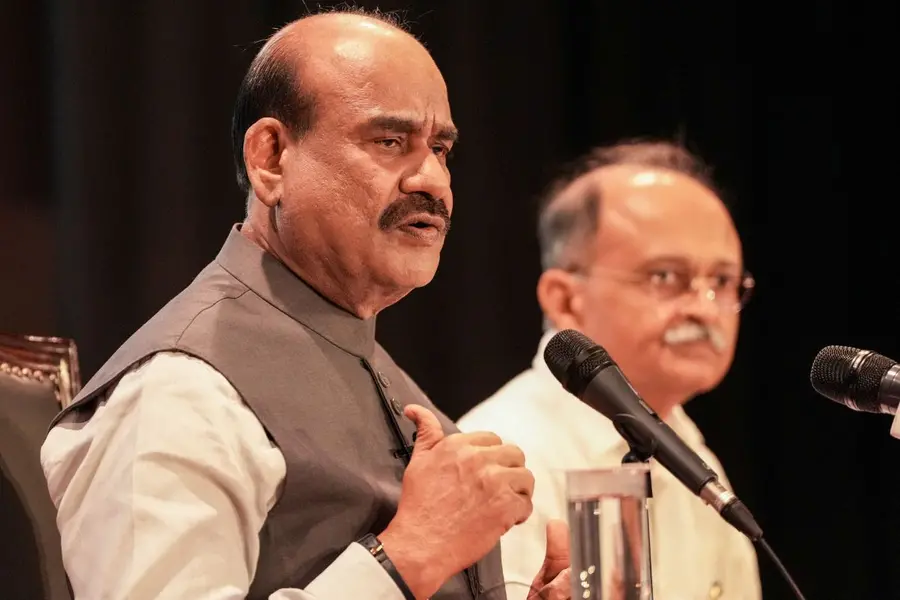
New Delhi: Lok Sabha Speaker Om Birla on Thursday said any fresh motion seeking the removal of Chief Election Commissioner (CEC) Gyanesh Kumar would be examined in accordance with parliamentary rules and procedures.
The Opposition has made two previous attempts to remove Kumar. The notices submitted during the first attempt were rejected by both the Lok Sabha and the Rajya Sabha, while those submitted during the second attempt are still pending in the Upper House.
Also Read

“If any fresh notice comes, we will see and examine it accordingly under rules and procedures,” Birla told a press conference, responding to a question about a possible motion against the CEC.
Protests demanding Kumar’s resignation have intensified across parts of the country over the past fortnight, with the Opposition alleging irregularities in the conduct of the Special Intensive Revision (SIR) of electoral rolls.
The Opposition's protests gained momentum after The Indian Express reported that Election Commissioners Sukhbir Singh Sandhu and Vivek Joshi had objected on record at least 14 times over the past 10 months to SIR-related decisions and orders that they said were issued without their knowledge or recommendation.
Under the Constitution and the Chief Election Commissioner and Other Election Commissioners (Appointment, Conditions of Service and Term of Office) Act, 2023, the CEC can be removed only through a process similar to the impeachment of a Supreme Court judge. The law also allows the CEC or an Election Commissioner to resign by submitting a written resignation to the President.
Article 124 of the Constitution stipulates that a Supreme Court judge can be removed by an order of the President following an address by both Houses of Parliament, supported by a majority of each House's total membership and a two-thirds majority of members present and voting, on grounds of proved misbehaviour or incapacity.
Under the Judges (Inquiry) Act, 1968, once a removal motion against a judge is admitted, the Speaker or the Rajya Sabha Chairman constitutes a three-member committee to investigate the charges. The panel comprises the Chief Justice of India or a Supreme Court judge, a High Court Chief Justice and a distinguished jurist.
The committee submits its findings to the Speaker or Chairman. If it finds no evidence of misbehaviour or incapacity, the motion cannot proceed. If the charges are established, the motion is considered by Parliament, and both Houses must adopt it with the constitutionally prescribed majorities for the removal process to be completed.
PTI
Published: 22 Oct 2026, 06:29 pm IST
ABOUT THE AUTHOR
Related Topics
Disclaimer: Kindly avoid objectionable, derogatory, unlawful and lewd comments, while responding to reports. Such comments are punishable under cyber laws. Please keep away from personal attacks. The opinions expressed here are the personal opinions of readers and not that of Mathrubhumi.