
Mumbai airport will temporarily cut 265 weekly international flights from October 25 as MIAL prepares to shift domestic operations from T1 to T2 ahead of redevelopment.
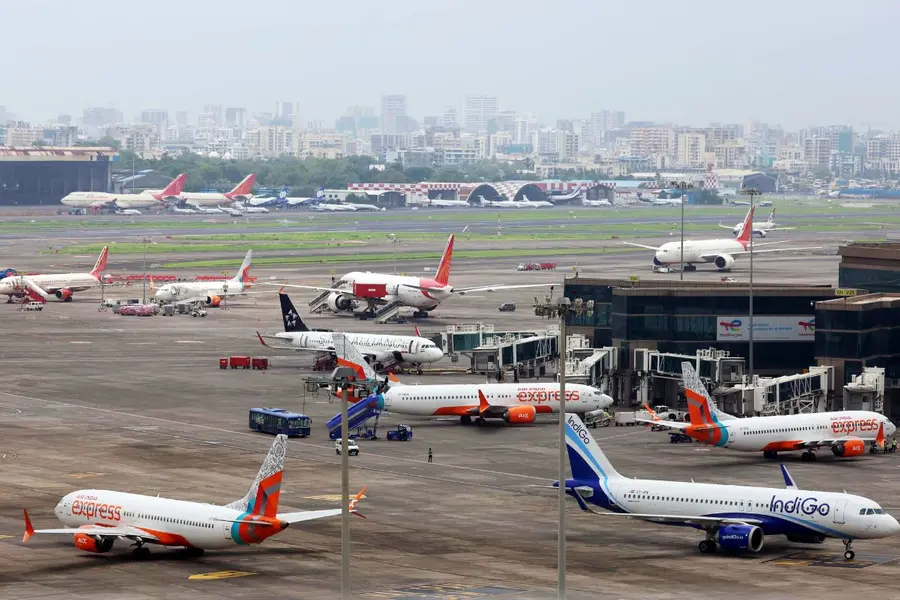
Mumbai: Airlines will have to temporarily cut 265 weekly international flights from Mumbai airport from October 25 as the airport operator prepares to shift domestic operations from Terminal 1 to Terminal 2 ahead of its redevelopment.
Mumbai International Airport has two terminals, with domestic operations mainly using T1 and international flights operating from T2.
Also Read

MIAL, the airport operator and part of Adani Airport Holdings, has asked 46 airlines to reduce international departure slots at the airport by about 33% from 11.59 pm on October 25, according to sources.
The move coincides with the start of the winter flight schedule.
Currently, 46 airlines operate around 770 weekly international flights from T2. Of these, 265 weekly services will have to be temporarily discontinued.
Why are international flights being reduced?
The reduction is linked to the planned redevelopment of Terminal 1, which is scheduled to begin in January 2027.
The vacated international departure slots at T2 will be used to accommodate domestic flights currently operating from T1. Around 5 million domestic passengers a year are expected to be transitioned from T1 to T2.
MIAL will begin allocating vacated airport facilities, including check-in counters, baggage belts and boarding gates, to scheduled domestic airlines as part of the transition.
Which airlines will be affected?
Among Indian carriers, IndiGo will have to cut the largest number of weekly international services from Mumbai, with 74 flights affected.
Air India will have to reduce 33 weekly international flights.
Other Indian airlines affected include:
- Akasa Air: 11 weekly international flights
- Air India Express: 7
- SpiceJet: 5
Foreign airlines will also be affected. Emirates and Etihad Airways will each have to reduce 10 weekly services from Mumbai. Both currently operate 28 weekly flights from the airport.
Why are airlines concerned?
The transition has been the subject of discussions between the airport operator and airlines, with carriers raising concerns about how the changes will affect their operations.
MIAL said it held a meeting with airlines on September 16 and asked carriers to submit their proposed transition plans by September 25. In a communication dated October 1, the airport operator said several airlines had not provided the requested information.
The airport operator is also considering the wider transition of some international operations to Navi Mumbai International Airport.
Air France-KLM rejects split operations
The issue has also triggered objections from airlines.
Air France-KLM said on September 30 that splitting its operations between Mumbai and Navi Mumbai airports was not an option for the group and did not make commercial sense.
The airline's position comes as discussions continue over the role of Navi Mumbai International Airport in handling traffic from the Mumbai airport system.
What has IATA said?
The International Air Transport Association (IATA) has asked the civil aviation ministry to intervene.
In a September 9 letter, IATA called for a transition framework agreed upon by all stakeholders, with a clear implementation timeline and regulatory oversight.
The airline body said temporary infrastructure or transitional arrangements should not affect airlines' established historic slot entitlements.
IATA has also said it supports the long-term development of Mumbai's dual-airport system but argued that the use of Navi Mumbai airport should be based on market forces and airline choice rather than mandatory relocation.
The immediate impact will be on international flight schedules from Mumbai from October 25. With 265 weekly overseas services set to be temporarily discontinued, passengers could see changes to flight frequencies, timings and available connections.
The exact services affected will depend on individual airline schedules and their transition plans.
The larger change is linked to the redevelopment of T1, which will require domestic traffic to be accommodated elsewhere within the Mumbai airport system.
Why the Mumbai airport transition matters
The reduction in international flights is part of a larger restructuring of Mumbai's airport operations.
The closure and redevelopment of T1 will require a significant shift of domestic passengers and airport infrastructure to T2. Because T2 currently handles international traffic, MIAL plans to free up capacity by reducing international departure slots.
At the same time, Navi Mumbai International Airport is emerging as a second airport serving the Mumbai region. The transition has therefore raised questions about how traffic should be divided between the two airports and how much flexibility airlines should have in deciding where they operate.
The dispute also highlights the challenge of balancing airport redevelopment with airline schedules, established airport slots and passenger connectivity. IATA's call for a jointly agreed transition framework reflects airlines' concerns over how quickly and under what conditions these changes are implemented.
Published: 02 Oct 2026, 08:32 pm IST
ABOUT THE AUTHOR
Disclaimer: Kindly avoid objectionable, derogatory, unlawful and lewd comments, while responding to reports. Such comments are punishable under cyber laws. Please keep away from personal attacks. The opinions expressed here are the personal opinions of readers and not that of Mathrubhumi.