
Kapil Sibal says growing Gen Z anger in India is driven by the education crisis, propaganda politics and concerns over dissent, while defending social media activism and pledging ₹1 crore for legal aid to protesters.
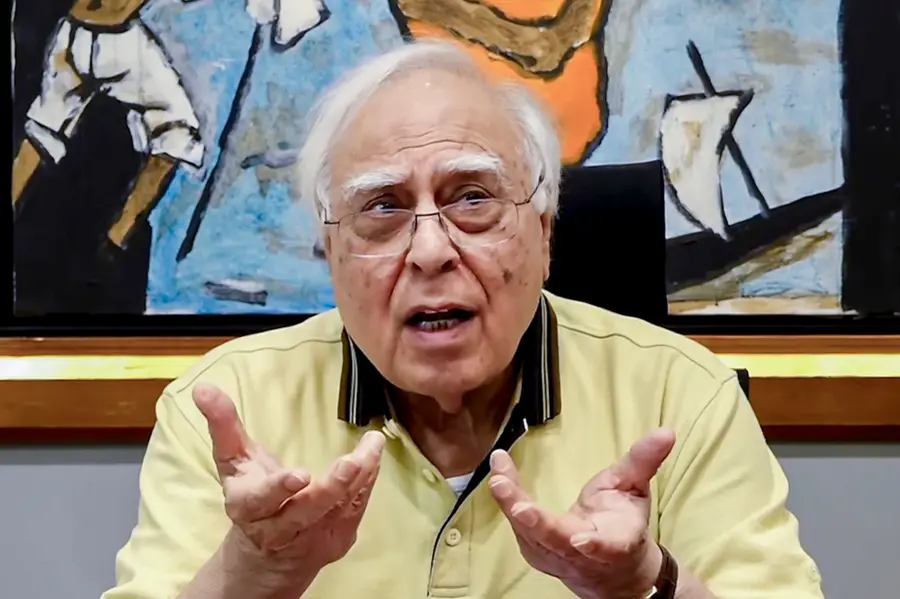
New Delhi: Senior advocate and Rajya Sabha MP Kapil Sibal believes the growing participation of young Indians in protests reflects a deeper crisis in the country's education system and governance, saying the discontent goes far beyond the NEET controversy and stems from what he described as years of "propaganda" and "event management."
Sibal made the remarks in an exclusive interview with Mathrubhumi English after announcing a ₹1 crore contribution towards a legal aid fund for protesters associated with the Cockroach Janta Party (CJP). The announcement came a day after the group announced plans to launch a public fundraising platform to support protesters who may face criminal cases following the end of its 37-day nationwide agitation.
Speaking to B Balagopal, Sibal explained why he believes India's youth have emerged at the forefront of recent protests, defended the role of social media in mobilising public opinion, and outlined why he decided to back legal assistance for protesters.
ALSO READ: CJP to launch nationwide legal aid network for student protesters; Kapil Sibal pledges ₹1 cr support
'I can only tell you the anger of the young'
Asked whether India was witnessing the beginning of a "Gen Z revolution", Sibal said it was too early to draw that conclusion but insisted that the frustration among young people was undeniable.
"I can only tell you the anger of the young. Whether it's a revolution, it's not a revolution; only time will tell."
According to Sibal, the current wave of youth participation cannot be understood solely through the lens of the NEET examination or recent protests.
Sibal argued that the issues confronting young Indians are rooted in long-standing structural deficiencies in education rather than isolated policy failures.
"The structural problems with the education structure, which is just not about NEET exams, but the structural problems in the education sector, the quality of education, which is abysmal."
He said the dissatisfaction extends beyond education and reflects broader concerns about how the country has been governed.
"The nature of the way in which this country has been governed by propaganda, by event management, I don't think the Gen-Z likes it."
While refraining from describing the situation as a revolution, Sibal suggested the scale of youth discontent should not be underestimated.
Why social media has become the movement's voice
With many of the recent protests organised and amplified through social media, Sibal was asked whether digital platforms had become the primary vehicle for mobilisation.
He argued that social media had stepped in because, in his view, large sections of the mainstream media were failing to report events independently.
"Naturally, because the Godi media is not even informing the people of what's happening in India. I mean, if the mainstream media is collaborating with the government, you're bound to have the social media inform the people of what's happening on the ground."
ALSO READ: From Superman to Dora; How Gen Z turned Instagram into CJP protest's biggest stage
When asked whether such reliance on social media bypassed constitutional institutions, Sibal rejected the suggestion.
"Any form of media which gives information to people can't be bypassing anything. In fact, it is consistent with our constitutional values because at the heart of the polity is the freedom to inform and the freedom to receive information."
Why he pledged ₹1 crore for legal aid
Sibal's remarks come amid the CJP's decision to establish a nationwide legal aid fund after calling off its protest movement.
The organisation has said it fears protesters could face police action and criminal proceedings even after demonstrations have ended. It has announced plans to create a dedicated website to raise public contributions for legal assistance, with Sibal pledging ₹1 crore and appealing to lawyers across the country to represent protesters facing trials.
Explaining his decision, Sibal said he was concerned about what he described as the increasing use of legal processes against dissenters.
"I think people are being persecuted, prosecuted and unjustly dealt with."
ALSO READ: 'Three years ago this was impossible': Yogendra Yadav on anti-Modi anger at July 20 protest
Referring to former JNU student leader Umar Khalid, Sibal said prolonged incarceration without the commencement of trial reflected a larger problem.
"Umar Khalid is still in jail. Trials don't start; people languish in jail."
He also recalled representing Kerala journalist Siddique Kappan, saying such cases reinforced the need for lawyers to defend those facing prosecution.
"If this is happening in our country, naturally it's important for people like us to say that we will defend them. I'm sure that the legal fraternity in this country will do likewise."
End of Modi era?
Asked whether the present political climate marked the beginning of the end of Prime Minister Narendra Modi's era, Sibal avoided making a prediction.
"I think any beginning must have an end. When that will happen, I cannot say."
Published: 28 Jul 2026, 09:02 pm IST
ABOUT THE AUTHOR

Disclaimer: Kindly avoid objectionable, derogatory, unlawful and lewd comments, while responding to reports. Such comments are punishable under cyber laws. Please keep away from personal attacks. The opinions expressed here are the personal opinions of readers and not that of Mathrubhumi.