
Protests against Gyanesh Kumar drew different responses in Mumbai and Delhi. Here are the key reasons behind the contrasting police approaches.
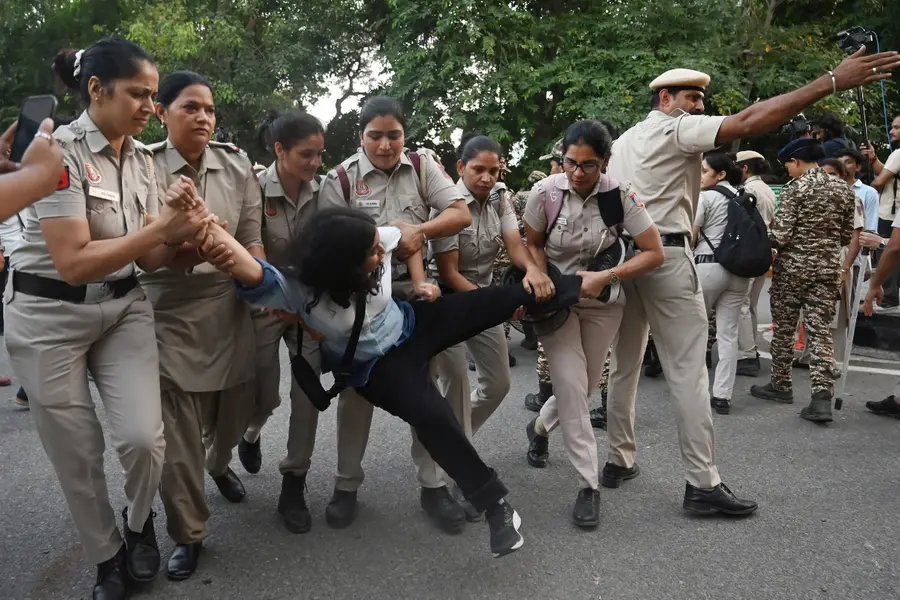
New Delhi: Protests demanding the resignation of Chief Election Commissioner Gyanesh Kumar drew sharply different responses from Mumbai Police and Delhi Police, with reels comparing their handling going viral across social media and drawing widespread attention to the differences in crowd management.
While Delhi Police moved to stop the protest, detain protesters, and register cases, Mumbai Police adopted a more restrained approach.
Police did not allow protesters to gather inside Shivaji Park, but they let them assemble on the adjoining road and focused on crowd management.
The difference in response can be understood through several factors.
1. Different locations and security considerations
The Delhi protest was planned at Jantar Mantar, a designated but tightly regulated protest zone in the national capital.
The area is also located close to several important government and institutional buildings.
Delhi Police had imposed restrictions in the New Delhi area and maintained that gatherings required prior permission.
This gave the police a legal and administrative basis to prevent an unauthorised gathering.
In Mumbai, police denied protesters permission to demonstrate inside Shivaji Park but allowed them to gather on the road outside the venue.
2. Different approach to crowd management
The biggest difference was how the two police forces handled the gathering.
Delhi Police deployed barricades and a large security presence and detained protesters who allegedly refused to follow instructions to disperse. Police also registered FIRs related to the protest.
Mumbai Police, meanwhile, focused on controlling protesters' movement rather than dispersing the gathering immediately.
As the crowd grew, police managed movement on the adjoining road.
This meant Mumbai's approach focused more on containing the protest, while Delhi's focused on preventing the unauthorised gathering.
3. Administrative instructions
The local administration's role is another important factor. In Maharashtra, the state Home Department, led by Chief Minister Devendra Fadnavis, directed police leadership to keep the gathering peaceful and prevent any untoward incident.
That approach appears to have encouraged police to prioritise crowd management and avoid unnecessary confrontation.
In Delhi, authorities took a more restrictive position and enforced prohibitory orders around the protest area.
4. Different legal and policing structures
Delhi and Mumbai have different policing structures. Delhi Police falls under the Union government through the Ministry of Home Affairs, while Mumbai Police operates under the Maharashtra state government.
This difference matters when examining how decisions on protests, security, and crowd control are made.
It does not, by itself, establish that political instructions caused the contrasting responses. However, the different administrative structures form an important part of the context.
5. The nature of the protest and police assessment
Police responses also depend on how authorities assess the potential for a demonstration to disrupt public order.
The number of protesters, location, expected crowd size, presence of political leaders, traffic concerns, and the possibility of protesters attempting to enter restricted areas can all influence the decision to allow, contain, or stop a gathering.
Therefore, comparing the two incidents requires looking beyond the headline contrast between Mumbai and Delhi.
6. The larger political question
Both protests were linked to demands concerning Gyanesh Kumar and criticism of the Election Commission, including concerns surrounding the Special Intensive Revision of electoral rolls.
The contrast raises a broader question about how consistently India regulates political protests.
The key issue is not simply whether one police force was more lenient than the other.
It is whether similar demonstrations should be governed by comparable standards, and how much the location, security environment, administrative structure, and local assessment of law and order should influence the police response.
Published: 05 Oct 2026, 08:37 am IST
ABOUT THE AUTHOR

Related Topics
Disclaimer: Kindly avoid objectionable, derogatory, unlawful and lewd comments, while responding to reports. Such comments are punishable under cyber laws. Please keep away from personal attacks. The opinions expressed here are the personal opinions of readers and not that of Mathrubhumi.