
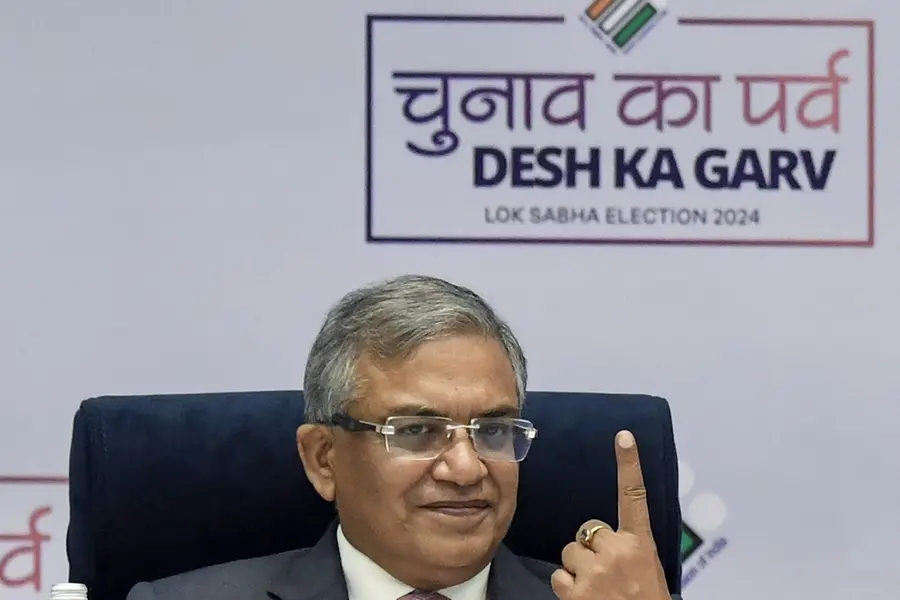
Gyanesh Kumar, a 1988-batch former Indian Administrative Service (IAS) officer of the Kerala cadre, was appointed as India's Chief Election Commissioner (CEC) on Monday. His tenure will run until January 26, 2029, just before the next Lok Sabha elections are expected to be announced.
Kumar, who previously served as an Election Commissioner, will assume office on February 19, 2025, succeeding Rajiv Kumar. His appointment marks the first under the new law governing Election Commission appointments, a matter currently under challenge in the Supreme Court.
What is his Kerala connection?
Though originally from Uttar Pradesh, Kumar’s bureaucratic career is tied to Kerala, having been part of the state’s IAS cadre. In Kerala, he served in key administrative roles, including Assistant Collector of Ernakulam, Sub-Collector of Adoor, and Managing Director of the Kerala State Development Corporation for SC/ST. He also held the post of Municipal Commissioner of the Corporation of Cochin.
As Secretary to the Kerala government, Kumar handled diverse portfolios, including Finance Resources, Fast-Track Projects, and the Public Works Department. His long association with Kerala also extended to his role as Resident Commissioner at Kerala House in Delhi from 2012 to 2016.
What are his past roles in the Centre?
Kumar retired as Union Cooperation Secretary on January 31, 2024, after holding several key positions in the central government. He served as:
- Joint Secretary and Additional Secretary in the Ministry of Home Affairs (MHA)
- Joint Secretary in the Ministry of Defence
- Secretary in the Ministry of Parliamentary Affairs
- Secretary in the Ministry of Cooperation
Notably, during his tenure at MHA from 2018 to 2021, Kumar played a major role in abrogating Article 370 and reorganising Jammu & Kashmir into two Union Territories. He was also instrumental in drafting the Jammu and Kashmir Reorganisation Bill and setting up the Ram Janmabhoomi Teerth Kshetra Trust.
What lies ahead for Kumar as CEC?
As the 26th Chief Election Commissioner, Kumar will oversee major electoral processes, including:
- Bihar Assembly elections (2025)
- Kerala and Puducherry Assembly elections (2026)
- Tamil Nadu and West Bengal Assembly elections (2026)
- Presidential and Vice-Presidential elections (2027)
- Lok Sabha elections (2029)
His tenure will witness 20 Assembly elections across states, making it a critical period for India's electoral landscape.
What is his educational background?
Kumar holds a B.Tech in Civil Engineering from IIT Kanpur. He further pursued Business Finance at ICFAI, India, and Environmental Economics at Harvard University, US.
With a career spanning over three decades across state and central governments, Kumar brings extensive administrative experience to his new role as India's top election official.
Published: 18 Feb 2025, 07:05 am IST
Related Topics
Disclaimer: Kindly avoid objectionable, derogatory, unlawful and lewd comments, while responding to reports. Such comments are punishable under cyber laws. Please keep away from personal attacks. The opinions expressed here are the personal opinions of readers and not that of Mathrubhumi.
