
From Subway Surfers edits to viral memes and Instagram reels, Gen Z brought its internet culture to the streets, redefining what modern political activism looks like.
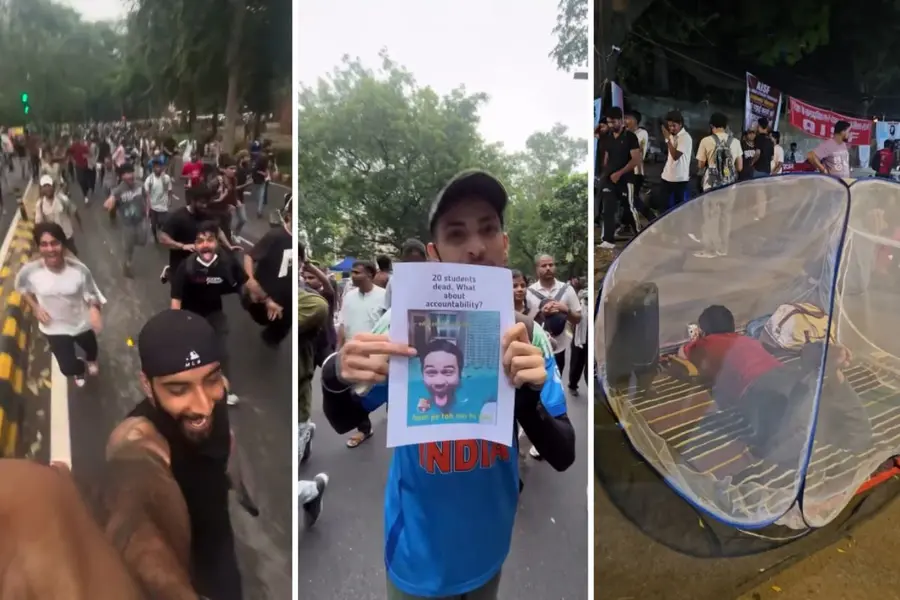
A protest no longer begins and ends on the streets. For Gen Z, it often starts with a post, spreads through memes, gains momentum through hashtags and eventually moves offline, with cameras still rolling.
The recent Cockroach Janata Party (CJP) protests in New Delhi have highlighted a new style of political expression among young Indians, where anger over serious issues exists alongside humour, satire and internet culture. Protesters demanding accountability over alleged examination irregularities and calling for the resignation of Union Education Minister Dharmendra Pradhan turned Jantar Mantar into a space where placards, slogans and social media content existed side by side.
The demonstrations, which later witnessed clashes between protesters and police, including the use of tear gas and baton charges, reflected a broader shift in how a digitally native generation approaches activism. Instead of relying only on traditional political imagery, Gen Z has brought its online identity – memes, viral trends, humour and visual storytelling – into public movements.
A protest generation raised on the internet
For earlier generations, protests were often defined by long marches, handwritten posters and powerful speeches. Gen Z’s movements follow a different rhythm.
Young protesters who gathered in Delhi arrived with smartphones in hand, documenting every moment of the demonstration. Videos of crowds, creative posters and humorous references quickly spread online, transforming the protest site into both a physical gathering point and a digital stage.
The CJP movement itself emerged from the internet before moving onto the streets. What began as a satirical online initiative grew into an offline mobilisation involving students, parents and young professionals who raised concerns over examination failures, education pressures and unemployment.
The movement’s identity reflected the generation behind it, serious about the issues but unwilling to abandon humour. Memes and jokes became tools of communication, allowing young protesters to express frustration while making their message accessible to millions online.
Satire as a political language
One of the defining features of Gen Z-led protests is the use of irony.
The CJP’s very name was built around satire, turning a dismissive reference into a symbol of collective frustration. The movement used online humour not to minimise the seriousness of its demands but to attract attention in an overcrowded digital space.
For many young protesters, memes are not separate from politics. They are a way of explaining complex issues, criticising those in power and building a shared identity.
As crowds gathered at Jantar Mantar, videos from the demonstration quickly moved across social media platforms. Some clips showed protesters navigating barricades and clashes with police, but instead of being shared only as traditional news footage, many were edited through the language of the internet.
One viral trend saw videos of protesters running from police barricades paired with the familiar background music of the mobile game Subway Surfers, a format often used online to add humour to chaotic situations. The edits turned moments of tension into shareable content, capturing the distinctly Gen Z way of processing events, through irony, jokes and instant digital reactions.
The result is a protest style that looks different from earlier movements: less formal, more visual and designed for a generation that consumes information through short videos and online conversations.
From screens to streets
The Delhi protests also showed how quickly online communities can become real-world gatherings.
The CJP’s initial digital popularity helped bring people together at Jantar Mantar, where the movement gained support from students and families affected by examination-related controversies. The involvement of activist Sonam Wangchuk, who joined the agitation and undertook a hunger strike over education-related concerns, further increased attention around the protest.
When protesters attempted to march towards Parliament, authorities restricted movement and tensions escalated. However, even amid the confrontation, social media remained central. Updates, videos and personal accounts from the ground continued to shape how the wider public experienced the protest.
For Gen Z, being present at a protest and documenting it are often inseparable acts.
How the Cockroach Janata Party was born
The CJP emerged from an online reaction to a controversial remark during a court hearing, where unemployed young people were compared to “parasites” and “cockroaches”.
In response, Abhijeet Dipke, a young Indian who had recently completed his studies abroad, created a satirical political identity around the idea of “cockroaches coming together”. What started as a joke quickly developed into a digital movement, with the party presenting itself as a voice for people who felt ignored by the system.
The name itself was a form of protest, reclaiming an insult and turning it into a symbol of collective frustration.
The movement created social media pages, shared a satirical manifesto and used humour to highlight issues affecting young Indians. Within a short period, the online community grew rapidly, attracting attention from students and young people who felt disconnected from traditional political spaces.
The role of Sonam Wangchuk in the movement
The protest gained further momentum after activist and education reformer Sonam Wangchuk joined the agitation.
Wangchuk, known for his work in education and sustainability, began a hunger strike in solidarity with students and demanded action over concerns surrounding examination systems. His participation brought greater national attention to the protests.
After several days of fasting, authorities intervened citing concerns about his health, and he was taken to a hospital. Following the development, Wangchuk called on supporters to continue raising their voices and march towards Parliament.
The planned march became a turning point for the movement. Thousands gathered in Delhi, despite restrictions and barricades, turning the protest into one of the most visible youth-led demonstrations in recent times.
The Nepal connection: When protests become digital movements
A similar pattern was observed during the Gen Z-led protests in Nepal, where young demonstrators used social media platforms, memes and online communities to organise and amplify their message. The protests, which began over concerns including corruption and restrictions on social media platforms, saw young people turn digital spaces into tools for mobilisation.
Like the Delhi demonstrations, Nepal’s youth movement carried a distinct Gen Z signature, a combination of political anger and internet-driven creativity. Protesters used hashtags, viral content and humour to communicate their demands and connect with others.
However, while both movements shared similarities in their digital-first approach, their causes and political contexts were different. Nepal’s protests were shaped by anger over corruption and social media restrictions, while the Delhi movement centred around education-related grievances and demands for accountability.
From Delhi to Kathmandu, Gen Z appears to be rewriting the visual language of protest.
The generation that grew up creating and consuming online content is bringing the same instincts into activism. Their protests are recorded, shared and discussed in real time. Their slogans may appear alongside memes, and their demonstrations may become viral videos, but the underlying concerns remain serious.
For Gen Z, humour is not the opposite of resistance. It is part of the strategy.
As youth movements continue to evolve, the streets may remain the centre of protest, but the internet has become the place where movements are born, shaped and remembered.
Published: 22 Jul 2026, 03:57 pm IST
ABOUT THE AUTHOR

Related Topics
Disclaimer: Kindly avoid objectionable, derogatory, unlawful and lewd comments, while responding to reports. Such comments are punishable under cyber laws. Please keep away from personal attacks. The opinions expressed here are the personal opinions of readers and not that of Mathrubhumi.