
Three F-2A fighters join Indian Air Force’s Tejas, Rafale and Su-30MKI for Veer Guardian 26 exercise in Rajasthan
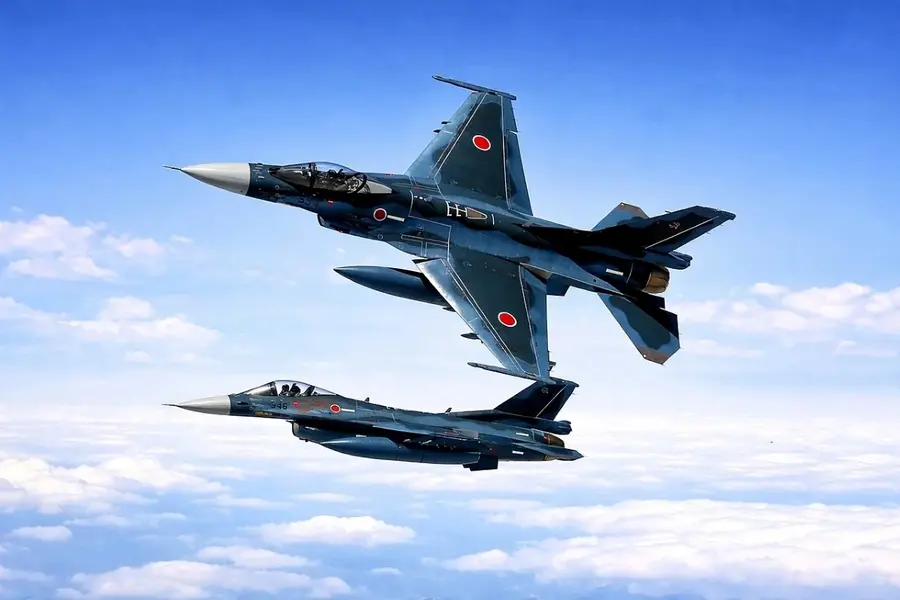
For the first time, Japanese fighter aircraft have arrived in India to take part in a joint military exercise, bringing a new dimension to the growing defence relationship between India and Japan.
Three F-2A fighter jets of the Japan Air Self-Defense Force (JASDF), along with around 110 Japanese personnel, have been deployed to Air Force Station Jodhpur in Rajasthan for Exercise Veer Guardian 26. The bilateral air exercise is being conducted from September 9 to 21 in Jodhpur and the surrounding airspace.
The exercise is the second edition of Veer Guardian, following the first exercise held in Japan in January 2023. That exercise saw Indian Air Force Su-30MKI fighters travel to Japan for the first time for the bilateral fighter training. This time, the direction has been reversed, with Japanese fighters operating from an Indian air base for the first time.
Why the Japanese Fighter deployment matters
The arrival of the F-2As is significant because Japanese fighter aircraft have traditionally operated mainly from bases within Japan. Sending a fighter unit to India involves much more than simply flying the aircraft from one country to another.
The deployment requires pilots, ground crews, technical personnel, spare equipment, maintenance support, communications and other logistics to operate effectively far from their home base.
For Japan, therefore, the exercise provides valuable experience in moving and operating a fighter unit overseas. The Japanese Ministry of Defence has described Veer Guardian 26 as part of efforts to deepen defence cooperation with India and further develop bilateral exercises. Japan and India have also agreed to make future exercises more complex, introduce unmanned systems and explore exercises that can be organised at shorter notice.
What is the F-2A?
The Japanese F-2A is a fighter aircraft developed by Japan in cooperation with the United States. It is based on the design of the American F-16, but was extensively modified for Japanese requirements.
The aircraft has a larger wing than the F-16 and incorporates Japanese-developed avionics and radar technology. It was designed with a particular emphasis on operations over the sea, making it an interesting aircraft for Indian pilots to train against.
The F-2 is also operated exclusively by Japan, which means Indian pilots get an opportunity to train against an aircraft type they would not normally encounter during routine exercises with other foreign air forces.
Tejas, Rafale and Su-30MKI join the exercise
The Japanese F-2As are training alongside a varied group of Indian fighter aircraft, including the indigenous HAL Tejas, the French-origin Rafale and the Russian-origin Su-30MKI. This gives the exercise an unusual mix of aircraft, technologies and operating philosophies.
The focus, however, is not on comparing one aircraft with another. Veer Guardian 26 is primarily designed to improve the tactical skills of both air forces and strengthen their ability to operate together.
Training includes air-combat manoeuvres, mission planning, communication and coordinated execution. Such exercises allow pilots and ground personnel to understand how another air force plans and conducts operations while learning to work together in a realistic training environment.
A long journey from Japan to India
Getting the Japanese fighters to India was itself an important part of the deployment. The Japanese contingent began moving towards India in early September. Ground personnel and equipment travelled separately, while the F-2 fighters followed a route that included Okinawa and Thailand before continuing towards India. The Japanese aircraft also received aerial-refuelling support during the journey.
The F-2s also made their first landing in Thailand during the deployment, adding another milestone to the overseas mission.
For a fighter force that is primarily accustomed to operating from Japanese territory, such deployments provide practical experience in long-distance operations, coordination with partner countries and sustaining aircraft away from home.
A step beyond the 2023 exercise
Veer Guardian 26 builds directly on the experience of Veer Guardian 23. In the first exercise, held in Japan in January 2023, the Indian Air Force deployed four Su-30MKI fighters, supported by C-17 transport aircraft and an IL-78 aerial refuelling tanker. The Japanese side participated with F-2 and F-15 fighters.
The latest exercise changes the operating environment. Instead of Japanese and Indian aircraft training over Japanese territory, Japanese fighters are now operating from an Indian base and flying alongside Indian aircraft over Rajasthan.
This gives both sides a different set of operational experiences, including the challenges of working from an unfamiliar air base and adapting to different operating conditions.
Building trust through training
Military exercises are not only about flying aircraft together. They also give personnel from two countries an opportunity to understand each other's procedures, communication methods and operational practices.
For India and Japan, that interaction has been expanding across all three military services. The two countries already conduct the Dharma Guardian exercise between their armies and the Japan-India Maritime Exercise (JAIMEX) between their navies. The two governments have highlighted the expansion and increasing complexity of these exercises as part of their broader defence cooperation.
The first deployment of Japanese fighter aircraft to India adds an important air-force component to that relationship. For the Indian Air Force, the exercise provides an opportunity to train against the F-2 and gain a better understanding of Japanese operational procedures and tactics.
India regularly participates in multinational and bilateral air exercises, and the ability to train with different aircraft types helps pilots and support personnel experience a wider range of operational approaches.
The presence of the F-2 alongside Tejas, Rafale and Su-30MKI also brings together aircraft representing different generations, technologies and design philosophies in one training environment.
More complex exercises
The significance of Veer Guardian 26 extends beyond the two-week exercise itself. India and Japan have indicated that future military exercises could become more complex, include unmanned systems and be organised with shorter lead times.
For Japan, the deployment demonstrates its growing ability to move fighter aircraft beyond its home territory and operate with an international partner. For India, it provides another opportunity to work with a technologically advanced partner and expose its personnel to a different fighter and operational system.
The sight of Japanese F-2As operating from an Indian air base is therefore more than a first-time deployment. It reflects the steady expansion of practical defence cooperation between New Delhi and Tokyo and shows how military ties between the two countries are increasingly moving from dialogue to hands-on operational cooperation.
Published: 16 Sept 2026, 05:38 pm IST
ABOUT THE AUTHOR

Related Topics
Disclaimer: Kindly avoid objectionable, derogatory, unlawful and lewd comments, while responding to reports. Such comments are punishable under cyber laws. Please keep away from personal attacks. The opinions expressed here are the personal opinions of readers and not that of Mathrubhumi.