
The Satya Niketan collapse has therefore brought renewed attention to the conditions in which thousands of students and young workers live in India's cities.
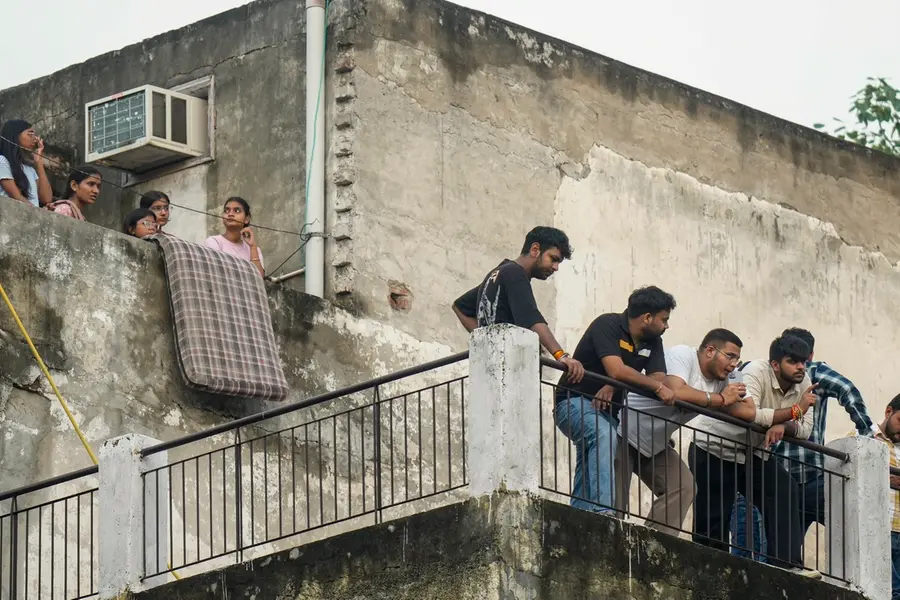
The death toll in the collapse of a multi-storey student hostel in South Delhi’s Satya Niketan has risen to six, after another body was recovered during late-night rescue operations.
The building collapsed on Sunday while renovation work was under way on the ground floor. Search and rescue teams continued clearing the heavy debris and looking for anyone who could still be trapped under the rubble.
The tragedy has also renewed scrutiny of the safety of paying guest (PG) accommodations and private hostels across major Indian cities, where large numbers of students and young working professionals live.
Reports and civic audits from different states have repeatedly pointed to structural neglect, poor hygiene and weak administrative oversight at such facilities.
Buildings packed beyond safe limits
The Delhi collapse has highlighted concerns that extend beyond one building. In several cities, private accommodations operate without basic safety clearances or adequate emergency arrangements.
In Kolkata, many guesthouses in commercial areas operate from heritage-era buildings with narrow exits, wooden partitions and cramped layouts. Operators have said the design of some old structures makes it difficult to install emergency exits or widen staircases.
In Chandigarh, landlords have been accused of bypassing building regulations by dividing rooms into small, poorly ventilated cubicles to accommodate more tenants.
Safety audits in Hyderabad have also found shortcomings in women's hostels, with many facilities reportedly lacking basic emergency equipment, including fire extinguishers and evacuation plans. This is despite tenants paying substantial rents.
Hygiene concerns add to risks
For residents, however, the dangers are not limited to the condition of buildings. Food and sanitation have also emerged as recurring concerns.
Food safety inspections in Bengaluru recently found highly unhygienic kitchens at private accommodation facilities, including cases involving stale food and expired ingredients. At one facility, inspectors reportedly found toxic bed bug repellent placed on a dining table alongside food.
Similar concerns have been reported in Kochi, where students have suffered severe food poisoning after allegedly being served unhygienic meals. Reports have also highlighted rodent infestations in some kitchens.
Regular inspections remain difficult in some areas because food safety departments face shortages of inspectors. This can leave private operators with limited oversight despite repeated complaints and health-related incidents.
High rents, curfews and discrimination
The problems are particularly difficult for students and young migrants who have few affordable alternatives.
A shortage of seats in government and NGO-run hostels has pushed many towards private accommodation, where rents can be high despite limited facilities. In expensive housing markets such as Mumbai, tenants may pay substantial amounts to share small rooms with several others. Common washrooms can also be poorly maintained and affected by pest infestations.
Residents may additionally face high security deposits and arbitrary brokerage charges. Women often report another layer of restrictions, including curfews, visitor bans, controls on food and intrusive monitoring of their personal lives.
For students from marginalised communities, access to accommodation can be even more difficult. Dalit and Adivasi collectives in some areas have protested against alleged discriminatory treatment by welfare hostel officials as well as shortages of state-run facilities.
In some places, private accommodation can cost up to Rs 7,000 a month, while the stay grant available to marginalised students is only Rs 1,500. The financial gap can make continuing education difficult for some students.
Transgender and non-binary students face additional barriers. Reports by organisations including the International Commission of Jurists have highlighted how strict male-female segregation in hostels can exclude those who do not fit binary categories.
Private landlords have also been reported to reject transgender applicants, use discriminatory language, demand higher rents or refuse to provide formal lease agreements, leaving tenants with limited protection.
Authorities struggle to regulate PGs
The rapid expansion of private hostels and PG facilities has outpaced regulation in several cities.
In some areas, there are no uniform standards covering room sizes, occupancy limits or mandatory safety audits. Even where guidelines exist, enforcement remains a challenge.
Bengaluru has introduced standard operating guidelines for private accommodation facilities amid growing demand. However, implementation remains uneven.
In Pune, police have launched drives against property owners who failed to submit mandatory tenant verification details and registered cases in some instances.
Ahmedabad municipal authorities have also issued notices to unauthorised hostels operating in residential societies without the required local approvals, with officials warning that some facilities could be sealed.
The Satya Niketan collapse has therefore brought renewed attention to the conditions in which thousands of students and young workers live in India's cities, where high demand for affordable accommodation often meets limited regulation and enforcement.
Published: 07 Sept 2026, 08:41 am IST
Disclaimer: Kindly avoid objectionable, derogatory, unlawful and lewd comments, while responding to reports. Such comments are punishable under cyber laws. Please keep away from personal attacks. The opinions expressed here are the personal opinions of readers and not that of Mathrubhumi.
