
Birsa Munda Jayanti 2026 marks the 151st birth anniversary of the tribal revolutionary. Discover eight lesser-known facts about his life, religious beliefs, Ulgulan rebellion and fight for tribal rights.
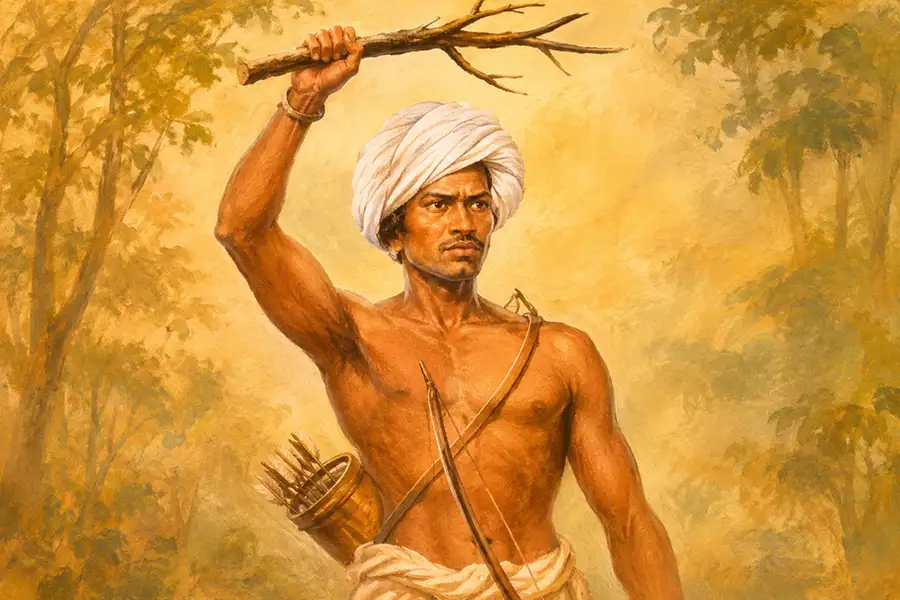
At just 25, he had become a name that sent ripples through the British administration in colonial India.
He mobilised thousands, challenged an exploitative land system and emerged as a powerful voice of tribal resistance.
More than a century after his death, Birsa Munda remains one of the most influential figures in India's freedom struggle.
Born on November 15, 1875, in Ulihatu village in present-day Jharkhand, Birsa Munda was a tribal freedom fighter, religious reformer and social leader belonging to the Munda community.
Revered as 'Dharti Aba', meaning Father of the Earth, he led the Ulgulan, popularly known as the Great Tumult, against British colonial oppression and the exploitation of tribal communities.
His birth anniversary is observed as Janjatiya Gaurav Divas, or Tribal Pride Day, to recognise the contributions of tribal communities and their freedom fighters to India's history.
As India commemorates Birsa Munda's 151st birth anniversary in 2026, here are eight lesser-known facts about the revolutionary whose legacy continues to inspire generations.
1. His childhood was marked by frequent movements
Birsa Munda was born into a financially disadvantaged family. His father, Sugna Munda, and mother, Karmi Hatu, belonged to a humble tribal household. During his childhood, the family moved between villages in search of livelihood and better opportunities. These early experiences exposed him to the economic difficulties faced by tribal communities, particularly those dependent on agriculture and traditional landholding systems.
2. He briefly attended a Christian missionary school
Birsa received his early education in a missionary school and later studied at a German Lutheran missionary institution in Chaibasa. His exposure to missionary education introduced him to Christianity and different religious ideas. He was also reportedly known by the Christian name Daud, or David, during this phase of his life. However, his association with missionary institutions did not last. His disagreements with missionary authorities, particularly over their criticism of tribal leaders and customs, reportedly contributed to his departure.
3. He emerged as a religious reformer and founded the Birsait faith
Birsa Munda's contribution was not limited to political resistance. He also emerged as a religious reformer who encouraged tribal communities to preserve their traditional beliefs, customs and cultural identity. His teachings eventually developed into a religious movement known as Birsait, whose followers came to be known as Birsaites. He urged people to abandon social practices he considered harmful and encouraged them to maintain discipline, unity and a strong connection with their cultural roots.
4. He was believed to possess healing abilities
Before becoming a prominent revolutionary, Birsa Munda developed a reputation as a healer and spiritual leader. His followers believed that he possessed extraordinary healing abilities and sought his blessings for relief from illnesses and other difficulties. His commitment to helping the sick was also recorded in accounts of his life. His influence grew as people began associating his teachings with both spiritual guidance and social reform.
5. His first major arrest came in 1895
Birsa Munda's growing influence soon attracted the attention of the British administration. In August 1895, colonial authorities arrested him following his mobilisation of tribal communities and his activities against the existing establishment. He was convicted and sentenced to two years of rigorous imprisonment. His release did not end his resistance. Instead, he returned to organise his followers and strengthen the movement against colonial oppression.
6. Ulgulan was about land rights, not merely rebellion
One of the most significant aspects of Birsa Munda's movement was its focus on the traditional land rights of tribal communities. The Ulgulan uprising, which intensified during 1899-1900, challenged the exploitation of Adivasis by British authorities, landlords, moneylenders and other outsiders, often referred to as 'Dikus'. Birsa wanted tribal communities to regain control over their ancestral lands and traditional systems of governance. The movement was therefore not simply an armed confrontation with the British. It was also a struggle for dignity, cultural identity, economic independence and self-rule.
7. Women played an important role in his movement
Birsa Munda's resistance movement was not restricted to men. Women also participated in the mobilisation against colonial oppression. Historical accounts documented in the Government of India's publication on freedom fighters identify Sali, a woman who was closely associated with Birsa, as an important figure in mobilising tribal women. Thousands of men and women participated in the uprising, demonstrating the movement's influence across tribal communities.
8. He died in British custody at just 25
Birsa Munda was arrested by British police in March 1900 and lodged in Ranchi jail. He died in custody on June 9, 1900, at the age of just 25. Colonial records attributed his death to illness, including cholera-related complications.
His death, however, did not end the significance of the movement he had led. His resistance became an important part of the history of tribal struggles against colonial exploitation.
His legacy also forms an important historical backdrop to subsequent efforts to protect tribal land rights, including the Chotanagpur Tenancy Act of 1908.
More than 125 years after his death, Birsa Munda's story remains a reminder that India's freedom struggle was shaped not only by prominent national leaders but also by tribal revolutionaries who fought for their land, identity and right to self-determination.
Published: 15 Nov 2026, 12:22 pm IST


ABOUT THE AUTHOR

Related Topics
Disclaimer: Kindly avoid objectionable, derogatory, unlawful and lewd comments, while responding to reports. Such comments are punishable under cyber laws. Please keep away from personal attacks. The opinions expressed here are the personal opinions of readers and not that of Mathrubhumi.