
Shah said earlier that problems used to be permanent and solutions temporary, whereas the Bharatiya Janata Party-led government is striking at the roots of problems and making solutions permanent.
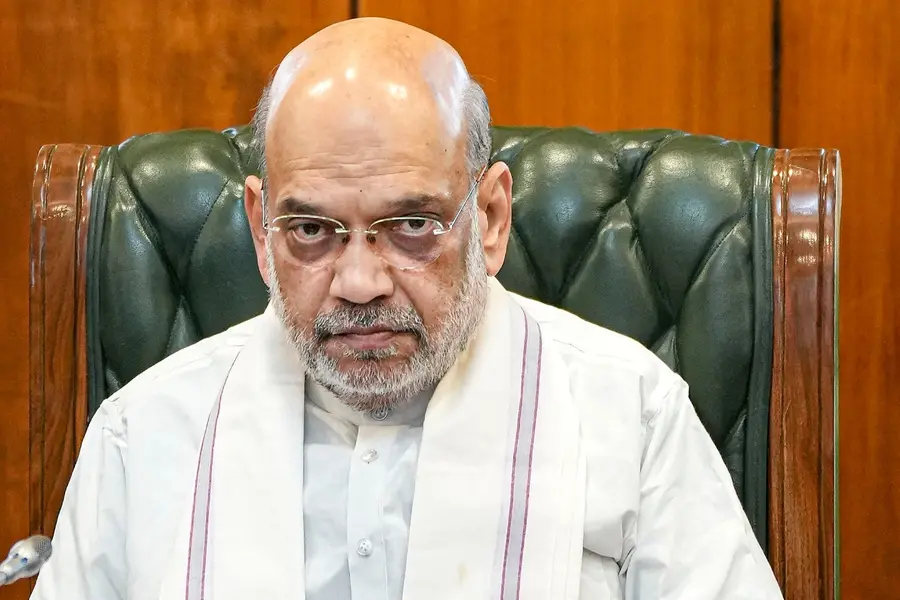
New Delhi: Union Home Minister Amit Shah on Thursday said the Centre is committed to curbing unnatural demographic growth caused by abnormal factors, such as infiltration, with a ruthless approach, and a quadrangular security grid has been created for the purpose, transforming India's approach from reactive to proactive.
Addressing the first Land Border Districts' Superintendents of Police Conference-2026, which was attended by officials from 119 border districts, Shah said in the coming times, the Centre will move forward holistically towards ensuring coastal-border security.
Union Ministers of State for Home Affairs Nityanand Rai and Bandi Sanjay Kumar, Union Home Secretary Govind Mohan, Director of the Intelligence Bureau (IB) Mahesh Dixit, the directors general of police of the border states and several other senior officials were present on the occasion.
"We are creating a robust system to make the country completely infiltration-free and ensure that infiltration does not happen at all.... The Modi government has strengthened border infrastructure by 400 per cent and is taking it forward with a scientific approach," the home minister said.
He said in order to achieve the objective, the Centre has built a strong quadrangular security grid by bringing together the border-guarding forces concerned, state and district administrations, relevant stakeholders of the Union government and local people.
Shah said Prime Minister Narendra Modi has launched the Demography Mission to study demographic changes, identify abnormal factors contributing to demographic growth and recommend measures to prevent such changes in the future.
"The Modi government is committed to curbing unnatural demographic growth caused by abnormal factors with a ruthless approach.... The primary cause of demographic changes in border areas is infiltration and to make border security impenetrable, the government has created a quadrangular security grid, transforming India's approach from reactive to proactive," he added.
Shah said earlier, problems used to be permanent and solutions temporary, whereas the Bharatiya Janata Party-led government is striking at the roots of problems and making solutions permanent.
He said under Modi's leadership, the country has been freed from Naxalism and Jammu and Kashmir and the northeast have seen the last of terrorism, "which is a sign of our collective success".
"In the next three years, we will inflict serious damage on the narcotics menace and achieve victory over it," he said.
Shah said the government is moving from an isolated-border-outpost system towards the creation of an integrated security grid.
He emphasised the importance of ensuring that information on demographic changes caused by abnormal factors in border areas is communicated from the grassroots to the highest level at the earliest.
"Our objectives are to prevent proxy wars, illegal infiltration, radicalisation, narcotics trafficking, smuggling, drone-related threats, cybercrime, organised crime and demographic changes, make border areas more livable, prevent migration from these regions and ensure their security," he said.
After keenly observing the presentations and interventions from the attending officers, the home minister said the conference has institutionalised the comprehensive approach to border security.
He said the conference will involve discussions on problems related to border security, addressing concerns for their resolution and formulating appropriate policy measures in this direction.
The government is fencing the 1,610-km-long India-Myanmar border at a cost of Rs 31,000 crore, he said.
Shah said India's border-security system, based on the vision of a Smart Border, will become the most modern one in the world in the coming years.
"A secure border, a prosperous border region and a vigilant society together can make the country secure," he said.
Under the Vibrant Villages programme, Modi has described the country's last village as its first one, the home minister pointed out, adding that under the initiative, efforts are being made to prevent migration, create jobs and ensure 100 per cent implementation of the government's welfare schemes. PTI
Published: 09 Jul 2026, 11:24 pm IST
Related Topics
Disclaimer: Kindly avoid objectionable, derogatory, unlawful and lewd comments, while responding to reports. Such comments are punishable under cyber laws. Please keep away from personal attacks. The opinions expressed here are the personal opinions of readers and not that of Mathrubhumi.
