
Katwa’s Singi village celebrates 113 years of the Bhattacharya family’s Durga Puja, where traditional rituals and a shared village spirit keep an old legacy alive.
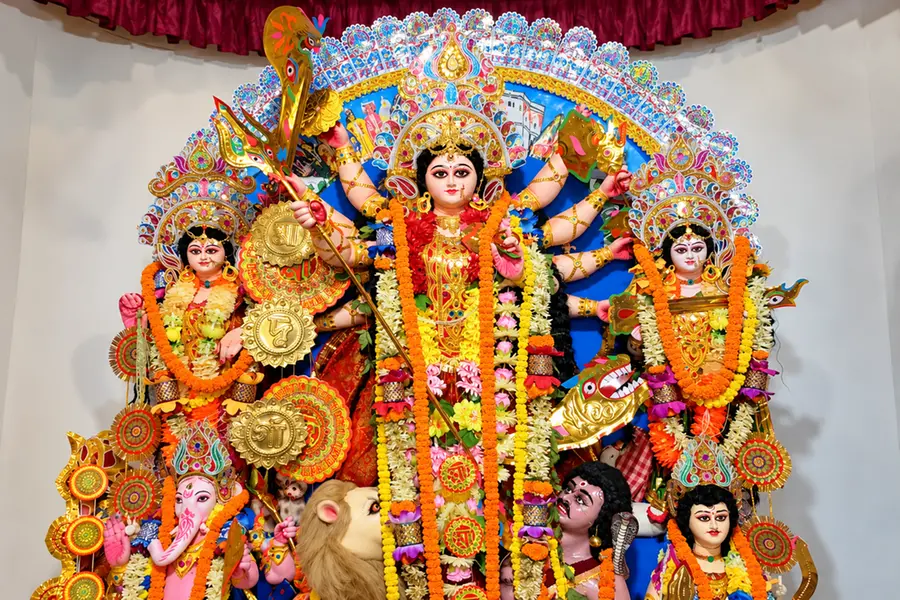
Katwa: Long before the first rays of sunlight touch Singi village in West Bengal’s Purba Bardhaman district, dhak drums fill the air. The fragrance of incense drifts through the narrow lanes, homes stir to life, and devotees prepare for another morning of age-old rituals.
Here, Durga Puja is more than an annual festival. It is a tradition that connects generations, brings neighbours together and keeps the memories of the past alive.
At the heart of this festive atmosphere is the Bhattacharya family’s Durga Puja, celebrated for 113 years.
Located in Singi village under Katwa II block, the family’s puja remains one of the village’s prominent celebrations, drawing attention for its distinctive rituals and enduring customs.
Singi holds a special place in the region's cultural memory. Many believe the village is associated with Mahakavi Kashiram Das, the poet credited with composing the Bengali Mahabharata.
And during Durga Puja, the village offers another glimpse into Bengal’s rich heritage, where faith and family traditions continue to shape everyday life.
A village comes together for Nabapatrika Snan
The celebrations begin on Shukla Saptami with Nabapatrika Snan, the ceremonial bathing of the Nabapatrika, a group of nine plants associated with the worship of Goddess Durga.
One of the ritual's most heartwarming aspects in Singi is the sense of togetherness it brings.
Although several families organise their own Durga Pujas, the Nabapatrikas associated with many of the village’s household celebrations are taken together to a local pond for the ritual bath.
Villagers gather by the water, carrying the sacred plants and following familiar customs. The Nabapatrikas bathe in succession, then return home where they are installed beside Lord Ganesha.
For a moment, the individual courtyards and family shrines of Singi seem connected by a single thread of devotion.
Each household may have its own rituals, but the morning ceremony becomes a shared celebration that reflects the close-knit spirit of village life.
Three days of sacrifice and an enduring family legacy
The Bhattacharya family’s Durga Puja is also known for its traditional goat sacrifice, a ritual that has continued since the celebration began more than a century ago.
An elderly family member said that the puja began after his grandfather’s elder brother built a house in the village.
At the request of some local residents, the family started organising the annual celebration, and the tradition has continued ever since.
Animal sacrifice remains an integral part of the family’s observances on Saptami, Ashtami, and Navami.
On Saptami, the family traditionally sacrifices two goats, one at Durga Puja and the other at the nearby Manasa temple. The practice continues on the following two days as well.
Beside the Bhattacharya family home stands the Manasa temple, another important site of worship during the festivities.
Together, the two places of worship reflect how religious customs and family histories have intertwined over generations.
The Sandhi Puja, performed at the transition between Ashtami and Navami, is another major attraction. Villagers gather in large numbers to witness the sacred observance, adding to the festive energy that sweeps through Singi.
A celebration that belongs to the village
For the generations who have carried the tradition forward, the puja's significance extends beyond its age.
The 113-year milestone reminds us how a family's decision to begin a religious celebration gradually became part of a village's shared cultural life. What began at the request of a few residents has endured through changing times, preserving rituals that still bring people together every autumn.
In Singi, the spirit of Durga Puja lives not only in the decorated shrines or the sound of the dhak, but also in the familiar faces gathering by the pond, the observances passed down within families and the collective anticipation surrounding each ritual.
As another festive season unfolds, the Bhattacharya family's century-old celebration stands as a testament to tradition's enduring power.
It is to be noted that 113 years on, the rituals remain rooted in the past, while the village continues to find in them a reason to gather, remember and celebrate together.
Published: 19 Oct 2026, 05:34 pm IST
ABOUT THE AUTHOR

Related Topics
Disclaimer: Kindly avoid objectionable, derogatory, unlawful and lewd comments, while responding to reports. Such comments are punishable under cyber laws. Please keep away from personal attacks. The opinions expressed here are the personal opinions of readers and not that of Mathrubhumi.