
A former NCB officer has recounted an emotional interaction with a Bollywood superstar's son during the re-examination of the 2021 Cordelia cruise drug bust case. His upcoming book, Code of Honour, also highlights alleged procedural lapses in the original investigation.
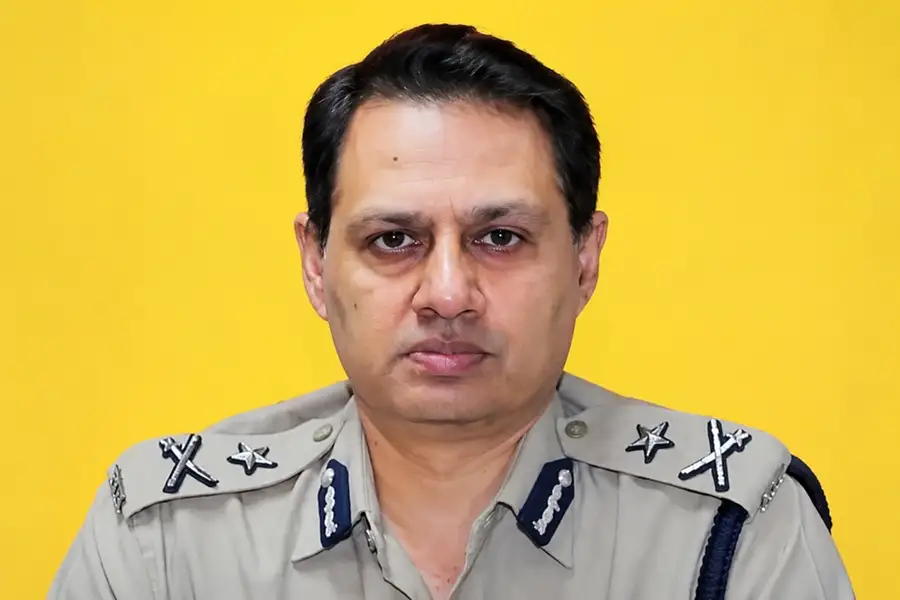
A question over fairness, an emotional breakdown and lingering concerns about investigative procedures have brought the 2021 Cordelia cruise drug bust back into focus.
A former Narcotics Control Bureau (NCB) officer has now recounted a conversation with the son of a Bollywood superstar, who reportedly broke down several times while describing his arrest and questioning the allegations made against him.
In his book Code of Honour, Sanjay Kumar Singh, former NCB deputy director general and head of the Special Investigation Team (SIT) that re-examined the case, recalls an interaction in which the individual expressed anguish over being portrayed as an international drug trafficker and drug financier.
‘Sir, aapne to mujhe international trafficker bana diya, aapne mujhe drug financier bana diya, kya yeh theek hai jee? Mere paas se to drug bhi nahi mila tha NCB ko,’ the individual reportedly told Singh.
In English, he questioned why he had been portrayed as an international trafficker and drug financier when, according to him, the NCB had not recovered any drugs from his possession.
Singh does not disclose the individual's identity in his account, referring to him only as the "son of the celebrity".
‘While narrating the entire episode, the son of the celebrity broke down several times. His emotions were raw, and it was clear that the pressure he had been under, both during the investigation and the media storm that followed, had taken a heavy toll on him,’ Singh writes.
The book, scheduled for release on Saturday, revisits the investigation into the October 2021 cruise ship raid and the questions that emerged during the subsequent SIT examination.
Singh does not disclose the individual's identity in his book, referring to him only as the ‘son of the celebrity’.
The description, however, appears to point towards the son of actor Shah Rukh Khan, who was arrested in connection with the case in October 2021.
Former NCB officer flags procedural gaps in cruise raid
Singh's account also sheds light on the concerns he encountered while reviewing the original investigation, which was led by former Mumbai zonal director Sameer Wankhede.
During his visit to the cruise ship and subsequent conversations with officers involved in the operation, Singh found himself dissatisfied with the documentation surrounding the raid.
He questioned whether the seizure operation had been videographed or photographed and sought details about the informer whose tip-off had prompted the NCB action.
‘The lack of thorough documentation and procedural clarity raised red flags for me,’ Singh writes.
He also questioned the decision to include the informer as a formal witness.
According to Singh, informers are generally not made witnesses because doing so could expose their identities and create potential conflicts of interest.
The SIT's examination subsequently brought to light inconsistencies and contradictory claims in the statements recorded from witnesses and accused persons.
Singh also discusses the digital evidence collected during the investigation.
According to his account, WhatsApp conversations recovered from the individual's phone referred to drug consumption during overseas trips rather than establishing trafficking or possession.
He further raises questions about the procedure followed while handling the phone and points to the absence of a medical examination to establish drug consumption.
SIT concluded there was insufficient evidence to prosecute
The SIT's findings eventually led to the conclusion that there was insufficient material or technical evidence to prosecute the individual and five others, Singh writes.
Following the re-examination, the NCB dropped charges against six people and filed a chargesheet against 14 accused in May 2022. The SIT also flagged gaps in evidence collection and procedural lapses in the original investigation.
Singh maintains that his team was not under pressure to pursue the investigation in any particular direction.
Beyond the cruise drug bust, Code of Honour also revisits Singh's tenure in the Central Bureau of Investigation (CBI), where he served between 2008 and 2015.
He writes about the controversy surrounding then CBI director Ranjit Sinha, who faced allegations of meeting individuals facing corruption charges at his official residence.
Singh recalls being asked to prepare the agency's defence in the matter but says he declined, believing that defending Sinha would compromise the principles of transparency, fairness and accountability. He was subsequently transferred to Guwahati.
Through these accounts, Singh revisits some of the difficult professional decisions and investigative controversies he encountered during his career.
Published: 28 Nov 2026, 12:39 pm IST


ABOUT THE AUTHOR

Related Topics
Disclaimer: Kindly avoid objectionable, derogatory, unlawful and lewd comments, while responding to reports. Such comments are punishable under cyber laws. Please keep away from personal attacks. The opinions expressed here are the personal opinions of readers and not that of Mathrubhumi.