
Nitesh Tiwari believes Homer may have drawn inspiration from the Ramayana while writing The Odyssey
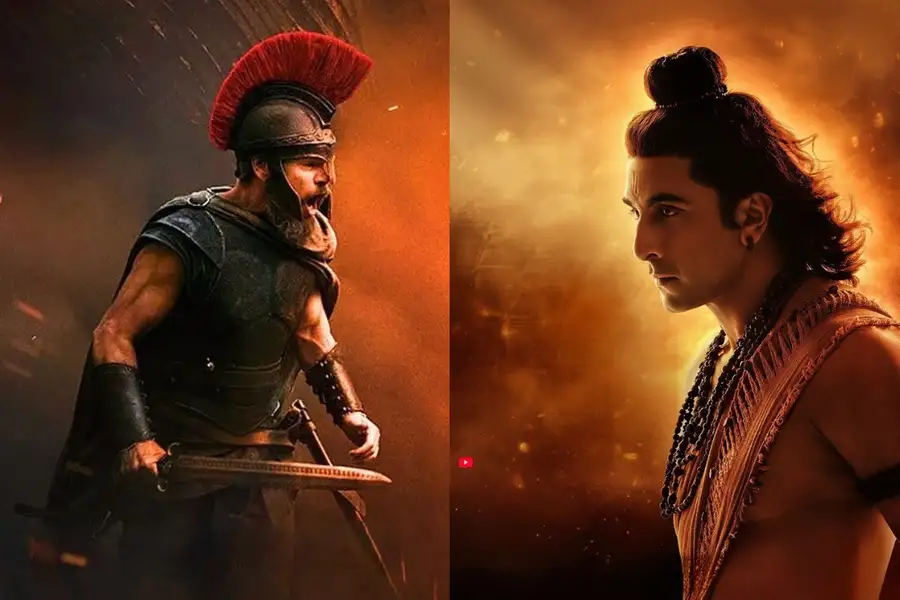
Could Homer's The Odyssey have drawn inspiration from the ancient Indian epic Ramayana? The question has found fresh relevance following comments by director Nitesh Tiwari and actor Ranbir Kapoor, who recently spoke about the parallels between the two celebrated works.
The discussion gained momentum after Tiwari, who directed ‘Ramayana: Part 1’, shared his thoughts on the similarities in an interview. He suggested that Homer may have taken inspiration from the Indian epic while writing The Odyssey, describing the connections as a tribute to one of the world's greatest stories.
"Ramayana is the oldest epic, and I believe Homer was inspired by Ramayana in some way, having written those bits in Odyssey," Tiwari said. He added that recognising these similarities could help Western audiences connect with the story the filmmakers are bringing to the screen.
Ranbir Kapoor, who plays Rama in the film, also pointed to one particular parallel that caught his attention: the challenge involving a powerful bow.
The bow challenge: A test only the hero can pass
One of the most noticeable similarities between the two epics lies in a challenge involving a bow, where a seemingly impossible task separates the hero from everyone else.
In The Odyssey, Penelope announces a competition for her suitors. The task is to string the mighty bow of her husband, Odysseus. Several men attempt it, but none can succeed. Odysseus, who has returned to Ithaca in disguise after years away, eventually takes up the challenge and proves that he alone possesses the strength and skill required.
A comparable moment appears in the Ramayana during Sita's swayamvar. The challenge involves Lord Shiva's enormous celestial bow, which the assembled kings and princes struggle even to lift. Rama, however, manages to raise it. As he attempts to string the bow, it breaks into two, demonstrating his extraordinary strength and winning him Sita's hand in marriage.
For Ranbir Kapoor, the resemblance was particularly striking. He said that when he encountered the scene in The Odyssey, his immediate reaction was that it reminded him of the Ramayana. Nevertheless, he called it a coincidence and spoke warmly about his love for the Greek epic.
Two heroes, two long journeys away from home
The similarities extend beyond a single scene. Both stories follow central characters who are separated from their homes and must endure long, difficult journeys before they can return.
In Homer's epic, Odysseus spends a decade fighting in the Trojan War. His troubles do not end with the fall of Troy. The journey back to Ithaca stretches over another 10 years, with the Greek king encountering dangerous creatures, hostile forces, shipwrecks and several temptations along the way.
The Ramayana follows Rama's life through a different but equally significant period of separation. He leaves Ayodhya for a 14-year exile, accompanied by Sita and his brother Lakshmana. What begins as a journey into the forest eventually leads to Sita's abduction by Ravana, a search that takes the protagonists across vast distances and culminates in a major battle in Lanka.
Both narratives place considerable importance on the journey itself. The heroes are tested through hardship, loss and encounters that challenge their strength, judgement and determination.
Mythical creatures, supernatural encounters and dangerous distractions
Neither epic confines its heroes to an ordinary human world. Their journeys are filled with supernatural beings, extraordinary creatures and situations in which appearances can be misleading.
Odysseus encounters the Cyclops, the deadly sea monsters Scylla and Charybdis, and the enchanting Sirens. He also crosses paths with Circe, a sorceress who uses her powers to transform his men. Each encounter presents a different threat, forcing him to rely on his intelligence as much as his physical courage.
Rama's journey also brings him face to face with powerful supernatural forces. His conflict with Ravana and the latter's formidable army forms the central battle of the epic. The golden deer episode is another important example of deception and distraction. The magical creature catches Sita's attention and draws Rama away from their dwelling, setting in motion the events that eventually lead to her abduction.
The Sirens' enchanting songs in The Odyssey similarly lure sailors towards danger. Although the incidents are different in their details, both stories use supernatural attractions and illusions to place their heroes in difficult situations.
The wives who wait while their husbands are away
The women at the heart of these epics also share an important narrative connection. Both Sita and Penelope are separated from their husbands, with their respective stories shaped by the uncertainty surrounding their partners' return.
In the Ramayana, Sita is abducted by Ravana and taken to Lanka, where she refuses to give in to his demands. She remains devoted to Rama despite the difficult circumstances of her captivity, holding on to the belief that he will find and rescue her.
In The Odyssey, Penelope remains in Ithaca while Odysseus is away. His prolonged absence attracts several suitors who want to marry her and claim a place of power in the kingdom. She repeatedly finds ways to delay their advances, refusing to accept that her husband will never return.
While their circumstances are not identical, both women represent loyalty and patience in the face of prolonged separation. Their determination also becomes central to the eventual reunion with their husbands.
Gods who influence the fate of heroes
Divine intervention is another important feature shared by the two stories. The protagonists do not navigate their challenges entirely on their own. Gods and supernatural powers influence their journeys, sometimes offering assistance and at other times creating obstacles.
In The Odyssey, Athena, the goddess of wisdom and warfare, is one of Odysseus' strongest supporters. She guides and protects him through several challenges. Poseidon, however, becomes a formidable opponent after Odysseus angers him, making the journey home even more difficult.
The Ramayana also unfolds within a larger divine framework. Lord Shiva's celestial bow plays a crucial role in Rama and Sita's marriage, while Lord Brahma and other divine figures are connected to the larger purpose of Rama's journey and his battle against Ravana.
These divine forces add another layer to the journeys, placing the struggles of the central characters within a much larger cosmic order.
‘Ramayana: Part 1’
Produced by Namit Malhotra, ‘Ramayana: Part 1’ was released in theatres on November 5, 2026. Directed by Nitesh Tiwari, the film stars Ranbir Kapoor, Ravie Dubey,Sunny Deol, Yash and Sai Pallavi.
Published: 08 Nov 2026, 02:33 pm IST


ABOUT THE AUTHOR

Related Topics
Disclaimer: Kindly avoid objectionable, derogatory, unlawful and lewd comments, while responding to reports. Such comments are punishable under cyber laws. Please keep away from personal attacks. The opinions expressed here are the personal opinions of readers and not that of Mathrubhumi.