
Ramayana: Part 1 brings Valmiki’s epic to the big screen with Ranbir Kapoor as Ram, Sai Pallavi as Sita and Yash as Ravana. Here’s our review of Nitesh Tiwari’s film
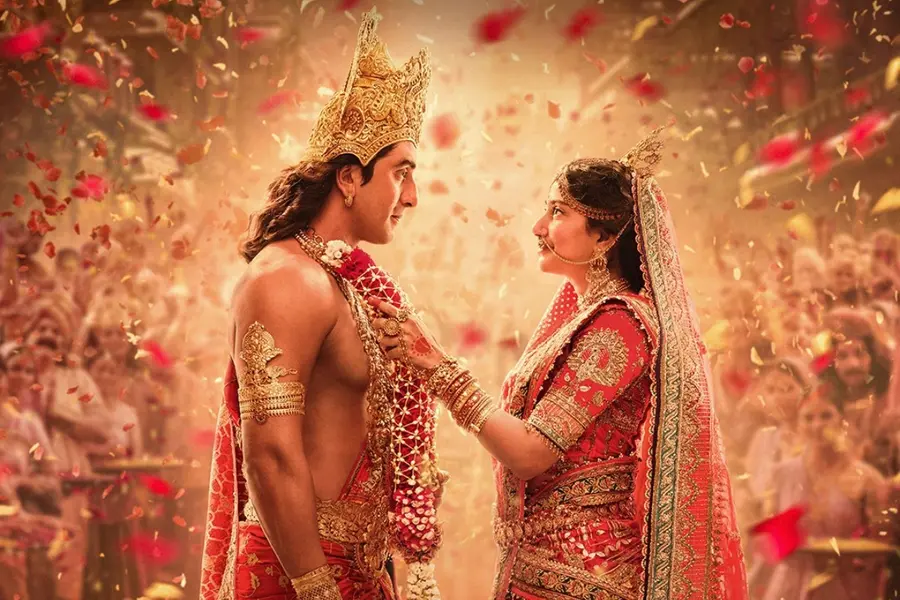
Every time a filmmaker attempts to bring Valmiki’s ‘Ramayana’ to the big screen, expectations are inevitably sky-high. The epic holds a special place in the hearts of Indian audiences, making any cinematic adaptation a subject of immense anticipation and scrutiny. Om Raut’s ‘Adipurush’, however, fell short of those expectations, finding itself at the centre of controversies and criticism over its performances, visual effects and depiction of the characters. So, when Namit Malhotra, chairman of DNEG — the visual effects company behind Academy Award-winning films such as the ‘Dune’ franchise and ‘Tenet’ — announced his ambitious two-part adaptation in November 2024, the excitement was accompanied by one big question: could Indian cinema finally deliver a spectacle worthy of the epic?
Now, as one of Bollywood’s most anticipated and biggest releases of 2026, Nitesh Tiwari’s ‘Ramayana: Part 1’ has arrived in theatres just days ahead of Diwali. Featuring Ranbir Kapoor as Ram, Sai Pallavi as Sita, Ravi Dubey as Laxman, and Yash as Ravana, the film attempts to bring one of India's most revered epics to life on an unprecedented cinematic scale. But does it live up to the enormous expectations surrounding it? More importantly, does it deliver the visual spectacle that Indian audiences have been waiting for? Let’s find out.
The film opens with a war between the gods and the Asuras for control of the world. Just when the Asuras, led by Sumali and his daughter Kaikesi (Ravana’s mother), appear close to victory, they are defeated by the gods, led by Indradev and supported by Lord Vishnu. The defeat also results in the gods reclaiming Lanka from the Asuras.
Among those held captive is a young Dashanand, who is seen playing the sitar. His mother, Kaikesi, approaches him and reminds him of his duty towards the Asura clan, telling him that he is the one capable of defeating the gods and reclaiming their lost kingdom. Determined to fulfil her wish, Dashanand undertakes intense tapasya to seek a vardaan from Lord Brahma. After receiving the boon, he sets out to reclaim Lanka, eventually transforming the kingdom from a city of white into one of gold and establishing himself as its ruler.
The film then moves to the birth of King Dasharatha’s four sons — Ram, Bharat, Lakshman and Shatrughna. It traces the brothers’ growing years before introducing Rishi Vishwamitra, who approaches Dasharatha seeking Ram’s help to protect him from the Asuras Tataka and Subahu, who repeatedly disrupt yagyas of the seers. Reluctant at first to send his young son, Dasharatha eventually agrees, allowing Ram to accompany Vishwamitra and put an end to the threat.
The narrative then moves to Sita’s swayamvar, followed by Kaikeyi’s (Lara Dutta) insistence that Ram be sent into vanvaas. It goes on to depict Lakshman cutting off Surpanakha’s (Rakul Preet Singh) nose after her advances towards Ram are rejected. This eventually sets the stage for Ravana’s abduction of Sita and his encounter with Jatayu (voiced by Anupam Kher), who attempts to rescue her but is fatally wounded in the process. ‘Ramayana: Part 1’ concludes with Jatayu’s death, leaving the story at a crucial turning point.
Two aspects that make ‘Ramayana: Part 1’ stand out are its breathtaking visuals and background score. Given Namit Malhotra’s DNEG has been behind the visual effects of some of Hollywood’s finest films, expectations were naturally high. However, there was also some apprehension, considering the visuals in ‘Brahmastra: Part 1’, another film on which DNEG worked, did not quite meet audience expectations.
With ‘Ramayana: Part 1’, though, Malhotra has raised the bar, delivering a visual spectacle that stands shoulder to shoulder with international cinematic productions. It is arguably among the finest visual experiences Indian cinema has offered.
One particularly striking sequence is when Rishi Vishwamitra introduces Ram to Astra Vidya (the knowledge of celestial weapons). As Ram sits with his hands folded and eyes closed, a shimmering lotus appears around him. The visual effect is mesmerising and makes for a treat to watch. The same attention to detail is evident in the depiction of mystical creatures, Jatayu, the golden Lanka, Ravana’s Pushpak Vimaan, and the lush forests, among others. Everything looks remarkably lifelike, intricate, and visually captivating, making it easy to get immersed in the world unfolding on screen.
The background score is equally impressive. Bringing together two musical maestros, Hans Zimmer and AR Rahman, for their first-ever collaboration was a significant move, and the duo delivers a score that elevates the cinematic experience. The music blends seamlessly with the narrative, adding emotional depth and grandeur to several sequences. The recurring use of the sitar is particularly soothing and lends the film a distinct musical identity. Together, the visuals and the music make ‘Ramayana: Part 1’ an experience that deserves to be witnessed on the big screen.
Coming to the performances, there was considerable anticipation around Yash stepping into the role of Ravana, while questions lingered over whether Ranbir Kapoor could convincingly portray Lord Ram, whether Sai Pallavi and Ranbir would share the required chemistry, and how Ravi Dubey would fare as Lakshman. There was also curiosity around Arun Govil, whom an entire generation has grown up watching as Lord Ram, now playing Ram’s father, King Dasharatha. Lara Dutta, too, had the responsibility of bringing Kaikeyi to life. Interestingly, all these characters work well, both individually and as part of the larger ensemble.
Ranbir brings a certain grace and composure to Lord Ram, and he seems well-suited to the role. His clean-shaven look, gentle features and slightly droopy eyes lend him the calm, almost serene appearance one associates with Ram. His expressions, particularly in the quieter moments, work in his favour, allowing him to convey warmth, compassion and restraint without having to say much. Sai Pallavi is poised, elegant and calm as Sita, bringing a natural grace to the character. Ravi Dubey captures Lakshman’s deep affection for his elder brother, his protectiveness towards Sita, and the occasional humour and impulsiveness that come with being the younger sibling. Each actor brings something to the table, making the characters come together rather seamlessly.
Interestingly, ‘Ramayana: Part 1’ also explores Sita’s warrior side, offering a glimpse of a dimension of her character that has rarely been portrayed in earlier adaptations. In one particular scene, she picks up a sword to defend herself, and the sequence is beautifully executed. It showcases Sita not just as a symbol of grace and resilience but also as a woman capable of standing up for herself and fighting when the situation demands it. This portrayal adds another layer to her character and makes for a refreshing departure from how Sita has traditionally been depicted on screen.
However, if there is one performance that steals the show, it is Yash as Ravana, or Dashanand. He is fantastic! His imposing physique, commanding body language, and remarkable control over his expressions make him a compelling presence on screen. There is an intensity to his performance that makes you want to watch more of him. If I may say so, he makes you fall in love with this Ravana.
One particular sequence that stayed with me long after the end credits rolled is Yash performing the Tandav in front of an enormous statue of Lord Shiva. From Yash’s performance and the choreography to the cinematography, visuals, and music, everything comes together beautifully in this particular scene. It is easily one of the film’s most memorable sequences and a moment where every department works in perfect harmony.
Nitesh Tiwari takes on the challenging task of bringing an epic as vast as the Ramayana to the big screen, keeping the narrative relatively straightforward and easy to follow. The dialogues are not weighed down by overly heavy or Sanskritised Hindi, making them accessible to audiences across age groups. The language is largely simple and understandable, without requiring viewers to constantly interpret elaborate expressions or traditional terminology. While this approach makes the film easier to follow, whether the dialogues have the depth and impact one would expect from an epic of this scale is a different question.
However, where the film falters is its runtime. At 3 hours and 15 minutes, ‘Ramayana: Part 1’ makes for a rather long watch, especially considering that the first instalment only takes the story up to Sita’s abduction (Sita Haran). There are several stretches where the narrative feels unnecessarily prolonged, testing the audience’s patience. While the visual grandeur makes certain sequences worth watching, a tighter edit and some judicious trimming would certainly have helped maintain the film’s pace and made the overall experience more engaging.
Despite its lengthy runtime, ‘Ramayana: Part 1’ does not give several members of its supporting cast enough screen time to make a lasting impression. Lara Dutta and Sheeba Chaddha are both good as Kaikeyi and Manthara, respectively, but their roles feel rather limited. The manipulation of Kaikeyi by Manthara, which eventually leads to Ram’s vanvaas, could have been explored in greater detail. Vivek Oberoi, as Vidhyutjiva, too, appears briefly and disappears without making much of an impact. Rakul Preet Singh has little to do as Surpanakha, and even the crucial sequence in which Lakshman cuts off her nose is over almost as soon as it begins. Characters such as Kaushalya and Bharat are also left with very little to contribute to the narrative. This limited character development might have been understandable had the story been told in a single film. But with the makers choosing to divide the epic into two parts, the 3-hour-plus runtime could have been used more effectively to flesh out these characters and give their arcs greater depth.
Ultimately, ‘Ramayana: Part 1’ is a film that gets several things right, particularly its extraordinary visual effects, immersive background score, and performances by the leading stars, especially Yash’s commanding portrayal of Ravana. It gives Indian cinema a spectacle that can confidently stand alongside big international productions, while bringing a much-loved epic to a new generation of audiences. However, the stretched runtime, uneven pacing, and underdeveloped supporting characters prevent it from being a completely satisfying experience. Despite these shortcomings, the film leaves you curious about what the second part has in store, especially as it ends with Lord Hanuman’s entry, without really showing his face. If nothing else, ‘Ramayana: Part 1’ proves that Indian cinema is capable of dreaming big and delivering on the visual front.
Rating: 3.5 out of 5 stars (half a star for visuals)
Published: 05 Nov 2026, 03:12 pm IST


Disclaimer: Kindly avoid objectionable, derogatory, unlawful and lewd comments, while responding to reports. Such comments are punishable under cyber laws. Please keep away from personal attacks. The opinions expressed here are the personal opinions of readers and not that of Mathrubhumi.
