
The verdict has renewed questions about how allegations and complaints against the comedian went unaddressed for years despite his own public accounts of his behaviour and concerns raised by former colleagues
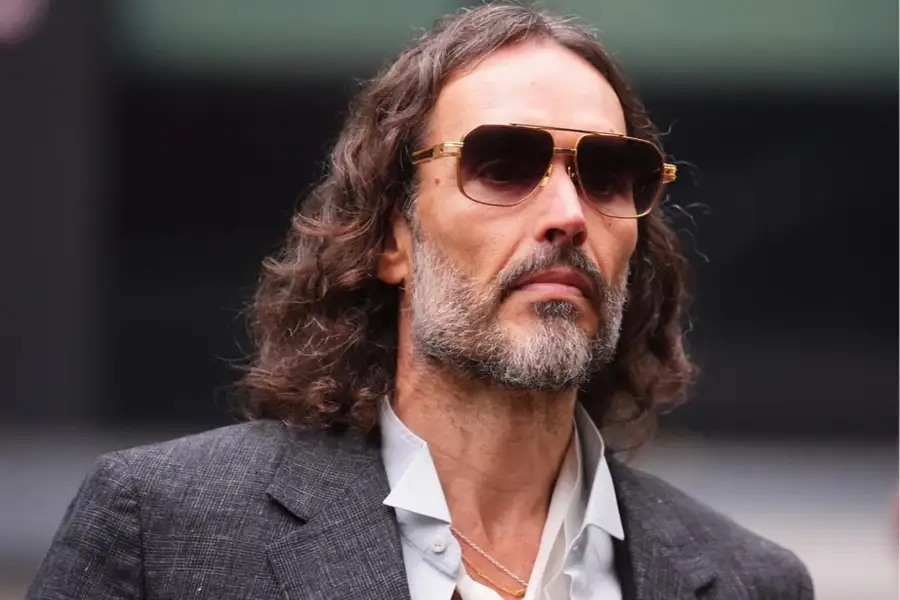
A jury at Southwark Crown Court found Russell Brand guilty on Thursday of one count of rape and three counts of sexual assault. The jury deliberated for more than eight hours over two days.
The 51-year-old was acquitted of two other rape charges and one count of attempted indecent assault. The judge refused bail and told him a custodial sentence of some length would follow. Sentencing is set for Monday 9 November. For many, the lingering question is how a man who made millions joking about his treatment of women stayed free of consequences for so long.
He told us himself
Brand never really hid his behaviour. His 2007 memoir ‘My Booky Wook: A Memoir of Sex, Drugs, and Stand-Up’ described how, as a drama school teenager, he followed a classmate 200 miles to her family home in Wigan, ignored her wishes and used emotional blackmail to get his way. The book also recounted spitting in a lap dancer’s face and smashing a sex worker’s phone. It reached No 1 on the Sunday Times list and won biography of the year at the 2008 British Book Awards.
The tabloids treated the stories as colour. The Sun named him “shagger of the year” three years running. When he spent time in a Philadelphia clinic often used as an alternative to jail for sex offenders, the public heard it as material for his act.
Warnings inside the building
Colleagues saw more than audiences did. Junior staff on Big Brother’s Big Mouth later told Channel 4 Dispatches and the Times that he asked a runner to find audience members for sex, and that he exposed himself to another worker in his dressing room. A 2024 review by the production company found informal complaints had not been properly escalated.
At BBC Radio 2, the pattern continued. He made sexual remarks to a newsreader, joked on air about exposing himself to a woman in a studio toilet, and offered to send his female assistant, naked, to Jimmy Savile. A 2025 review found the BBC mishandled complaints and that staff feared he was untouchable. A former BBC executive described him as a predator broadcasting live.
His 2008 downfall came from “Sachsgate”, when he and Jonathan Ross left crude voicemails for the actor Andrew Sachs about his granddaughter. Ofcom fined the BBC £150,000, and Brand resigned. The scandal was about an insulted celebrity, not the women around him.
The case against him
Everything changed in September 2023, when Dispatches and the Times reported claims from five women of rape, sexual assault and controlling, emotionally abusive behaviour. The Metropolitan Police opened an inquiry two days later. Six complainants gave evidence at trial.
The charges covered three counts of rape, three of sexual assault and one of attempted indecent assault, with alleged offences stretching from 1999 to 2009. The convictions concerned four women. The rape took place in 2009, involving a woman he met after a gig. One sexual assault happened at a London bar in 2004, and another involved a radio station employee in 2004 or 2005. A fourth sexual assault dated to 2009. Brand denied everything, saying the encounters were consensual or misremembered.
A separate matter sat outside the trial. A woman told ‘Dispatches’ that, when she was 16 and he was 30, he forced a sex act on her. Brand has admitted an “exploitative” relationship with a 16-year-old but says it was consensual. The Met is also investigating further rape allegations from two women.
Why it took so long
Fame was the first shield. Brand’s shock value was his selling point, so every complaint risked sounding like an act. Managers, producers and broadcasters had commercial reasons to look away, and junior staff had little power to be heard.
Fashion helped too. When he returned from Hollywood in 2013, he was welcomed as a serious voice, writing for the Guardian and the New Statesman and backing Labour in 2015. Few asked about the memoir. After the #MeToo movement began, television bookers cooled and some comedians called him an offender on stage, but there was still no investigation.
He then reinvented himself. He built a podcast audience on conspiracy theories, which brought viewers and millions in revenue, and said the press was punishing him for getting “too close to the truth”.
He was baptised in the Thames in April 2024 and found friends among America’s religious right. Before charges came, he moved his family to Florida, though he later returned voluntarily to face trial.
The verdict will bring a sentence, but not an answer to why it took so long. His victims are entitled to ask why the evidence, much of it published in his own words, went unchallenged while the laughter kept paying.
Published: 06 Nov 2026, 11:21 am IST


ABOUT THE AUTHOR

Related Topics
Disclaimer: Kindly avoid objectionable, derogatory, unlawful and lewd comments, while responding to reports. Such comments are punishable under cyber laws. Please keep away from personal attacks. The opinions expressed here are the personal opinions of readers and not that of Mathrubhumi.