
Netflix's latest series on Ted Kaczynski has revived interest in the Unabomber's life and ideology. His 1995 manifesto, Industrial Society and Its Future, offered a radical critique of modern technology and industrial society, raising questions about freedom, power and the human cost of technological progress.
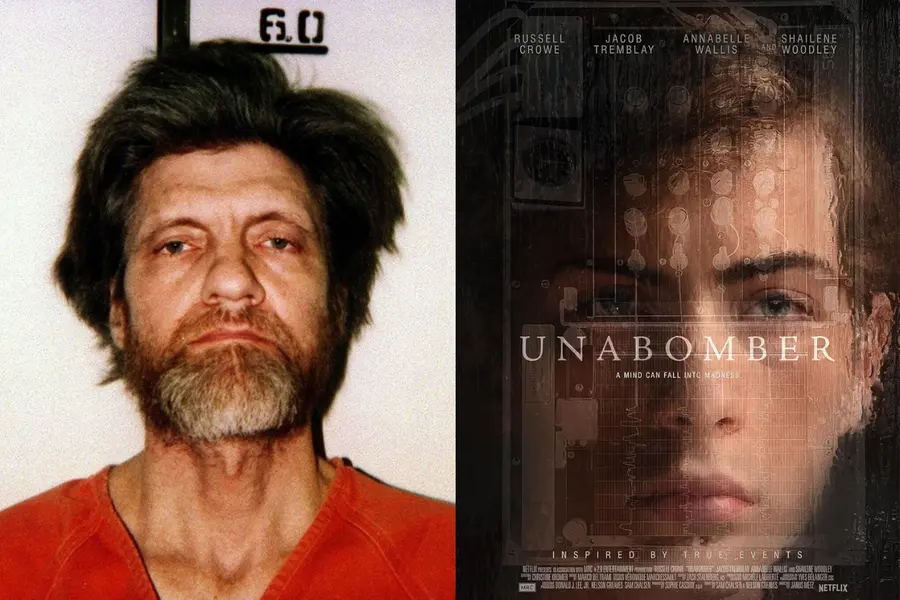
Netflix’s latest series on Ted Kaczynski, better known as the Unabomber, has brought renewed attention to one of the most disturbing chapters in American criminal history. A brilliant mathematician who turned into a domestic terrorist, Kaczynski waged a bombing campaign against people he associated with modern technology and industrial society. Nearly three decades after its publication, Ted Kaczynski's manifesto continues to draw attention to the uneasy relationship between technological progress, human autonomy and violence.
In September 1995, a lengthy essay titled Industrial Society and Its Future appeared in The Washington Post. Its author, Theodore John Kaczynski, was already infamous as the Unabomber, a serial bomber who had terrorised the United States for nearly two decades.
The document, however, was not simply an expression of anger against modern life. It laid out a sweeping argument against industrial civilisation, claiming that technological progress was steadily eroding human freedom, disrupting communities and damaging the natural world.
Kaczynski demanded that the essay be published, threatening further violence if his conditions were not met. The decision to publish it brought his ideas to a national audience, even as it raised difficult questions about whether the media should give space to a terrorist's demands.
The manifesto would become one of the most widely discussed aspects of the Unabomber case, offering a window into the ideology Kaczynski used to justify his campaign of violence.
The central argument: Technology as a threat to freedom
At the heart of Industrial Society and Its Future was Kaczynski's contention that modern technological society had fundamentally altered the relationship between individuals and the world around them.
He argued that industrialisation had made people increasingly dependent on large institutions, complex systems and technological infrastructure, reducing their ability to exercise control over their own lives.
The manifesto portrayed technological progress not as an uncomplicated source of prosperity but as a force that could undermine individual autonomy, disrupt traditional communities and inflict psychological suffering.
Kaczynski maintained that industrial society could not be meaningfully reformed because technology had become too deeply embedded in its economic and social structures.
His proposed solution was a revolution against the industrial-technological system itself.
The argument was radical in its scope. Rather than calling for changes to specific technologies or policies, Kaczynski advocated dismantling the foundations of modern industrial society.
The 'power process' and the psychology of modern life
One of the manifesto's central concepts was what Kaczynski called the "power process" — the idea that people need to pursue meaningful goals, exercise control over their lives and experience a sense of achievement.
He argued that modern society increasingly deprived individuals of this autonomy by placing them within systems governed by institutions and technological requirements.
The manifesto also examined what Kaczynski described as "surrogate activities" — pursuits that, in his view, substituted for the satisfaction people derived from directly controlling their circumstances.
These arguments formed part of his broader criticism of a society in which people, despite material advances, could feel increasingly powerless.
Yet the manifesto's diagnosis of modern life was inseparable from its deeply authoritarian conclusions. Kaczynski rejected the possibility of reforming industrial society and instead advocated its overthrow, treating the destruction of the technological system as a necessary objective.
From manifesto to a national controversy
The publication of Industrial Society and Its Future was itself the result of coercion.
Kaczynski had sent letters to major newspapers demanding that the essay be published, threatening further attacks if his demand was ignored.
The Washington Post published the text in September 1995, following consultations with law enforcement officials. The decision sparked debate over the responsibilities of the press when faced with threats of violence.
The manifesto's publication also helped bring Kaczynski's writing into the public domain, allowing investigators and readers to examine the ideas behind the bombing campaign.
The FBI had been investigating the Unabomber for years, with the attacks targeting individuals associated with universities, airlines and other institutions. The campaign killed three people and injured 23 others.
Kaczynski was arrested in April 1996 after his brother, David Kaczynski, recognised similarities between the manifesto and his brother's earlier writings and alerted authorities.
He later pleaded guilty to federal charges and was sentenced to life in prison without the possibility of parole. He died in prison in 2023.
A manifesto that remains controversial
The Unabomber manifesto occupies an uneasy place in discussions about technology, environmentalism and political violence.
Some of its themes — including concerns about technological dependence, the concentration of power and the environmental consequences of industrialisation — continue to feature in wider debates about modern society.
But Kaczynski's conclusions were far more extreme than criticism of technology or calls for environmental protection. His rejection of reform and advocacy of revolutionary destruction were central to the ideology he used to justify violence against people who had no meaningful connection to the problems he described.
The manifesto therefore cannot be separated from the bombing campaign that brought it to public attention.
Its lasting significance lies not in offering a blueprint for addressing technological change, but in illustrating how a critique of modern society can be transformed into an ideological justification for violence.
Published: 26 Sept 2026, 07:43 am IST
Related Topics
Disclaimer: Kindly avoid objectionable, derogatory, unlawful and lewd comments, while responding to reports. Such comments are punishable under cyber laws. Please keep away from personal attacks. The opinions expressed here are the personal opinions of readers and not that of Mathrubhumi.
