
From smartphone addiction and family conflicts to politics, love and environmental conservation, here's a look at the Tamil and Telugu films featured at IFFI 2026.
The 57th International Film Festival of India (IFFI) 2026 brings a wide-ranging selection of Tamil and Telugu films and non-feature productions to the spotlight, with stories rooted in social realities, personal experiences, cultural traditions and human relationships. From the challenges of smartphone addiction and barriers to education to environmental conservation, family conflicts, political ambitions and the meaning of devotion, the selections explore subjects that extend beyond linguistic and geographical boundaries.
Featuring narratives set in contemporary communities as well as traditional social environments, the Tamil and Telugu line-ups offer different perspectives on changing societies and enduring human concerns. While some productions examine the impact of technology and social restrictions, others focus on individual aspirations, reconciliation, friendship and the relationship between people and nature. The selection also includes a special Golden Jubilee presentation of a restored Telugu classic.
Tamil cinema: From smartphone addiction to indigenous traditions
The Tamil selection at IFFI 2026 brings together stories that examine the complexities of modern life alongside longstanding social and cultural practices.
Directed by Kannan S, ‘Scroll’ explores the consequences of excessive smartphone use through the experiences of Aravind, a young man whose life takes an unsettling turn after he signs up for an application called Dopa Rush. Designed to help users overcome their dependence on smartphones through challenges and rewards, the application gradually becomes a source of control and fear. As its tasks take increasingly disturbing turns, Aravind finds himself trapped in a situation that is far removed from his original intention of breaking an addiction.
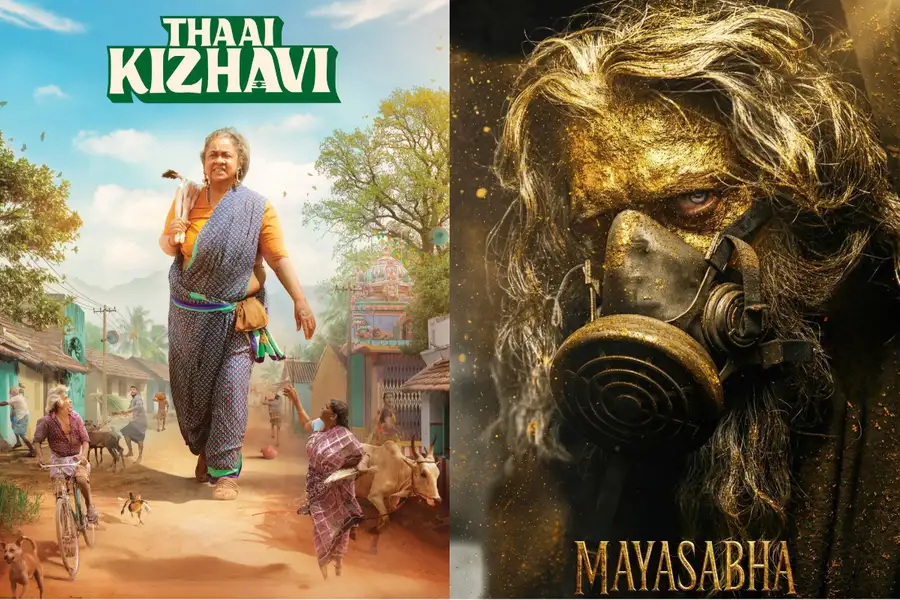
Family tensions and the weight of unresolved memories drive ‘Thaai Kizhavi (God Mother)’, directed by Sivakumar Murugesan. Set in a village, the film revolves around Pavunuthaayi, a formidable 70-year-old woman who lives with her daughter and grandson. Her strained relationship with her three estranged sons takes a new turn when she falls critically ill and they return home. Their reunion brings buried disagreements and painful experiences back to the surface. As the family confronts its past, a secret that has remained concealed for years threatens to alter their relationships.
The importance of education and the barriers faced by girls in remote communities are explored in ‘Arivu’, directed by Sathyashiva. Set in 1996, the film follows Kathir, a young teacher who takes up a posting in an isolated tribal settlement in the Western Ghats. He discovers that local beliefs prevent girls from attending school, as the villagers fear that educating them could anger their deity. Unwilling to accept this restriction, Kathir begins teaching a group of 13- and 14-year-old girls in secret. With examinations approaching, he encourages them to overcome their apprehensions and challenge the limitations imposed on them.
Traditional medicine and indigenous heritage take centre stage in ‘Attappadi’, directed by Vijeesh Mani. The film follows Sultan Ahmed Al Mehmoudi, who travels from Arabia to Kerala's Western Ghats to understand the healing knowledge and forest-based traditions of indigenous communities. Accompanied by filmmaker Vijeesh Mani, he interacts with elders and traditional practitioners in Attappadi, learning about their medicinal practices and deep-rooted connection with the natural environment. His exploration gradually becomes an introduction to the community's cultural identity and way of life.
Environmental protection and collective responsibility are at the heart of ‘Koodu (Nest)’, directed by Joyal Vijay. Set in Vachathi, Tamil Nadu, the story begins when a power outage leads villagers to discover a sparrow's nest containing eggs inside an electricity transformer. Rather than risk harming the birds, the community, led by village head Agathiyan, decides to go without electricity for 35 days. Kathir, an agriculture graduate, joins the effort to safeguard the nest. However, their decision encounters resistance from the local VAO and Lingam, whose personal animosities lead to attempts to disrupt the initiative. Despite the obstacles, Kathir and the villagers remain committed to protecting the birds.
Telugu cinema: Family, love, ambition and the environment
The Telugu selection explores a similarly broad range of subjects, with narratives examining the relationship between individual choices and wider social responsibilities.
Environmental concerns and the consequences of greed provide the backdrop for ‘Sing Geetham (Sing a Song)’, directed by Singeetham Srinivasa Rao. The story follows Pratap Mannem, who returns to his hometown of Kuberpuram, a mining village, to claim his inheritance in the form of his father's gold mines. His arrival brings him into conflict with a former business associate whose plans for expansion threaten the village's remaining tree. As disagreements intensify, Pratap uncovers revelations about his family's history and begins reassessing his priorities. The ensuing events lead the villagers to recognise the importance of standing together, making sacrifices and preserving their natural surroundings.
Directed by Anil Ravipudi, ‘Mana Shankara Vara Prasad Garu (Our Mr. Shankar Varaprasad)’ examines family bonds through the story of Shankar Vara Prasad, a national security officer whose commitment to his profession comes at the expense of his personal relationships. His dedication to duty leads to a separation from his wife and children. Six years later, he attempts to reconnect with them by taking up a position at the school attended by his children. When a threat emerges against his family, he is given the responsibility of protecting them. The assignment forces him to confront unresolved issues from his past while trying to restore his family's confidence in him.
The emotional consequences of love and unexpected loss are explored in ‘Chennai Love Story’, directed by Ravi Varma Namburi. The film centres on Nivi, who is still dealing with the aftermath of a failed relationship when she encounters Steven, an orphan whose affection and warmth gradually help her rediscover happiness. Their relationship develops despite their contrasting backgrounds, and they eventually decide to marry. However, tragedy strikes when Steven dies in an accident on their wedding day. His sudden death leaves Nivi struggling with grief and anger, unable to reconcile his loss with the promises they had made to each other.
Personal ambition and the courage to pursue one's dreams form the central theme of ‘Why, Vani?’, directed by Dhanush Dandu. The film follows Vani, an editor working in Hyderabad who feels dissatisfied with her professional life. An opportunity to work on a documentary in Mumbai gives her a chance to move towards her ambition of becoming a filmmaker. However, her decision complicates her relationships with her boyfriend Arun and filmmaker Sahith. Their differing approaches to the project, including compromises influenced by their personal fears, create further challenges. As Vani navigates family expectations and feelings of guilt, she gradually develops a clearer understanding of her aspirations and the choices she must make.
The relationship between competition, self-control and personal growth is explored through chess in ‘Win’, directed by Praveen. Its central character, Napoleon, is an 18-year-old who has grown up under his mother's strict training and is determined to win every game he plays. His confidence is shaken when he loses to Gayatri, a composed 10-year-old, at an important chess tournament. Unwilling to accept the defeat, he challenges her to another match. Their subsequent conversations introduce him to a different understanding of the game. Through the teachings of the Bhagavad Gita, Gayatri encourages him to concentrate on performing his duty rather than becoming fixated on the outcome. Napoleon gradually begins to recognise the role of discipline and perspective in overcoming his ego.
Politics, friendship and ideological differences provide the setting for ‘Mayasabha’, directed by Deva Katta. Set in Andhra Pradesh from the mid-1970s, the series traces the journeys of two young men from contrasting backgrounds. Kakarla Krishnama Naidu (KKN) is an idealistic student leader, while M.S. Rami Reddy (MSR) belongs to an influential family. Despite their differences, the two develop a friendship and enter politics with ambitions of bringing about change. However, their journey exposes them to the realities of political power, including caste divisions, corruption and financial influence. As their standing grows, personal ambitions and competing interests begin to challenge their friendship and earlier ideals.
IFFI 2026 marks 50 years of Telugu classic 'Bhakta Kannappa'
Adding a retrospective dimension to the Telugu selection, IFFI 2026 will feature a restored version of ‘Bhakta Kannappa’ in its Golden Jubilee section. Directed by Bapu, the film completes 50 years since its release on 26 May 1976.
The film revisits the legendary story of Kannappa Nayanar, a celebrated devotee of Lord Shiva. It follows Thinnadu, the rebirth of Arjuna, who grows up as an atheist hunter under the care of a tribal chief. After marrying the chief's daughter, Neela, he is forced to leave his community because of his refusal to worship the village deity. His encounter with Lord Shiva eventually transforms his understanding of faith and devotion.
In the film's defining sequence, Thinnadu offers his own eyes to stop blood from flowing from a Shiva Lingam, demonstrating a devotion that transcends established rituals and conventions. Originally made in Kannada, the production received the National Film Award for Best Audiography and is also remembered for its ambitious outdoor filming and visual scale. Its restored presentation at IFFI marks an opportunity for audiences to revisit a significant work of Indian cinema.
'Stories Without Borders': Cinema beyond language and culture
The Tamil and Telugu selections reflect the central idea behind IFFI 2026's theme, ‘Stories Without Borders’. Although the films draw from distinct regional settings, their narratives engage with experiences that audiences across different cultures can understand.
From the fight for educational opportunities and the preservation of indigenous knowledge to family reconciliation, environmental responsibility, political conflict and the pursuit of personal ambitions, the productions explore a variety of contemporary and timeless concerns. The Golden Jubilee presentation of ‘Bhakta Kannappa’ also connects the festival's current selection with the legacy of Indian cinema.
Published: 18 Nov 2026, 12:06 pm IST


ABOUT THE AUTHOR

Related Topics
Disclaimer: Kindly avoid objectionable, derogatory, unlawful and lewd comments, while responding to reports. Such comments are punishable under cyber laws. Please keep away from personal attacks. The opinions expressed here are the personal opinions of readers and not that of Mathrubhumi.