
Cinematographer Sujith Sarang discusses his journey across South Indian cinema, his collaboration with Pavan Sadineni and the challenges of shooting ‘Aakasamlo Oka Tara’.
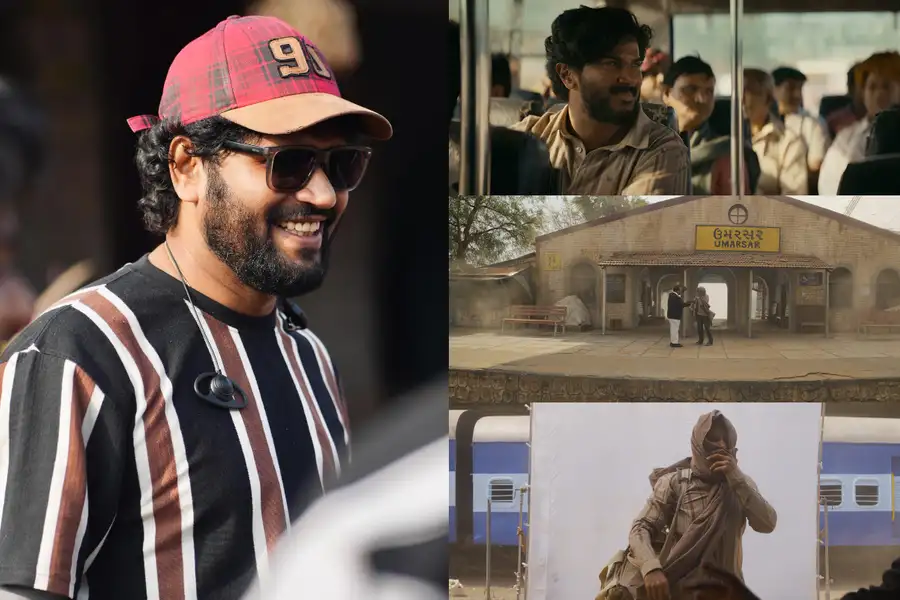
Cinematographer Sujith Sarang, known for his work across Malayalam, Tamil and Telugu cinema, has been part of several notable projects, including ‘Dhuruvangal Pathinaaru’ (D16) and ‘Taxiwaala’. His latest project, ‘Aakasamlo Oka Tara’, directed by Pavan Sadineni, brought a new set of creative challenges, including the creation of an elaborate space station sequence for the film's climax.
With a background in physics and a filmmaking career shaped by collaborations with directors such as Rahul Sankrityan and Karthick Naren, Sarang brings both technical understanding and artistic instinct to his craft. In this interview, he talks about his journey in cinematography, the differences in working across South Indian film industries, his collaboration with Pavan Sadineni and the visual moments that define ‘Aakasamlo Oka Tara’.
Excerpts from the interview:
1. You studied physics before joining film school. Does that background help you understand light, lenses and framing better?
Absolutely. Studying physics has definitely influenced the way I think and approach cinematography. At its core, cinematography has a strong connection with physics — from understanding optics and how light behaves, to the mechanisms and electronics inside a camera, and the technical aspects of the equipment we use. That scientific foundation helps me understand the tools and the technical side of image-making better. However, I believe framing is more of an art than a science. Physics helps me understand how to create an image, but the artistic instinct tells me what that image should communicate.
2. You won the Best Student Cinematographer award at MGR FTI. What do you remember about the film, and how do you look at it today?
That brings back a lot of nostalgia. The effort and passion I put into filmmaking back then are still the same today. The difference is that experience has taught me how to channel that passion better and execute my ideas more effectively. The short film was titled My Girl and I. It was quite unconventional compared to what most film institute students were making at the time, and I think that gave it a unique identity and caught people's attention. It was quite contemporary for its time. Even today, I revisit the film occasionally. It takes me back to those days and reminds me of the fun, innocence and sheer excitement with which we made it. Looking at it now is a lovely reminder of where the journey began.
3. You have worked with young directors like Rahul Sankrityan and Karthick Naren. What did you learn from them?
Both Rahul Sankrityan and Karthick Naren had great clarity about what they wanted to achieve, each in their own unique way. I think that clarity is one of the most important qualities a director can have, as it helps steer the entire team in the right direction. I enjoy working with directors who have a strong vision. When the director is clear about the intent, it makes my job easier because I understand the world they want to create. It also gives me the freedom to contribute my own creative ideas and build on their vision. For me, that combination makes the collaboration exciting.
4. You've worked in Tamil, Telugu and Malayalam films. Does your way of shooting change with each industry?
Not much in terms of the actual filmmaking approach. The fundamentals of cinematography remain the same. But when it comes to creative freedom, there have been some differences. Malayalam cinema has traditionally been more open to experimentation. Telugu cinema, especially in the earlier days, sometimes came with certain creative restrictions, while Tamil cinema was somewhere in between. But with the advent of OTT platforms, I feel these differences have gradually reduced, and filmmaking across all three industries has become quite similar in many ways. One noticeable difference, though, is the working schedule. Malayalam films often had continuous shooting schedules, sometimes from 7 am to 10 pm, without Sunday breaks. Tamil and Telugu productions generally followed more structured schedules with weekly breaks.
5. Which film made the biggest difference to your career? Did any project open new doors for you?
Dhuruvangal Pathinaaru (D16) was definitely the biggest turning point in my career. It was my fifth film, but it became my breakthrough and brought me significant recognition. Even today, many people identify me as the cinematographer of D16. Later, Taxiwaala opened up another chapter and brought me new opportunities. From there, the journey continued, and the rest is history!
6. What made you say yes to Aakasamlo Oka Tara? What was your first reaction when you heard the story?
When I heard the story from Pavan for the first time, I had a strong feeling that I was going to be part of a great film. I didn't know how much the film would eventually collect at the box office, but I was convinced that it would earn me a great name and give me an opportunity to be part of something truly special. I knew it was going to be a film I would cherish for the rest of my life and always feel proud of. That conviction was enough for me to say yes.
7. How did director Pavan Sadineni explain what he wanted each scene to look like?
Pavan and I share a very similar vision when it comes to filmmaking. The way we see and perceive the world was always in sync. Our creative process was more like a continuous exchange of ideas. I would pitch an idea to him, he would build on it and come back with his inputs, and I would refine it further. This back-and-forth helped us develop the visual language of the film together. We had a fantastic time shooting the film. The process was always fast, clear and collaborative. Pavan is a visionary director who knows exactly what he wants, and he has the ability to bring out the best in me as a cinematographer.
8. If you had to describe Aakasamlo Oka Tara through three visuals, what would they be?
The Planetarium: This is where Kalpana gets her first glimpse into the world of astronomy through scientist Bhaskar. It is a defining moment that sparks her dream of going to space and sets the entire journey in motion.
Krishna and Kalpana's First Night Together: A very intimate moment when Krishna discovers Kalpana's age and learns about her dream. It reveals an important layer of their relationship and establishes the emotional heart of the story.
Kalpana's Call from the Space Station: When Kalpana calls scientist Bhaskar from the space station, it brings the story full circle. The person who first introduced her to the wonders of space is now hearing from her after she has achieved her dream.
For me, these three visuals capture the film's journey — the birth of a dream, the emotional support behind it, and finally, its fulfilment.
9. Which scene was the hardest to shoot? What made it challenging?
Without a doubt, the space station sequence in the climax was the most challenging. We had never attempted something of this scale before, and initially, we weren't entirely sure how to approach it. We reached out to legendary production designer Mr. Sabu Cyril, who generously guided us despite his busy schedule. It turned into a fantastic learning experience for me. We shot the entire sequence inside a studio over five days. Pavan, VFX supervisor Thoufeek Hussain and I worked very closely to bring it together. The constant collaboration and the tremendous support from our producers, Mr. Sandeep Gunnam, Mr. Allu Aravind and Ms. Swapna Dutt, made it possible. It was challenging, but also one of the most rewarding experiences of the film.
10. Is there a shot in the film that you really love but feel most viewers might not notice?
Honestly, every shot in the film is personal to me. I wouldn't have filmed anything that I didn't connect with or like. But one shot that I particularly love is the image of the little girl walking along the edge of the lake, with her reflection on the water. We flipped the shot in post-production, and the main title appears over it. It's a simple visual, but it has a beautiful quality to it. Interestingly, quite a lot of people noticed and appreciated that shot, which made it even more special to me.
Looking back at his journey, Sarang says the passion he had as a film student remains unchanged, even as experience has helped him understand his craft better. From the early recognition he received for ‘Dhuruvangal Pathinaaru’ to the challenges and creative discoveries on ‘Aakasamlo Oka Tara’, each project has added something to his journey. For him, the excitement of filmmaking still lies in working with people who share his vision and finding something special in every frame.
Published: 28 Nov 2026, 06:36 pm IST


ABOUT THE AUTHOR

Related Topics
Disclaimer: Kindly avoid objectionable, derogatory, unlawful and lewd comments, while responding to reports. Such comments are punishable under cyber laws. Please keep away from personal attacks. The opinions expressed here are the personal opinions of readers and not that of Mathrubhumi.