
The Congress MP also questioned the franchise's political messaging, portrayal of intelligence operations and depiction of India-Pakistan relations
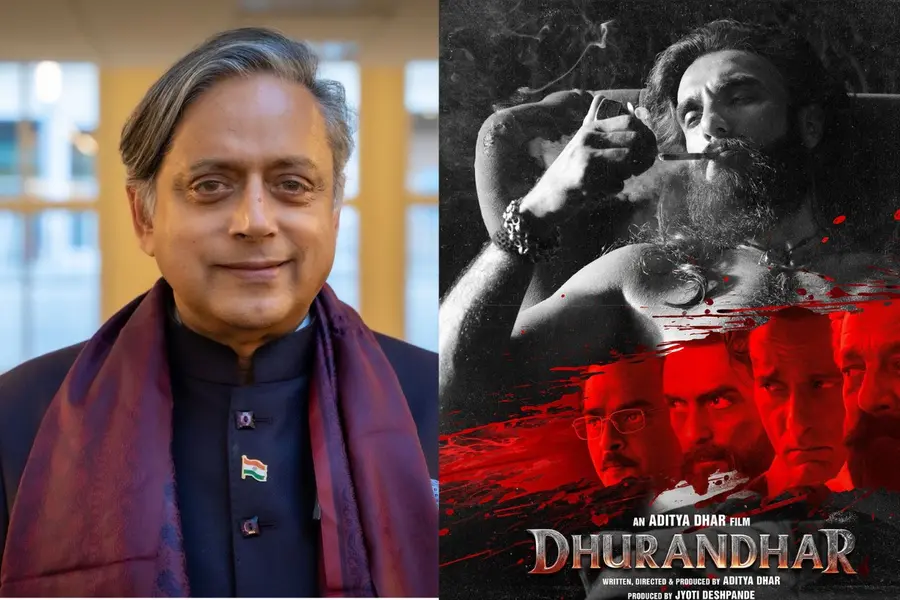
Can a film be an impressive cinematic experience and still get some things wrong? Congress MP Shashi Tharoor seems to think so. After watching Aditya Dhar's ‘Dhurandhar’ films, the politician has praised the franchise's entertainment value, singling out the second instalment, ‘Dhurandhar: The Revenge’. But the graphic violence and political undertones left him with several reservations.
Tharoor shared his review in a video on his official YouTube channel, offering a perspective that went beyond whether the films were enjoyable. He questioned some of their creative choices, their portrayal of intelligence operations and the possible impact of their depiction of India-Pakistan relations.
For Tharoor, ‘Dhurandhar 2’ emerged as the stronger of the two films. He acknowledged its effectiveness as a work of fiction and entertainment, praising the scale of the cinematic experience it offered.
His appreciation, however, came with a clear qualification. The politician felt that the filmmakers relied too heavily on graphic violence, with several sequences pushing beyond what he considered necessary for the story.
He objected to the repeated depiction of bloodshed, cruelty and disturbing acts, arguing that the film could have made its point without showing so much brutality. The issue, in his view, was not simply that the film contained violence, but that its graphic presentation felt excessive.
His response offers a distinction worth noting: Tharoor did not dismiss ‘Dhurandhar: The Revenge’ as a film. He enjoyed the sequel while questioning how certain parts of it were presented.
Does Dhurandhar cross the line between fiction and propaganda?
The films' political undertones were another point of concern for Tharoor. With a story rooted in espionage, national security and the tensions between India and Pakistan, the franchise touches on subjects that audiences may connect with real political events.
Tharoor suggested that the films contain elements of propaganda and acknowledged concerns about the way such portrayals could affect public sentiment. He also referred to reports of the films being banned in Pakistan and several Gulf countries, where their content was reportedly viewed as potentially inflammatory.
He said he could understand why some viewers might worry about films contributing to hostility between Indians and Pakistanis.
Tharoor also wondered how audiences in Pakistan would react to the franchise. He suggested that some of the dialogue might be met with laughter, while other aspects could encourage viewers to consider whether actions portrayed in the films had been carried out in their country's name.
His comments raise a broader question about politically themed blockbusters: when a fictional story draws on real tensions, how easily can dramatic portrayals shape the way audiences understand another country?
Why Tharoor is sceptical about the film's depiction of intelligence work
Another aspect of the franchise that caught Tharoor's attention was its portrayal of intelligence operations. He explained that his own interactions with Indian intelligence officials had been far less dramatic than the covert missions and high-stakes action sequences shown in the films.
His experience, he said, involved discussions, analysis and the exchange of information. The explosive operations and cloak-and-dagger scenarios depicted on screen were not part of the world he had encountered.
This does not mean that Tharoor claimed to know everything about intelligence work. Rather, he drew a distinction between his personal experience and the dramatic version of espionage presented by the films.
He also questioned the timeline surrounding Ajay Sanyal, the character played by R Madhavan and loosely inspired by National Security Advisor Ajit Doval. Tharoor found it difficult to accept the idea of a single official holding the same position over such an extended period.
For him, these elements reinforced the need to view the franchise as a fictional narrative rather than a literal account of actual events.
Tharoor still calls it a major cinematic experience
Despite his criticisms, Tharoor recognised the ambition behind the two films. Watching both instalments, which together run for roughly eight hours, had left him feeling that he had witnessed something on a grand cinematic scale.
That reaction captures the complexity of his review. He appreciated the sequel's entertainment value and the scale of the filmmaking, even as he questioned the extent of the violence and the messages woven into the narrative.
His assessment is neither an outright endorsement nor a rejection. Instead, it separates the experience of watching a large-scale spy thriller from questions about its treatment of violence, history and geopolitics.
‘Dhurandhar’ franchise: Cast, director and story
Directed by Aditya Dhar, the ‘Dhurandhar’ franchise stars Ranveer Singh in a spy-action thriller centred on covert operations, criminal networks and national security. The films also feature Akshaye Khanna, Sanjay Dutt, R Madhavan and Arjun Rampal in key roles.
The first instalment introduced audiences to the world of undercover missions and intelligence work, while ‘Dhurandhar: The Revenge’ continued the story with an expanded narrative.
Published: 21 Oct 2026, 01:10 pm IST
ABOUT THE AUTHOR

Related Topics
Disclaimer: Kindly avoid objectionable, derogatory, unlawful and lewd comments, while responding to reports. Such comments are punishable under cyber laws. Please keep away from personal attacks. The opinions expressed here are the personal opinions of readers and not that of Mathrubhumi.