
The actor discusses accountability, privilege and the pressure to follow a director's instructions on set
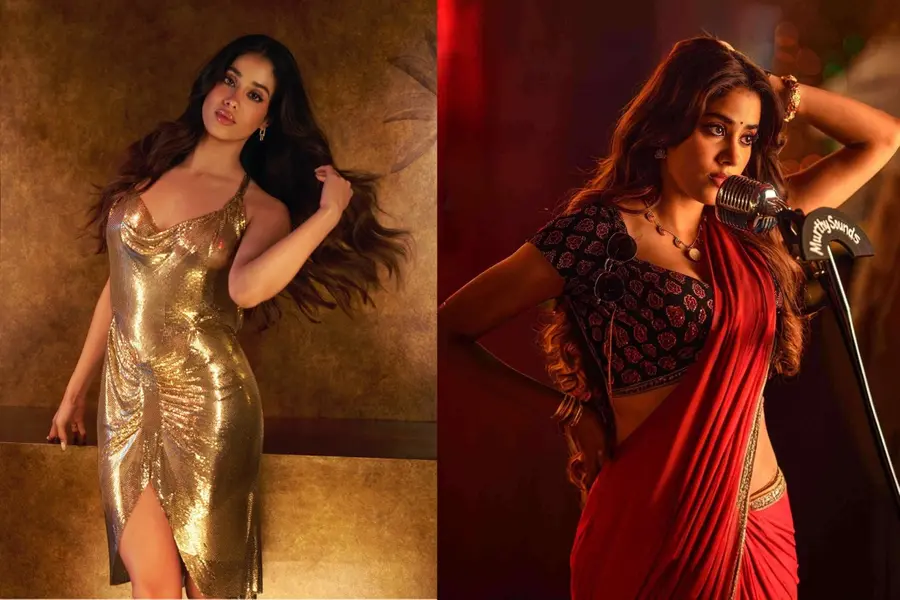
Actress Janhvi Kapoor has spoken candidly about the criticism surrounding her role in ‘Peddi’, admitting that she wishes she had challenged certain aspects of the film more firmly.
Appearing on Koffee With Karan Season 9 with Varun Dhawan, the actor reflected on the debate over the way her character, Achiyamma, was presented on screen and the responsibility she believes she shares.
The controversy centred on accusations of sexualisation and objectification in the sports drama, directed by Buchi Babu Sana and starring Ram Charan. While some viewers expressed concern over the treatment of Janhvi’s character, others questioned why the actor had not intervened during filming.
Host Karan Johar brought up both sides of the debate, asking Janhvi how she had dealt with the reaction. He also recalled speaking to her on the day the controversy erupted and noted how deeply the episode had affected her.
Janhvi said she had initially struggled to find the right words, partly because she did not want to dismiss the efforts of those who had worked on the film.
“I felt many things, Karan. I feel the reason I was so apprehensive to talk about it was that many people worked very hard on that film. And I really didn't know what to say or if there was anything really to say even.”
However, the actor made it clear that her respect for the team's work did not take away from her concerns about the film's portrayal of women. She said the possible social consequences of such representations continued to trouble her.
“Because it's important that I take ownership for my half of whatever that fiasco was, because it weighs heavily on my conscience, the sort of negative impact a narrative like that can have on our society. Specific to my gender, right? And I think that shame I'll always carry with me.”
Janhvi Kapoor admits she could have spoken up more
During the conversation, Janhvi acknowledged that she could have been more forceful in questioning the scenes. She agreed with the criticism that the portrayal went beyond what was acceptable, including concerns about whether the narrative appeared to encourage attitudes that could normalise sexual assault.
“Could I have done more? Could I have been more vigilant? Could I have made a bigger scene? A hundred per cent, yes. Was it problematic? Was it extreme objectification? Did it even propagate sexual assault narratively? Yes. But yeah, I mean, the only thing I can do is to ensure that doesn't happen again.”
Her comments also touched on a difficulty actors can face while working with a director. Janhvi said the expectation to remain professional and follow instructions can make it harder to challenge decisions on set. She was careful to add that she did not want this explanation to sound like an attempt to shift responsibility.
“And again, I don't like saying this because it sounds like I'm shifting blame. But you know what it's like: you feel like whatever the director says, you have to be professional. You have to listen to the director.”
She also explained that actors may not always know precisely how a scene will look in its final form. According to Janhvi, scripts do not necessarily spell out every visual detail, particularly the camera angles that can influence how a character is presented.
“So I was really navigating how to make things less problematic, as best I thought, as and when information was becoming available to me. Because you know this, I can just say that very rarely is there a bound script. And very rarely in those scripts do you see where the camera angles are.”
‘I do come from a place of privilege’
Janhvi returned to the question of accountability towards the end of the discussion, recognising that her position in the industry gave her a degree of influence that she could have used more effectively. Rather than treating her circumstances as a reason she could not intervene, she said she should have made better use of the access and privilege she had.
“But having said that, I need to also take responsibility for my half of it. I do come from a place of privilege. I should have taken advantage of that because I'm going to get the shit for being privileged anyway. So I might as well have leveraged it.”
The discussion revisited the questions raised after ‘Peddi’ came under criticism for the way Achiyamma was portrayed. Viewers had questioned whether the character was being reduced to her physical appearance and whether some scenes crossed the line into objectification.
Director Buchi Babu Sana later issued a public apology, saying the team had not intended to disrespect or objectify female characters. The contentious scenes were also removed or edited for the film's theatrical release.
Published: 29 Oct 2026, 11:04 am IST
ABOUT THE AUTHOR

Disclaimer: Kindly avoid objectionable, derogatory, unlawful and lewd comments, while responding to reports. Such comments are punishable under cyber laws. Please keep away from personal attacks. The opinions expressed here are the personal opinions of readers and not that of Mathrubhumi.