
India celebrates Friendship Day on the first Sunday of August, while the United Nations observes the International Day of Friendship on July 30.
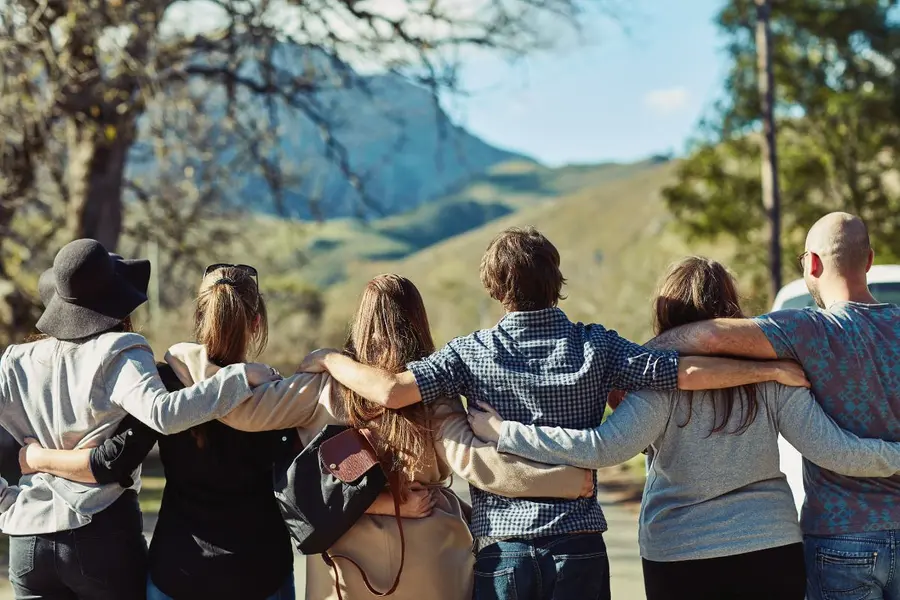
By the time social media fills up with Friendship Day posts in India, much of the world has already celebrated it. Every year, the mismatch sparks the same question: why does India observe Friendship Day on the first Sunday of August while the United Nations marks the International Day of Friendship on July 30?
The answer lies in a mix of commercial history, cultural adoption and a later global campaign by the United Nations. Although both observances celebrate the same idea, that is the importance of friendship, they emerged from different movements and continue to serve slightly different purposes.
Here's how one celebration became two.
Two dates, one idea
Unlike festivals tied to religious calendars or national holidays, Friendship Day has never had a single universally accepted date.
India, along with several other countries, celebrates Friendship Day on the first Sunday of August. Meanwhile, the United Nations officially recognises July 30 as the International Day of Friendship, a date adopted by the UN General Assembly in 2011 to promote friendship as a way of fostering peace, dialogue and understanding among communities and nations.
The different dates often create confusion online, but both commemorate the same underlying value, human connection.
The American roots behind India's celebration
The version of Friendship Day celebrated across India traces its origins to the United States.
The idea was popularised by Joyce Hall, founder of Hallmark Cards, who promoted a day dedicated to celebrating friendships through greeting cards during the early 20th century. The observance became associated with the first Sunday of August, although it never became a lasting nationwide tradition in the US.
While the concept faded in America, it found enthusiastic audiences elsewhere.
In India, the celebration gained momentum during the 1990s, driven by greeting card companies, television, schools, colleges and later social media. Friendship bands, handmade cards and casual get-togethers became defining traditions, especially among young people.
The UN had a different vision
The United Nations' version of Friendship Day was created with a broader objective.
The idea of an international day celebrating friendship had already been proposed in Paraguay in 1958 as a way to encourage peace and goodwill between people. Decades later, the UN General Assembly officially proclaimed July 30 as the International Day of Friendship.
Rather than focusing only on personal relationships, the UN encourages governments, educational institutions and civil society organisations to use the day to promote dialogue across cultures, reconciliation and mutual respect. Friendship, in this context, is viewed as a tool for building peace in an increasingly divided world.
Why India never switched
Although the UN established an international date, countries were never required to abandon existing traditions.
India simply continued with the first Sunday of August because it had already become deeply embedded in popular culture. The weekend timing also makes celebrations easier, allowing students and families to meet without school or work commitments. Over the years, the first Sunday of August has become synonymous with exchanging friendship bands, gifts and messages.
As a result, the UN observance and India's Friendship Day now coexist rather than compete.
Different focus, same emotion
The distinction today is less about which date is "correct" and more about what each celebration represents.
The UN's International Day of Friendship highlights friendship as a bridge between nations, cultures and communities, encouraging dialogue and peace-building.
India's Friendship Day, meanwhile, remains centred on personal relationships, childhood companions, classmates, colleagues and lifelong friends. It is typically celebrated through reunions, social media tributes, gifts and the familiar tradition of tying friendship bands.
Friendship Day has also adapted to changing times.
The greeting cards that once defined the occasion have largely given way to WhatsApp messages, Instagram stories, video calls and digital photo memories. Yet the core sentiment has remained remarkably consistent: taking a moment to acknowledge the people who stand beside us through life's milestones and everyday moments.
Published: 30 Jul 2026, 03:17 pm IST
ABOUT THE AUTHOR

Related Topics
Disclaimer: Kindly avoid objectionable, derogatory, unlawful and lewd comments, while responding to reports. Such comments are punishable under cyber laws. Please keep away from personal attacks. The opinions expressed here are the personal opinions of readers and not that of Mathrubhumi.