
When children leave home, parents can face an unexpected emotional adjustment. Here are five signs of empty nest syndrome and ways to cope with the transition.
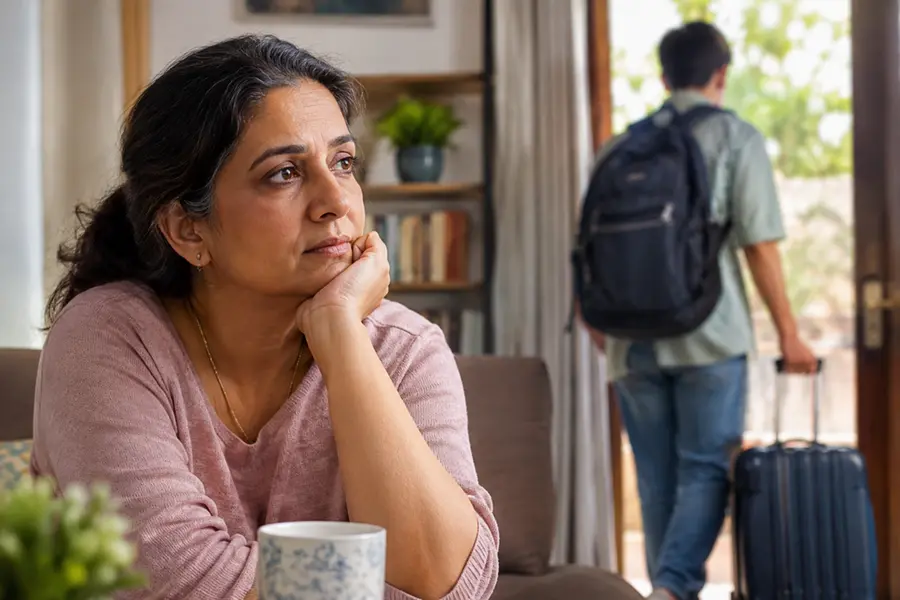
For parents, watching a child leave home can be a moment of pride and heartbreak at the same time. The packed bags, an empty bedroom and a suddenly quieter house can mark the beginning of a new chapter – not only for the child, but for the parent too.
The transition can leave some parents struggling with a sense of loss, loneliness or uncertainty about what comes next. This experience is commonly described as ‘empty nest syndrome’, although it is important to note that it is not a formal mental health diagnosis. The American Psychological Association defines an empty nest as the family home after children have reached adulthood and left, a change that can create an emotional void for some parents.
Mayo Clinic Press similarly describes empty nest syndrome as a term for longer-lasting, difficult responses to a child's departure, rather than a clinical condition. Sadness and grief by themselves are not signs of a syndrome but concern arises when these feelings persist and begin affecting a person's quality of life.
1. A lingering sense of sadness and grief
Missing a child after they move out is natural. Parents may suddenly lose the everyday moments that once structured their lives, shared meals, conversations, errands or simply knowing that their child is in the next room.
However, for some parents, the sadness can become more persistent. Cleveland Clinic says parents experiencing empty nest syndrome can experience emotions including grief, sadness, loneliness, guilt, stress and a sense of emptiness.
The key is not to treat every emotional reaction as a problem. Difficult feelings can be a normal response to a major family transition. It is when those feelings remain intense or begin interfering with everyday life that parents may need additional support.
Also Read: 10 parenting lessons from Jorge, the father behind Lionel Messi's legendary career
2. Feeling that life has lost its purpose
Parenthood can become a significant part of a person's identity, particularly when much of their daily routine has revolved around caring for children.
When that responsibility suddenly changes, parents may wonder what their role is now. They may feel aimless or struggle to decide how to use the time that was previously occupied by their children.
Cleveland Clinic explains that a parent's identity can be strongly connected to the parenting role, making the change particularly unsettling when a child becomes independent.
One way to manage this shift is to see the transition as an opportunity to develop parts of life that may have been put aside. Exploring hobbies, travel, career plans, friendships or other interests can give parents a renewed sense of direction.
3. Loneliness and withdrawing from others
A home that once revolved around a child's schedule can suddenly feel unusually quiet. That change in routine may leave parents feeling isolated, particularly if they have few social connections outside their family.
Mayo Clinic notes that loneliness and social isolation can become unhealthy responses when parents struggle with the transition. It recommends strengthening friendships and finding activities or groups that provide opportunities for social connection.
Technology can also help maintain family connections. Regular calls, messages and video chats can allow parents and adult children to remain involved in each other's lives without making the child's physical presence at home the centre of the relationship. Research has linked the use of digital technology to greater social support and fewer depressive symptoms among empty nesters.
4. Increased tension in a relationship
When children move out, parents may suddenly have more time together as a couple. For some, this can be an opportunity to reconnect. For others, the change may expose relationship difficulties that had previously been overshadowed by parenting responsibilities.
Mayo Clinic identifies marital conflict as one possible unhealthy response associated with empty nest syndrome. At the same time, research discussed by the American Psychological Association suggests that an empty nest can also bring greater freedom and allow couples to reconnect.
Using the transition as an opportunity to rebuild a relationship, while recognising that partners may not experience the change in the same way. Open conversations about how each person is adjusting can help prevent resentment from building.
Also Read: Want your child to be more confident? Here are 10 tips every parent should know
5. Changes in mood, sleep or everyday functioning
Sometimes the emotional impact goes beyond missing a child. Parents may experience persistent anxiety, irritability, hopelessness, difficulty concentrating or a loss of interest in activities they once enjoyed.
Physical changes can accompany the emotional ones. Problems such as disrupted sleep, fatigue, appetite changes, headaches and gastrointestinal issues among signs that additional support may be needed.
This is where it is important to distinguish a normal period of adjustment from a more serious mental health concern. Empty nest syndrome itself is not a psychiatric diagnosis, and experiencing sadness after a child leaves does not automatically mean someone has depression or anxiety. But if symptoms become severe, persist or interfere with daily functioning, speaking to a healthcare professional is advisable.
How can parents cope with an empty nest?
Accept that the relationship is changing, not ending: A child's move away does not mean the parent-child relationship disappears. Instead, the nature of that relationship changes as the child becomes an independent adult. Acknowledge the transition rather than trying to suppress difficult emotions. Parents can tell their children that they will miss them while also allowing them space to establish their adult lives.
- Talk about feelings without making children responsible for them: It is healthy for parents to communicate honestly about missing their children. But be cautious against making adult children feel responsible for managing their parents' emotions. Parents can discuss how they are adjusting while also finding other sources of emotional support, such as friends, relatives, partners or professionals.
- Build a life outside parenthood: An empty nest can create time that was previously difficult to find. That can be used to revive an old interest, learn something new, spend time with friends, travel or focus on professional goals. Parents should look for opportunities to do things they enjoy and to reconnect with aspects of their identity outside child-rearing.
- Make plans for staying connected: Keeping in touch can make the transition less abrupt, but contact should be mutually comfortable rather than becoming an expectation placed on the child. Phone calls, texts, video chats and visits can help families maintain closeness, while allowing adult children the independence they need. Discuss concerns and expectations with trusted people rather than relying solely on children for emotional support.
- Ask for professional help when needed: Parents do not have to navigate prolonged distress alone. If sadness, anxiety, isolation or other symptoms worsen, interfere with daily life or make it difficult to experience happiness.
Also Read: Thinking of giving your baby a pacifier? Here's what parents need to know before deciding
An empty nest can therefore be both an ending and a beginning. The daily role of parenting may change, but it does not disappear. The quiet house may take some getting used to. But for parents, learning to fill that space with their own interests, relationships and goals can turn a difficult transition into a new stage of life.
Published: 17 Aug 2026, 12:58 pm IST
ABOUT THE AUTHOR

Related Topics
Disclaimer: Kindly avoid objectionable, derogatory, unlawful and lewd comments, while responding to reports. Such comments are punishable under cyber laws. Please keep away from personal attacks. The opinions expressed here are the personal opinions of readers and not that of Mathrubhumi.