
Converse has pulled a new ad featuring aespa star Karina after it sparked intense criticism online. Here’s what happened.
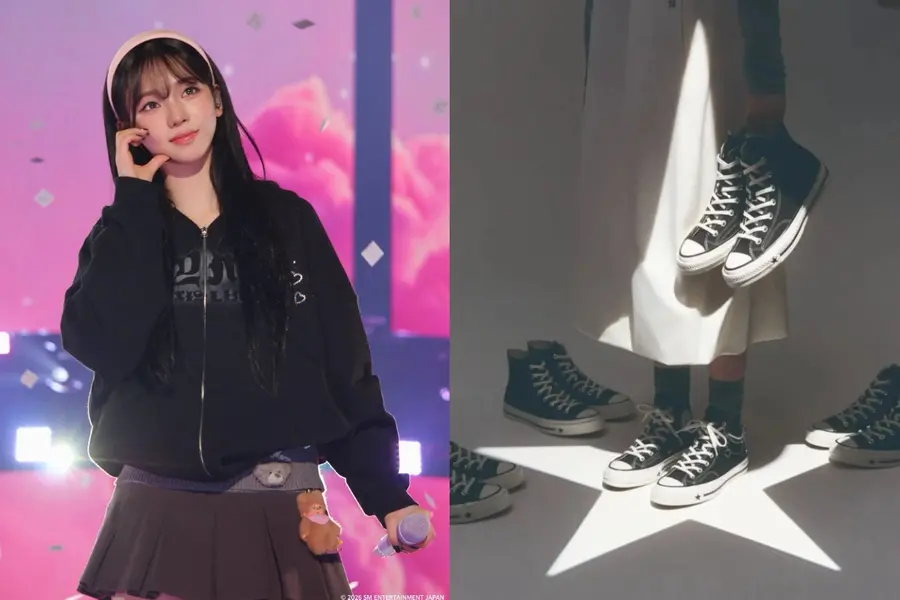
A Converse sneaker campaign featuring K-pop star Karina has been withdrawn after an image from the advertisement triggered widespread criticism online. Viewers said the visual appeared to evoke imagery associated with the Ku Klux Klan and racial lynchings in the United States, prompting questions about how the campaign passed the company's internal review process.
Converse, which is owned by Nike, apologised for the advertisement and said it was removing the image from its platforms. The controversy has since fuelled a wider conversation about racial sensitivity in advertising and the responsibility of brands to identify potentially offensive imagery before campaigns go public.
What happened with the Converse advertisement?
The controversy involved a campaign for Converse's Chuck 70 X sneakers, featuring Karina, a member of K-pop group aespa and a global ambassador for the brand.
In the photograph, Karina is dressed in a white skirt and stands beneath a star-shaped spotlight while holding a pair of black high-top Converse shoes. Although the image did not explicitly reference the KKK or lynching, some social media users interpreted elements of the composition as resembling those symbols.
The lighting on Karina's skirt created a pointed white triangular shape. Critics said it reminded them of the pointed hood traditionally associated with the Ku Klux Klan. Others focused on the way the sneakers were positioned in her hand, arguing that they could be interpreted as resembling the feet of a person hanging from a noose.
The interpretation spread rapidly across social media, with users on platforms including X, Threads, Instagram and TikTok questioning how such imagery had been approved.
Some critics called for employees involved in creating or approving the campaign to be dismissed and urged consumers to boycott Converse. Others pushed back against the criticism, saying they did not believe the imagery was deliberately intended to reference racism or racial violence.
Why has the imagery caused such a strong reaction?
The backlash is rooted in the history of racial violence in the United States.
The Ku Klux Klan, founded in the aftermath of the American Civil War, is a white supremacist organisation that has used intimidation and violence against Black Americans and others over different periods of its history. Its white robes and pointed hoods became closely associated with the organisation and its racist ideology.
Lynchings are another particularly painful part of US racial history. The term refers to extrajudicial killings, frequently involving hanging, carried out by mobs. Thousands of Black Americans were lynched in the US, particularly between the late 19th and early 20th centuries.
Because of that history, visual references that audiences perceive as resembling a KKK hood or a hanging body can carry a meaning far beyond the original commercial context.
In the Converse case, critics argued that the combination of the pointed white shape and the hanging-looking sneakers unintentionally recalled those historical symbols. The criticism was therefore focused not simply on the design of the advertisement, but on the cultural associations viewers saw within it.
What did Converse say?
Converse responded to the backlash by removing the advertisement and issuing an apology.
“We’re sorry,” said the statement, first released on Friday. “We understand why this image is deeply upsetting and recognize that we got this wrong. We removed it from our channels and are working to remove it everywhere it appeared. This should not have happened and we will do better.”
The company has not provided further details about the advertisement's approval process. Converse, which is based in Boston, declined to answer additional questions on Sunday, including queries about how its advertisements are screened before publication and how this particular campaign received approval.
Civil rights attorney Lee Merritt also criticised the company's response in an Instagram post. He argued that an apology does not address the internal processes that allowed the image to be published.
“We keep having this conversation because corporations keep failing the same test,” he wrote. “Do better means catching this before it airs — not after we’re offended.”
What has Karina said about the controversy?
Karina, who appears in the campaign, has not publicly commented on the controversy. Her management company, SM Entertainment Group, also did not immediately respond to messages sent through Instagram.
The criticism has primarily focused on the brand and the creative decisions behind the campaign rather than on any statement or action by the singer.
Have other brands faced similar criticism?
The Converse controversy comes amid a series of incidents in which retailers and fashion companies have faced backlash over products or campaigns that consumers considered racially insensitive.
Last month, retailer Target removed a children's Halloween costume from its stores following widespread criticism on social media. The company apologised after critics said the garment evoked racist minstrel caricatures.
Such incidents have increasingly played out online, where controversial advertising can spread rapidly and attract scrutiny from audiences across different countries and cultural backgrounds.
The history behind Converse's Chuck sneakers
Converse has a history stretching back more than a century. The company was founded in Malden, Massachusetts, in 1908 and is best known for its Chuck Taylor All Star sneakers.
The original Chuck Taylor All Star was introduced in 1917 as a non-skid basketball shoe. Basketball player Chuck Taylor later became associated with the sneaker after promoting it, and his signature was added to the shoe in 1934, according to Converse's website.
The latest controversy, however, has shifted attention away from the footwear itself and towards the visual choices made in marketing the brand's newer Chuck 70 X line.
Published: 21 Sept 2026, 09:25 am IST
ABOUT THE AUTHOR

Related Topics
Disclaimer: Kindly avoid objectionable, derogatory, unlawful and lewd comments, while responding to reports. Such comments are punishable under cyber laws. Please keep away from personal attacks. The opinions expressed here are the personal opinions of readers and not that of Mathrubhumi.