
Indian Army orders 425,213 indigenously made 5.56x45mm carbines, replacing outdated Sterling submachine guns
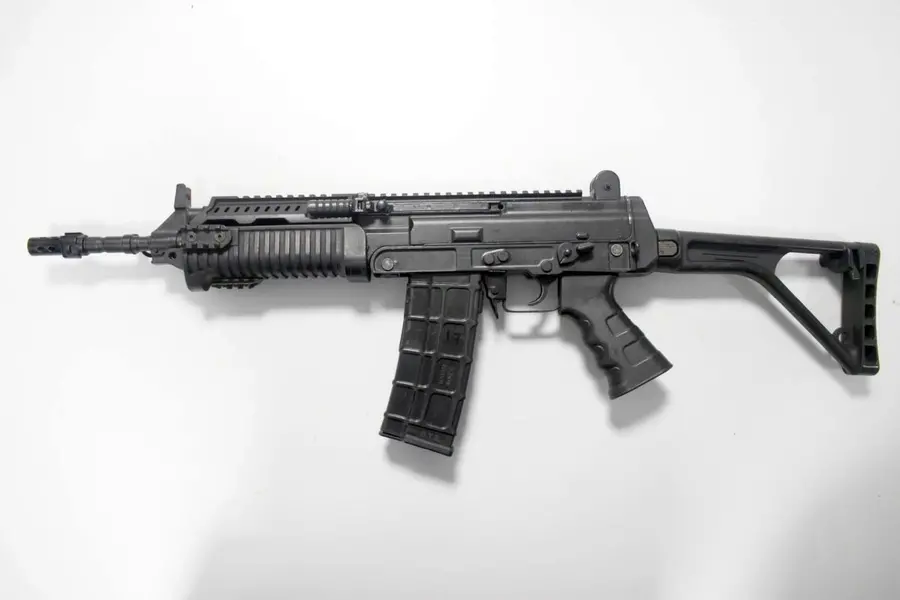
The Indian Army has placed a massive order for 425,213 units of the 5.56x45 mm Close Quarter Battle (CQB) Carbine, valued at approximately Rs 2,000 crore, marking a significant step toward modernizing its arsenal.
Designed by the Defence Research and Development Organisation's (DRDO) Armament Research and Development Establishment (ARDE) in Pune, the carbine is manufactured by Bharat Forge's subsidiary, Kalyani Strategic Systems Ltd, which emerged as the lowest bidder (L1) in a competitive tender against other Indian manufacturers like Advanced Weapons and Equipment India Limited (AWEIL).
The order, primarily for the Indian Army (418,455 units) and the Indian Navy (6,758 units), aims to replace the outdated Sterling submachine gun and boost India's self-reliance under 'Atmanirbhar Bharat'. But what is a carbine, how does it differ from the iconic AK-47, and why could the 5.56x45mm bullet shape India’s defense future?
Let's break it down and explore its potential.
A carbine is a type of gun that's shorter and lighter than a standard rifle, designed for close-range fighting, like in cities or jungles. It's easier to carry and handle in tight spaces, making it perfect for soldiers in quick, up-close battles. The 5.56x45 mm CQB Carbine, for example, weighs no more than 3.3 kg and is compact, ideal for counter-terrorism or urban warfare.
The AK-47, on the other hand, is an assault rifle, longer and heavier (about 4.3 kg with a loaded magazine), built for a mix of close and medium-range combat, often used in open fields or longer engagements. The carbine's smaller size makes it more maneuverable, but the AK-47 is more versatile for varied battlefields due to its larger size and design.
The '5.56x45mm' describes the bullet this carbine uses. The '5.56mm' is the bullet's width -- about half a centimeter across, small but strong. The '45mm' is the length of the bullet's casing, which holds the gunpowder that makes it fire. This is a NATO-standard caliber, used by armies worldwide, and it can hit targets accurately at least 200 meters away, ideal for close-quarter fights.
In contrast, the AK-47 uses a larger 7.62x39mm bullet, which is wider (7.62mm) and has a shorter casing (39mm). The AK-47’s bullet is heavier and hits harder, with an effective range of about 300-400 meters, but it’s less precise than the 5.56x45mm at longer distances.
The carbine's bullet is better for quick, accurate shots in tight spaces, while the AK-47’s bullet suits broader combat scenarios.
Now, let's compare this carbine to the Sterling submachine gun it will replace. The Sterling uses a 9mm bullet, meaning the bullet's width is 9 millimeters -- almost twice as wide as the 5.56mm but less powerful for longer distances. The 9mm bullet is good for short ranges, typically hitting targets accurately only up to about 100 meters or less, making it less effective in modern combat.
The Sterling weighs around 2.7 to 3 kg, slightly lighter than the new carbine, but its 1940s design lacks the versatility and firepower needed today. Unlike the Sterling, the CQB Carbine has a modern rail system for adding scopes or lasers, enhancing its effectiveness.
Why is this new carbine a big deal? The 5.56x45mm bullet gives our soldiers more power and range than the Sterling's 9mm, helping them handle tough situations better, while its compact design offers an edge over the bulkier AK-47 in close fights.
The Army's order of 425,213 carbines shows trust in this Indian-made weapon, supporting 'Atmanirbhar Bharat' by reducing our need to buy foreign guns. Factories in Pune will create jobs, and since the 5.56x45mm is a global standard, India might export these carbines one day, boosting our economy.
But could the 5.56x45mm be the key to India's defense future? This bullet size is used in many modern rifles and carbines worldwide, so mastering its production could open new possibilities. Picture Indian companies making not just guns but also bullets, optics, and accessories, all based on this standard. If we maintain high quality, we could sell to other countries, making India a defense leader.
Unlike the AK-47, which is a global icon but tied to older Soviet designs, the carbine’s modern NATO-standard bullet could position India as a forward-looking defense innovator. This success might also inspire more home-grown weapons, reducing our reliance on imports.
There are challenges, though. Producing over four lakh carbines and enough 5.56x45mm bullets is a huge task. Quality must stay top-notch, and deliveries must be on time, or the Army's confidence could waver.
The Sterling's lighter weight and the AK-47's rugged reliability show that older designs had advantages, so the new carbine must prove its slightly heavier build and modern features shine in real battles. We also need to keep innovating, as global competitors won't wait.
In simple terms, the 5.56x45mm bullet -- smaller but stronger than the Sterling’s 9mm and more precise than the AK-47's 7.62x39mm -- powers a carbine that could change how our soldiers fight and how India builds its defense. With a longer range than the Sterling's 100 meters and a compact design better suited for close quarters than the AK-47, this weapon is a step forward. If we get this right, the 5.56x45mm could be more than a bullet; it could be the spark for a self-reliant, powerful India. Will this small bullet lead us to a big future? Let’s hope so!
The author is a Defence, Aerospace & Geopolitical Analyst.
Published: 30 Jun 2025, 05:30 pm IST
Disclaimer: Kindly avoid objectionable, derogatory, unlawful and lewd comments, while responding to reports. Such comments are punishable under cyber laws. Please keep away from personal attacks. The opinions expressed here are the personal opinions of readers and not that of Mathrubhumi.
