
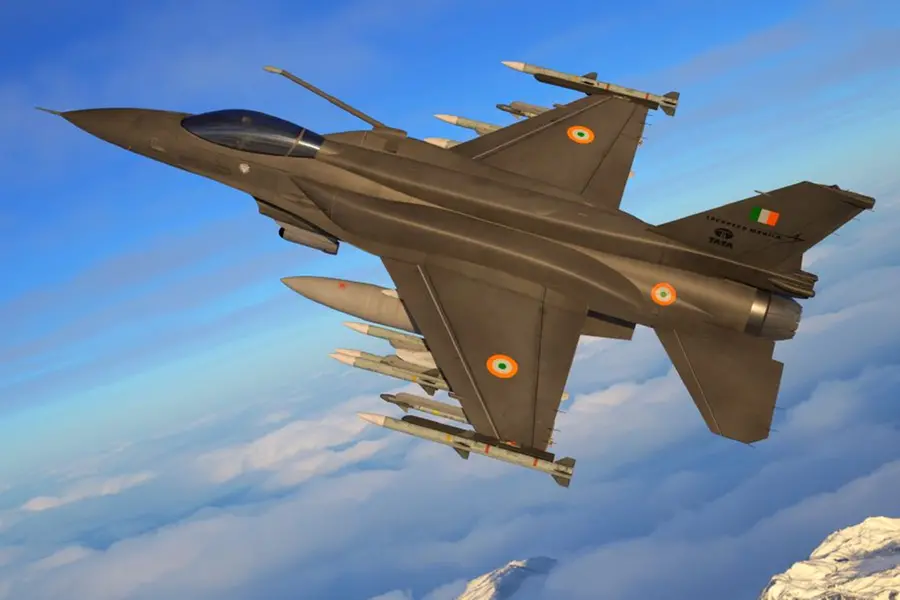
Lockheed Martin’s offer to provide the Indian Air Force (IAF) with F-21 fighter jets could greatly enhance India’s air power and defence sector. This deal would not only bring advanced fighter jets to the country, but it could also help India improve its aerospace industry and create a foundation for stronger defence systems. It may lead to new technology coming into the country, better manufacturing abilities and stronger self-reliance in building advanced military equipment in future.
The F-21 proposal provides an opportunity for India to build its own engineering skills, strengthen local manufacturing and create a fighter jet designed specifically to meet India’s defence needs. By focussing on its advanced features, its role in the IAF and the benefits of co-producing the jet in India, this plan could help improve the country’s overall defence capabilities.
The Lockheed Martin F-21 is based on the F-16 Fighting Falcon, a fighter jet that has been used by air forces around the world for many years. The F-21 is designed to include such advanced technologies as next-generation avionics, sensor integration and flexible systems to handle modern combat needs.
The F-21 fighter jet is built to meet India’s unique defence needs, making it a strong fit for the country’s operational requirements. Lockheed Martin states that the F-21 will have specifications similar to the F-16 Block 70/72, which include:
* Wingspan: 31 ft (9.45 m)
* Length: 49.3 ft (15.09 m)
* Height: 16.7 ft (5.09 m)
* Maximum Takeoff Weight: 48,000 lb (21,772 kg)
* Maximum Speed: 1,500 mph (2,414 kmph)
Partnership and mutual growth
Lockheed Martin’s F-21 programme focusses on building an industrial partnership rather than simply selling the aircraft as a regular export deal.
* The agreement would include transferring technology and producing key components within India
* The proposed deal would also include the possibility of assembling the entire F-21 in India
If this happens, it will help India rely less on other countries for fighter jets, while also boosting the growth of its own aerospace industry. Indian companies can slowly build the skills and expertise needed to maintain, upgrade and customize advanced fighter jets to meet the country’s future defence requirements.
The F-21’s design and features bring it closer to advanced fifth-generation fighter jets that are similar to the F-22 Raptor, according to a report by Simple Flying. The F-21 may not officially be a fifth-, or sixth-generation fighter, but it comes with such advanced features as sensor fusion, modern avionics and a high-tech pilot interface. These upgrades make it far more advanced than other fourth-generation jets, including the F/A-18E/F Super Hornet.
Upgrading without sacrifices
Before adding a new aircraft to the fleet, it is important to ensure that it fits well with the existing setup. The IAF operates different fighter jets—both indigenously made and imported, and each with its own maintenance, training and operational requirements.
Using the F-21 would mean adjusting weapon systems, upgrading sensors, modifying supply chains and retraining personnel -- all the while ensuring that the IAF remains fully prepared for operations without any disruptions. But the key question is whether the F-21 can strengthen the air force while smoothly fitting into its existing operations.
According to The Financial Express, the F-21’s advanced features and flexibility could greatly enhance the IAF’s ability to tackle multiple threats at the same time. While speed, flight range and modern electronic systems are important, what truly sets the F-21 apart is its ability to seamlessly connect with radar systems, surveillance networks and data-sharing platforms. This means better coordination, faster response times and improved situational awareness, making the air force more effective in defending the country.
Exactly how does the F-21 offer the best fighter performance while keeping long-term operational costs low? This fighter jet has 30% lower long-term costs and a smaller carbon footprint—mainly because it is a lighter, single-engine fighter jet. Unlike twin-engine aircraft, it uses less fuel, making it more efficient and cost-effective to operate.
F-21: The broader perspective
One of the most exciting aspects of the F-21 plan is its potential to serve as a long-term platform for continuous improvement. This means the aircraft is designed to easily adopt new technologies over time. This is possible because of its flexible design, which uses modular components and open architecture systems, besides allowing for step-by-step upgrades.
As radar systems, sensors and missiles improve over the years, having an aircraft that can adapt to these changes remains valuable. By choosing a system that is not locked into a fixed design, India ensures that its air force can adjust to new challenges without needing to completely overhaul, or replace, its equipment.
Every new purchase should be evaluated not simply based on its features, but also on how well it complements, and improves, the equipment India already has in its arsenal. Choosing a platform, such as the F-21, would not happen in isolation. India recently added the Dassault Rafale jets to its fleet, continues to rely on the Su-30MKI, while also working on developing its own Tejas fighter aircraft.
India has to carefully balance such factors as logistics, training, budget limits and long-term strategy. It is important to compare the F-21’s potential for local production and future adaptability with other offers, or options for developing fighter jets within the country.
The author of this article is an award-winning Science Writer and a Defence, Aerospace & Political Analyst based in Bengaluru.
Published: 30 Jan 2025, 09:45 am IST
Related Topics
Disclaimer: Kindly avoid objectionable, derogatory, unlawful and lewd comments, while responding to reports. Such comments are punishable under cyber laws. Please keep away from personal attacks. The opinions expressed here are the personal opinions of readers and not that of Mathrubhumi.
