
From a childhood favourite to a familiar way of describing life's ups and downs, some words have uses that go well beyond their original meaning.
Word of the Day: YO-YO
Pronunciation: UK /ˈjəʊ.jəʊ/
US /ˈjoʊ.joʊ/
Meaning
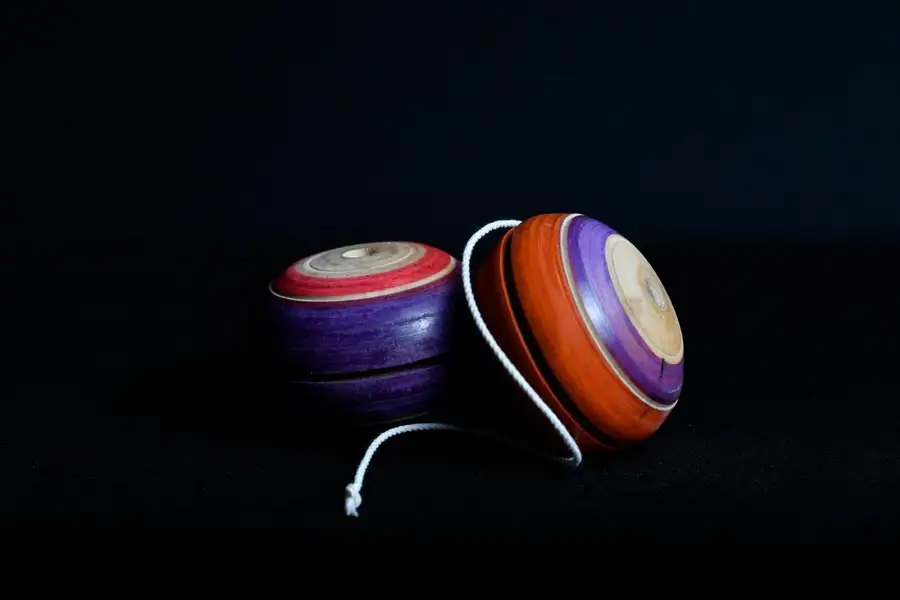
Yo-yo is a noun that refers to a small toy made of two discs joined by an axle, with a string wound around it. When the toy is released, it travels down the string and can be pulled back up into the hand with a movement of the wrist.
Also Read

The word is also used informally as a verb to describe something that repeatedly moves up and down or changes between two states.
Examples in everyday sentences
-
My grandfather taught me how to play with a yo-yo when I was a child.
-
The little boy spent the afternoon practising tricks with his new yo-yo.
-
Fuel prices have continued to yo-yo over the past few months.
-
Her mood seemed to yo-yo between excitement and disappointment.
-
The team's performance has been yo-yoing throughout the season.
Origin and history
The word yo-yo is believed to have originated from a language spoken in the Philippines, possibly Ilocano or another related language. It is often associated with the Tagalog expression meaning 'come-come' or 'come back', referring to the way the toy returns to the player's hand. However, the exact linguistic origin is not firmly established.
The toy itself is much older than the English word. Yo-yo-like objects have been found in historical records from ancient Greece, including depictions on pottery dating back to around 440 BC.
The toy became popular in the United States during the late 1920s through Pedro Flores, a Filipino immigrant who began manufacturing and selling it. In 1928, businessman Donald F. Duncan Sr. saw Flores demonstrating the toy and recognised its commercial potential. Duncan later acquired the rights to the name and helped turn it into a widely popular toy.
Also Read: Word of the Day, November 24: ‘Whodunit’
Cultural significance and modern usage
The yo-yo has remained a popular toy across generations, combining entertainment with skill and hand-eye coordination. From simple up-and-down movements to more complicated tricks, it has become a hobby for children and adults alike. Yo-yo competitions are also held around the world, with players demonstrating their skills through freestyle performances and technical tricks.
In everyday language, the word has taken on a figurative meaning. It is frequently used in conversations about fluctuating prices, changing moods, weight and unpredictable situations. The expression 'yo-yo effect' is also commonly used in discussions about repeated weight loss and weight gain.
Interesting facts
-
The yo-yo is considered one of the oldest toys in the world. Ancient Greek pottery dating to around 440 BC depicts a figure holding a yo-yo-like object.
-
Before becoming widely known as the yo-yo, similar toys were called bandalores in English.
-
Filipino immigrant Pedro Flores played an important role in popularising the toy in the United States during the 1920s.
-
The verb form is yo-yoing, while the past tense is yo-yoed. Both are used to describe repeated upward and downward movement or fluctuation.
Examples from literature
- “I read somewhere that in Tagalog, yo-yo means ‘to return’...” — The Gangster of Love by Jessica Hagedorn.
Synonyms
When used as a verb to describe repeated changes:
-
Fluctuate
-
Oscillate
-
Alternate
-
Vacillate
-
Swing
-
Shift
Antonyms
When used in the sense of fluctuating:
-
Stabilise
-
Remain
-
Continue
-
Persist
Read more Word of the Day here.
Published: 26 Nov 2026, 08:00 am IST


Related Topics
Disclaimer: Kindly avoid objectionable, derogatory, unlawful and lewd comments, while responding to reports. Such comments are punishable under cyber laws. Please keep away from personal attacks. The opinions expressed here are the personal opinions of readers and not that of Mathrubhumi.