What if dark matter started off with no mass at all?
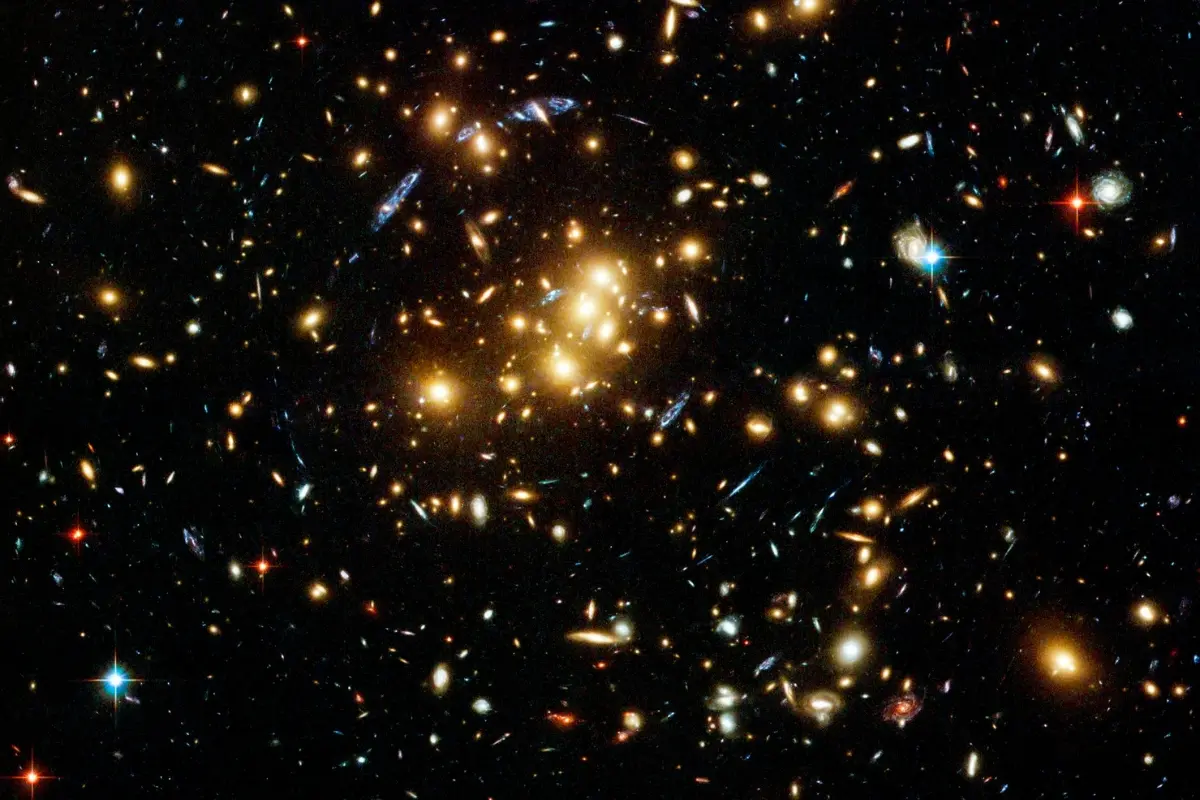
A new study by researchers at Dartmouth College offers a fresh explanation about the origin of dark matter — the mysterious, invisible substance believed to hold the universe together and give it structure.
Published in Physical Review Letters, the study suggests that dark matter might have formed during the early stages of the universe when massless, high-energy particles collided, slowed down, and instantly gained a large amount of mass. This idea is based on mathematical modelling and introduces a unique view of how dark matter could have emerged.
What is dark matter?
Though dark matter remains hypothetical, scientists are confident it exists due to the gravitational effects seen in space that cannot be explained by visible matter alone. It is estimated that dark matter makes up around 85 percent of the universe’s total mass.
The Dartmouth researchers argue that their theory stands out because it can be tested using existing observational data.
A link to the cosmic microwave background
The theory proposes that extremely low-energy particles — thought to be dark matter — would leave a distinct signature on the Cosmic Microwave Background (CMB). The CMB is the leftover radiation from the Big Bang that fills the entire universe.
“Dark matter started its life as near-massless relativistic particles, almost like light,” said Robert Caldwell, professor of physics and astronomy, and the senior author of the study.
“That’s totally antithetical to what dark matter is thought to be — it is cold lumps that give galaxies their mass,” Caldwell added. “Our theory tries to explain how it went from being light to being lumps.”
From hot and fast to cold and heavy
Right after the Big Bang, about 13.7 billion years ago, the universe was filled with hot, fast-moving particles, similar to photons — the massless particles that form the basic energy units of light.
According to Caldwell and Guanming Liang, a senior student at Dartmouth and the study's first author, large numbers of these particles began bonding with each other during this chaotic period.
They believe the bonding happened due to opposing spins of the particles, which worked like magnetic poles attracting each other. As the universe cooled, this interaction caused a sudden drop in energy.
The sudden energy drop
“The most unexpected part of our mathematical model was the energy plummet that bridges the high-density energy and the lumpy low energy,” said Liang.
Caldwell explained, “At that stage, it’s like these pairs were getting ready to become dark matter.”
Explaining today’s dark matter
This change, or phase transition, helps explain the amount of dark matter believed to exist today. The researchers think it came from a densely packed group of extremely energetic particles in the early universe.
“This phase transition helps explain the abundance of dark matter we can detect today. It sprang from the high-density cluster of extremely energetic particles that was the early universe,” Caldwell said.
The theory also introduces a new kind of particle that may have triggered this shift into dark matter. The researchers note that electrons — well-known subatomic particles — are already known to undergo a similar kind of transformation.
ANI inputs