Scientists one step closer to bringing the Dodo bird back into existence after 300 years
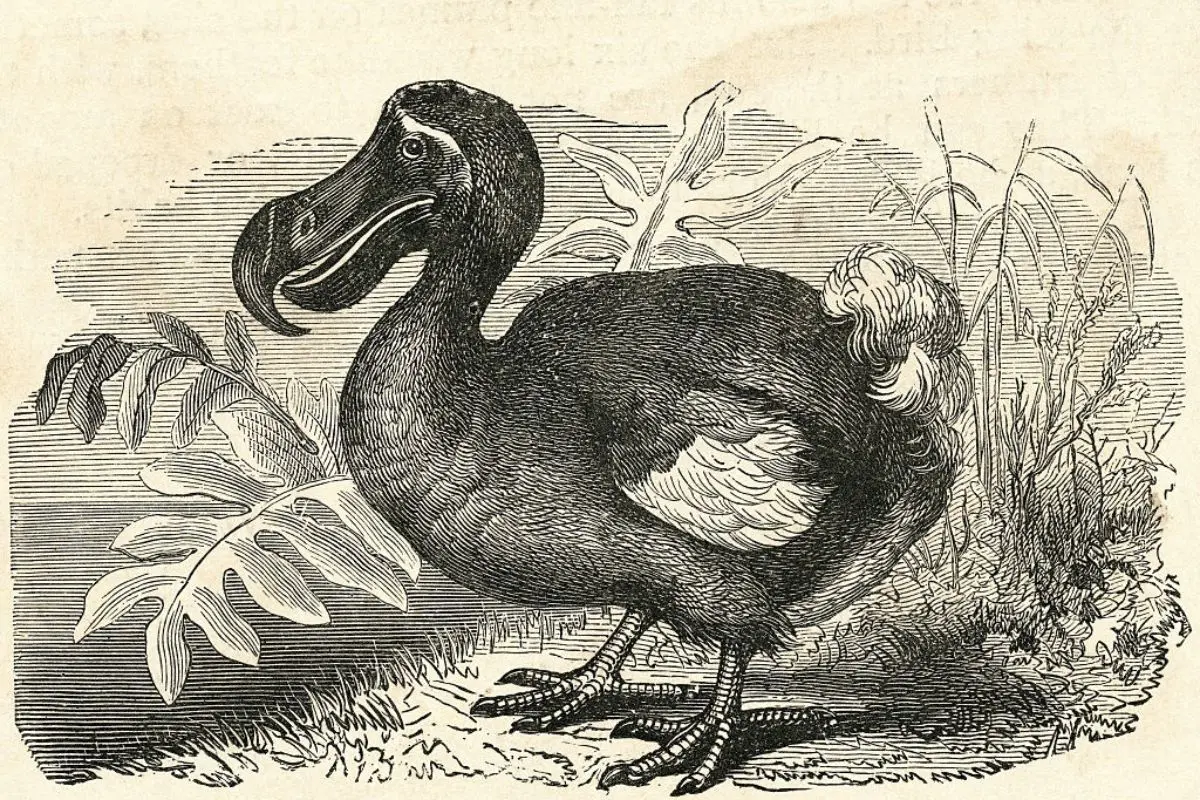
For centuries, the phrase “as dead as a dodo” has been shorthand for extinction. The flightless bird, once native to Mauritius, disappeared in the 17th century after human hunting, habitat destruction and invasive species wiped it out.
Now, a Texas-based biotechnology company says it is closer than ever to reversing that fate. Colossal Biosciences, known for its bold “de-extinction” projects, has announced a breakthrough that could pave the way for the dodo’s return.
The company revealed this week that it has successfully grown pigeon primordial germ cells in the lab - the precursors to sperm and eggs. Because birds cannot be cloned like mammals, researchers call this achievement a “pivotal step” in recreating the dodo.
Gene-editing Nicobar pigeons
Colossal plans to gene-edit Nicobar pigeons, the dodo’s closest surviving relatives, and transplant their germ cells into engineered chicken surrogates. With the help of Crispr technology, the offspring would gradually acquire the dodo’s unique traits, from its bulky body to its oversized head.
“Rough ballpark, we think it’s still five to seven years out, but it’s not 20 years out,” said Colossal’s chief executive Ben Lamm. He added that the aim was not to create a handful of birds but to establish an entire population. “Our goal is to make enough dodos with enough genetic diversity engineered into them that we can put them back into the wild where they can truly thrive,” he said. “So we’re not looking to make two dodos, we’re looking to make thousands.”
Wildlife groups are already working with the company to identify safe, rat-free habitats in Mauritius where the birds could eventually roam again.
A bird lost to history
The dodo was a large, ground-dwelling, fruit-eating bird that became extinct less than a century after Dutch sailors first documented it in 1598. The last reliable sighting dates back to 1662, when a sailor described it as a “kind of very big goose.”
Without natural predators, the dodo proved an easy target for hunters, while pigs, macaques and rats introduced by Europeans raided its nests. Its fate made it one of the earliest and most famous victims of human-driven extinction.
Beth Shapiro, Colossal’s scientific lead, called the germ-cell success “super exciting” after a year of work focused on gene-editing birds. She noted that any release of the recreated species would be gradual. “This isn’t a process where we’re going to one day just throw thousands of dodos into Mauritius. Obviously it will be a slow and careful and deliberate process,” Shapiro said.
Critics question de-extinction
Not everyone is convinced. Evolutionary biologist Leonardo Campagna of Cornell Lab of Ornithology cautioned that the genetic complexity of the dodo may never be fully understood. “It’s hard to know what it took to make a dodo genetically, from its genomic architecture to how its genes interacted with the environment,” he said. “I’d be curious to see a pigeon like that. But is this in fact the dodo?”
Other scientists have raised broader ethical concerns. Rich Grenyer of the University of Oxford described de-extinction as a “dangerous” distraction. He argued that calling gene-edited birds “dodos” could undermine conservation by enabling the very behaviour - habitat destruction and overhunting - that drove extinctions in the first place.
Money, momentum and celebrity backers
Despite scepticism, Colossal has seen soaring financial support. This week the company announced an additional $120 million in funding, lifting its valuation to more than $10 billion. Investors include film director Peter Jackson, golfer Tiger Woods, football star Tom Brady and entrepreneur Paris Hilton.
Jackson, who supports Colossal’s separate plan to revive the moa, a giant bird that once roamed New Zealand, appeared in a promotional video backing the effort.
Lamm insists the technology can support conservation as well as de-extinction. “The dire wolf is a monumental feat of genome engineering that has never been achieved before by any academic lab or by any other company ever, it is literally a testament to science, it’s a Dolly-esque moment full stop,” he said, referring to the world’s first cloned sheep.
As for critics who reject the idea of lab-grown birds as “real” dodos, Lamm is unfazed. “These are dodos, and I’m sure there will be some people who say, ‘Oh, well, we don’t like them. We’re not going to call them dodos,’” he said. “Then don’t. We just don’t care, and the more you don’t call them a dodo, the more controversy you drive, the more my numbers go up. So that’s great. So whatever you want to call them, as long as you’re calling them something.”