Remembering Jane Goodall: Pioneer of Chimpanzee research and a tireless voice for nature
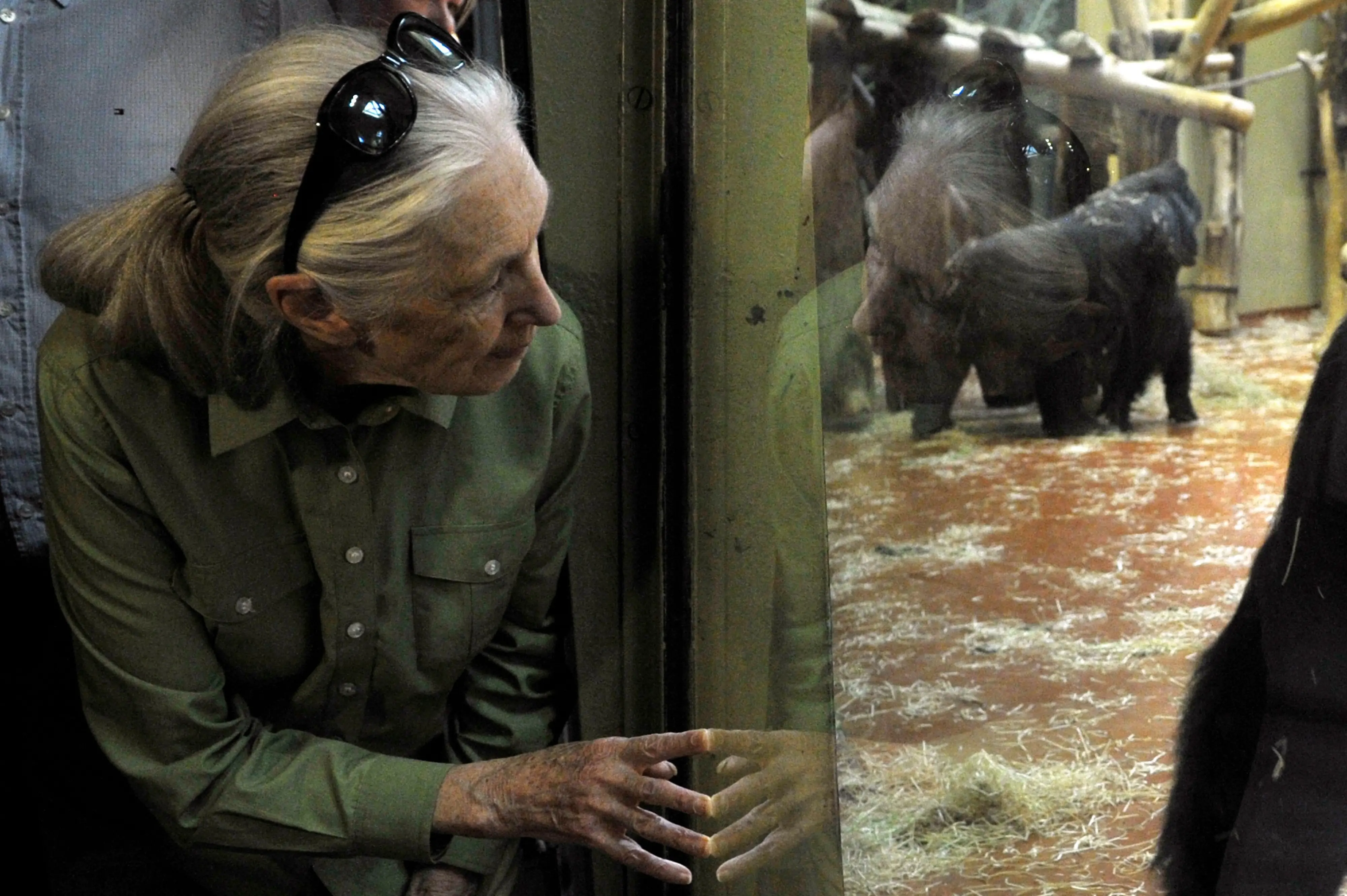
Jane Goodall, one of the most influential conservationists of the modern era who transformed how the world understands and relates to animals, died on Wednesday. Her pioneering research with chimpanzees in Tanzania during the 1960s revealed that they use tools, express complex emotions, and maintain intricate social bonds, discoveries that blurred the long-held boundary between humans and the rest of the animal kingdom.
Born in London in 1934, Goodall’s fascination with animals began in childhood. By 1960, she was living among wild chimpanzees in Gombe, then part of Tanganyika (now Tanzania), under the mentorship of the anthropologist Louis Leakey. Her immersive style, giving chimps names instead of numbers and following them closely in their daily lives, was unconventional at the time but led to groundbreaking insights.
In 1963, she appeared on the cover of National Geographic and soon became a household name through documentaries, books, and lectures. Among her most famous early observations was watching the chimpanzee David Greybeard use a twig to fish termites out of a nest, the first recorded instance of non-human tool use.
Over the decades, her findings expanded to show that chimpanzees experience joy, grief, jealousy, and even wage territorial warfare. Her work forced science and society to reconsider what it means to be human.
Goodall’s legacy, however, extended far beyond research. From the 1980s onward, she became a global advocate for conservation, animal welfare, and youth education. Through the Jane Goodall Institute and her Roots & Shoots program, she inspired millions of young people worldwide to take action for animals and the environment.
Her honours were numerous, including the prestigious Templeton Prize in 2021 and the U.S. Presidential Medal of Freedom in 2025. Yet she remained approachable, often lightening her serious messages with humour, even imitating chimpanzee calls during speeches.
Goodall’s philosophy combined scientific rigour with compassion. “If one wants to reach people, if one wants to change attitudes, you have to reach the heart,” she once said.
To the end of her life, she embodied that approach, travelling nearly 300 days a year well into her 90s, speaking to packed halls, urging action on climate change, wildlife protection, and human responsibility toward the planet.