NASA reveals astronaut who required first-ever ISS medical evacuation
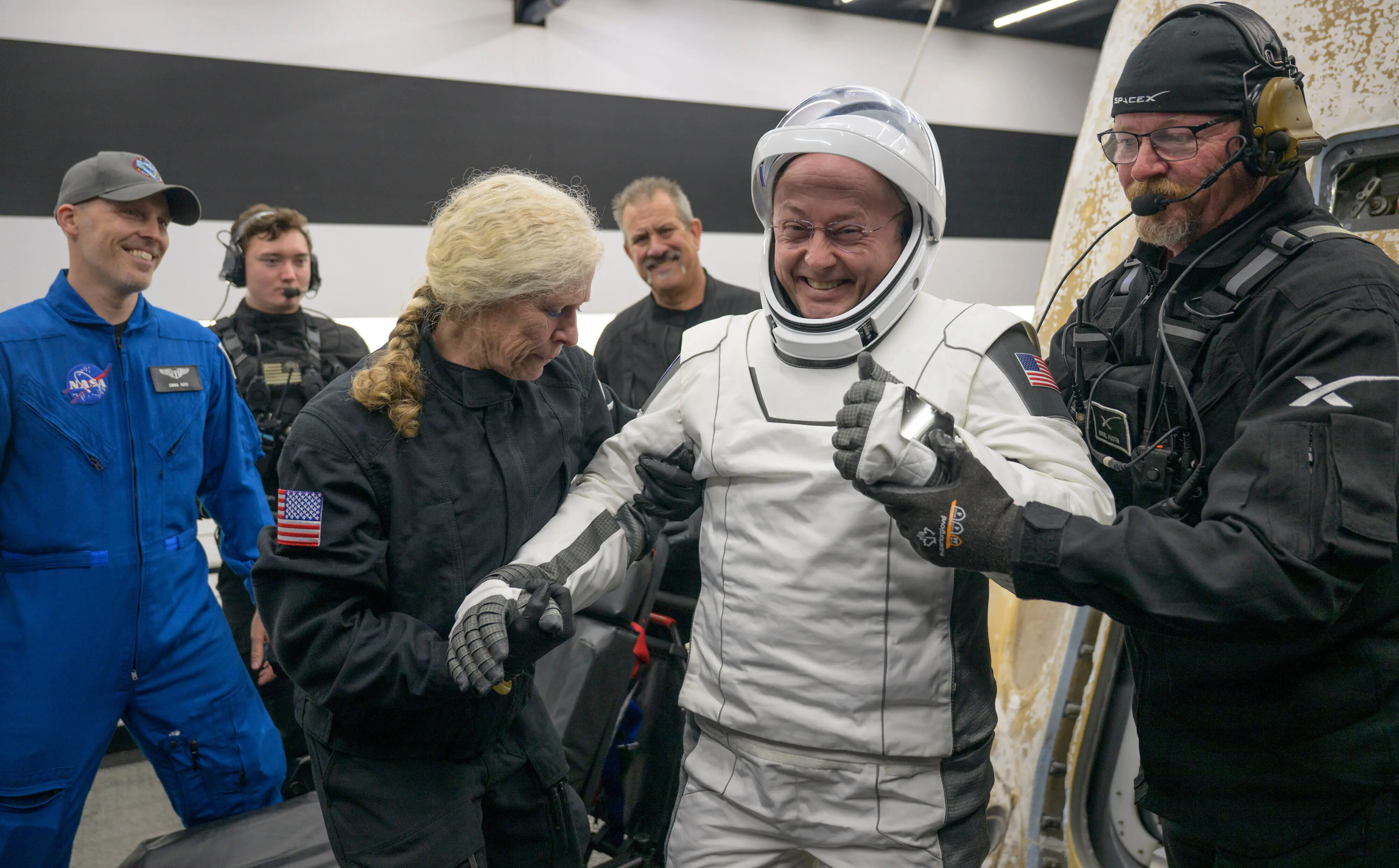
NASA has confirmed that veteran astronaut Mike Fincke was the crew member whose medical issue prompted the first-ever early evacuation from the International Space Station (ISS). The announcement comes more than a month after the Crew-11 mission was cut short in January.
Fincke, who served as Crew-11 pilot and commander of the ISS’ Expedition 74, disclosed that a personal health event required his immediate attention, prompting him and his crewmates to return to Earth aboard SpaceX’s Crew Dragon “Endeavour” on 15 January, roughly a month ahead of schedule.
"I experienced a medical event that required immediate attention from my incredible crewmates," Fincke said in a statement published by NASA on 25 February.
The astronaut emphasised that the issue, though not considered an emergency, required advanced medical imaging not available on the ISS. The incident occurred on 7 January while Fincke and fellow astronaut Zena Cardman were preparing for a scheduled spacewalk.
Early return and crew adjustments
Following the medical event, NASA made the decision to bring the four-member Crew-11 team back to Earth. Alongside Fincke, the crew included NASA astronaut Zena Cardman, Japan Aerospace Exploration Agency astronaut Kimiya Yui, and Roscosmos cosmonaut Oleg Platonov.
Crew-11 splashed down in the Pacific Ocean off the coast of San Diego, leaving a reduced crew of three aboard the ISS. Remaining astronauts Chris Williams of NASA, and Roscosmos cosmonauts Sergey Kud-Sverchkov and Sergey Mikayev, continued to maintain the station and execute research duties while NASA prepared for the accelerated arrival of Crew-12.
The handover mission, originally planned for mid-February, was moved forward. Crew-12 lifted off aboard SpaceX’s Crew Dragon “Freedom” on 13 February, restoring the ISS to its full complement of seven astronauts.
Details on the medical event
Fincke’s statement provided some clarity on the situation but withheld specifics, in line with NASA’s policy of protecting astronaut medical privacy.
"Thanks to their quick response and the guidance of our NASA flight surgeons, my status quickly stabilised," he said. He added that the agency decided to return the crew to Earth to access advanced imaging not available in orbit.
NASA confirmed that Fincke was in stable condition during the return, though it remains unknown whether the incident was life-threatening. The agency historically maintains a policy of withholding personal medical details of astronauts.
Who is Mike Fincke?
Mike Fincke is a highly experienced astronaut and retired US Air Force Colonel. He hails from Emsworth, Pennsylvania, near Pittsburgh, and attended Pennsylvania State University before studying at the Massachusetts Institute of Technology.
He has completed four space missions, logging over 549 days in space, ranking fourth among NASA astronauts for cumulative time in orbit.
Fincke is married to Renita Saikia, of northeast Indian origin, and the couple has three children. Saikia works in research operations and integration at NASA.
Spaceflight and human fragility
Reflecting on the event, Fincke said, "Spaceflight is an incredible privilege, and sometimes it reminds us just how human we are. Thank you all for your support."
While the ISS is equipped with medical resources, it lacks the full range of diagnostic tools available on Earth. Previous research has documented space-related conditions, such as space adaptation syndrome, optic nerve swelling, and blood clots, often without identifying individual astronauts affected.
Fincke continues standard post-flight reconditioning in Houston and is reported to be “doing very well.”
This is the first known instance of NASA cutting short an ISS mission for health reasons, marking a historic moment in human spaceflight operations.