Twin launch for Chandrayaan 4; parts to assemble in space: ISRO chief
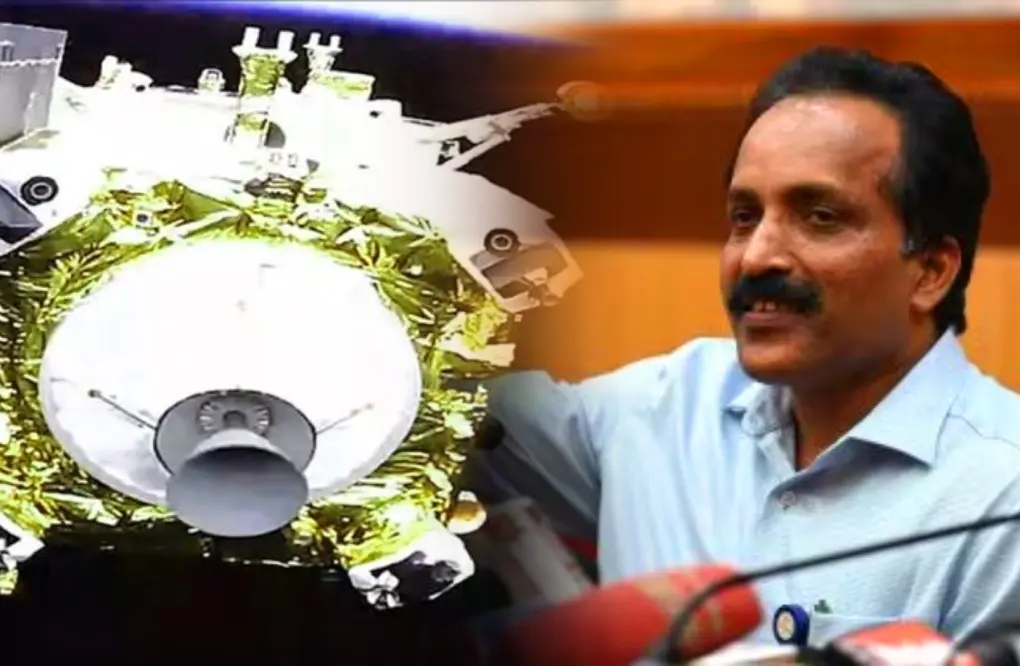
New Delhi: In a new revelation on ISRO's Chandrayaan 4 mission for collecting samples from the Moon, ISRO chief S Somnath said parts of the spacecraft will be sent in two launches. These parts will then be assembled in space and continue their journey to the Moon.
The ISRO chairperson was speaking at an event held here on Thursday.
ISRO came up with the idea of a twin launch because the Chandrayaan 4 Mission would carry more weight than the most powerful launch rockets currently in use by ISRO.
The process of connecting different modules in space has been done on several missions in the past. However, it may be the first time that probes of a spacecraft have been launched in two parts and assembled in space.
Somnath said that work is going on to develop a docking technology that integrates parts of the spacecraft in space and this technology will be tested by the end of this year under the name of 'Spadex' (Space Docking Experiment).
Modules are docked together when the spacecraft returns to Earth from the Moon. It is also useful for adjusting the weight of modules and so on. For example, during landing, a part of the spacecraft will detach from the main probe and remain in orbit. After landing on the moon and completing the mission, the lander will rise into orbit and connect with the previously separated orbital segment and with the help of that segment, it will jump back to Earth.
However, this is the first time that the modules of a lunar launch vehicle have been assembled in orbit around Earth.
ISRO has never had to do docking in any of its previous missions. Docking technology testing through 'Spadex' will benefit India in future space missions. India is planning to build a space station called the Bharatiya Atmospheric Station (BAS).
Somnath said that the proposal for the Chandrayaan 4 project has been submitted for government approval and it is one of the four project proposals under ISRO's 'Vision 47' initiative.
Vision 47 aims to establish its own space station by 2035 and put a man on the moon by 2040.
Somnath also shared some information related to the space station. He said that a proposal, containing detailed information to be given to the government regarding the launch of the space station, is being prepared.
The launch of the first part of the BAS will be carried out using the existing Launch Vehicle 3 rocket. The launch is planned for 2028. He also said that the rest of the station will be launched using the modified LVM-3 rocket and the new heavy rocket under construction, the Next Generation Launch Vehicle (NGLV).
Somnath added that a new launch pad is being built for NGLV and the existing one is not suitable for it.