What Hitler’s DNA reveals: Rare disease, psychiatric markers and shattered racial dogma
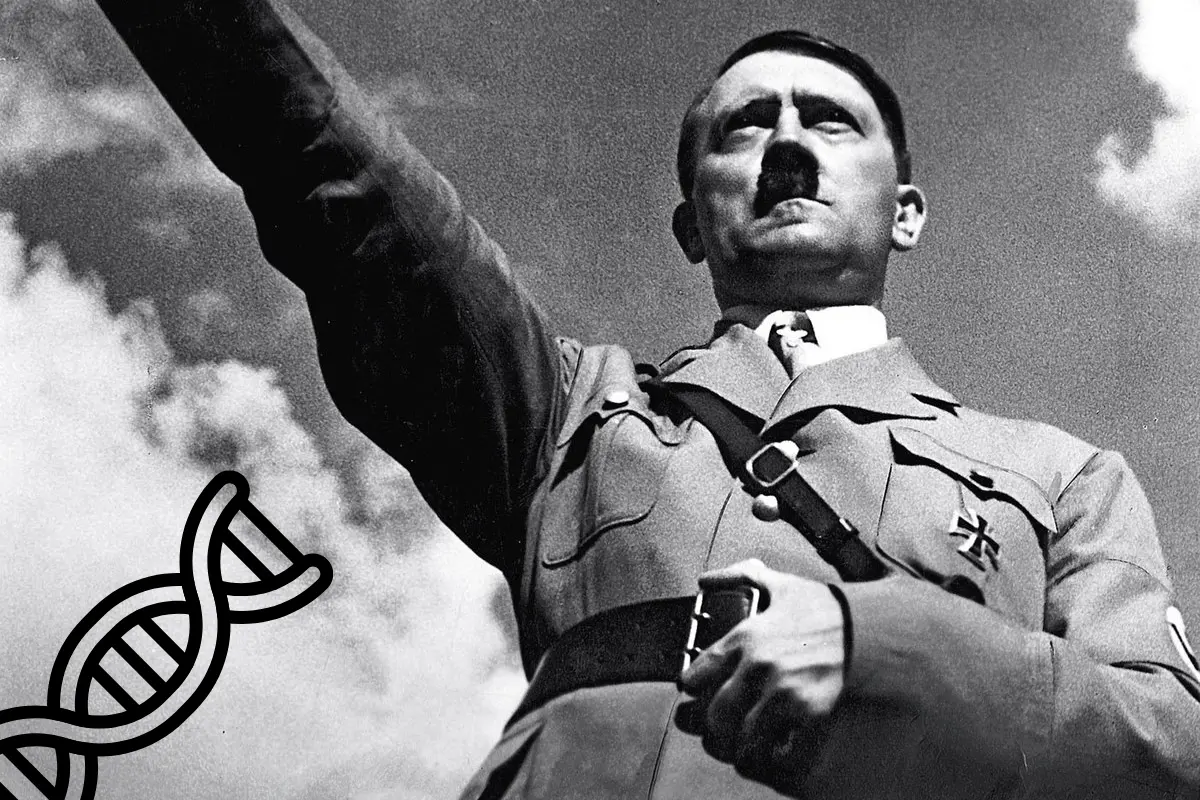
Fresh controversy surrounds Adolf Hitler’s medical and genetic history as Channel 4 prepares to air Hitler’s DNA: Blueprint of a Dictator, a two-part documentary claiming to have decoded the Nazi leader’s genome using what is believed to be his blood.
The findings, based on a swatch of blood-soaked fabric retrieved from the Führerbunker in Berlin at the end of the Second World War, are said to offer fresh insight into Hitler’s ancestry, biology and mental health. The cloth was reportedly taken in 1945 by Colonel Roswell P Rosengren, a US Army press officer under General Dwight D Eisenhower. Experts later confirmed the stains were human blood, which was subsequently analysed and matched via Y-chromosome DNA to a known male-line relative of Hitler.
According to Channel 4 and the production team at Blink Films, the genetic results paint a complex picture that both contradicts Hitler’s racist ideology and raises ethical questions about the boundaries of historical science.
Professor Turi King, the geneticist best known for identifying the remains of King Richard III, led the analysis. She told Channel 4 that the dictator’s DNA would have invalidated his own racial doctrines. “If he was to look at his own genetic results, he would have almost certainly have sent himself to the gas chambers,” she said. King described the moral burden of the work as heavy, noting that she wanted to ensure it was conducted “in an extremely measured and rigorous fashion”.
Genetic and medical revelations
The team’s research reportedly uncovered genetic evidence of Kallmann syndrome, a rare condition that interferes with the natural onset of puberty and sexual development. The disorder can result in low testosterone, an undescended testicle, and in some cases, a micropenis. This aligns with a 1923 medical examination of Hitler, unearthed in 2015, which recorded a “right-side cryptorchidism” — an undescended right testicle.
While rumours about Hitler’s supposed physical abnormalities have circulated for decades, the documentary’s findings provide a potential scientific explanation. However, Professor King stressed that “the genetics can in no way excuse what he did”, adding that Hitler “could have had the most boring genome on the planet”.
Historians involved in the programme argue that such findings, while not exculpatory, can offer context for Hitler’s psychological profile. Dr Alex J. Kay, a historian at the University of Potsdam, told The Times that the diagnosis might help explain Hitler’s “highly unusual and almost complete devotion to politics to the exclusion of any private life”. He added that “only under Hitler could the Nazi movement have come to power”, pointing to the Führer’s obsessive singularity.
Debunking myths
The documentary also addresses long-standing rumours that Hitler had Jewish ancestry — speculation arising from uncertainty about the identity of his paternal grandfather. The new analysis reportedly confirms that Hitler had no such ancestry, closing one of the most persistent historical debates, which was even reignited by Russian Foreign Minister Sergei Lavrov in 2022.
Psychiatric and behavioural testing
The most controversial aspect of the documentary lies in its use of polygenic risk score (PRS) analysis — a genetic method used to estimate statistical likelihoods for behavioural or psychiatric conditions. The programme claims that Hitler’s DNA suggested a “higher-than-average likelihood” for ADHD, “autistic traits”, “antisocial behaviour”, and “a high probability of developing schizophrenia”.
However, leading scientists have questioned the validity and ethics of such conclusions. Professor David Curtis of the UCL Genetics Institute told The Guardian that “polygenic risk scores tell you something about populations, not about individuals”, and that the actual risks for any one person could still be very low.
British psychologist Simon Baron-Cohen also warned of the dangers of stigmatising neurodivergent conditions by associating them with one of history’s most reviled figures. “Going from biology to behaviour is a big jump,” he said. “There’s a real risk of stigma.”
Ethical concerns and scientific criticism
Critics argue that while the documentary raises compelling scientific and historical questions, it veers dangerously close to genetic determinism — the same ideology the Nazis themselves promoted under their pseudoscientific “race purity” doctrines.
Journalist Philip Oltermann, writing in The Guardian, described the programme as “sensational but ethically troubling”, noting that it “may have read Hitler’s passages on blood purity carefully — and then gone ahead and done the same thing anyway.”
Professor King, meanwhile, maintains that the team’s results only show probabilities, not diagnoses. “We cannot say for certain that Hitler had any of these conditions, only that he was in the highest percentile in terms of genetic load for some traits,” she said, adding that the documentary took pains to present its findings responsibly.
Academic debate and legacy
The genetic findings are expected to be submitted to a medical journal for peer review. Channel 4 has defended the broadcast, calling it “a groundbreaking example of forensic history”.
However, the controversy underscores a deeper question at the heart of the project — whether the pursuit of scientific insight into Hitler’s biology risks reviving the very pseudoscience that fuelled his ideology.
At its core, Hitler’s DNA: Blueprint of a Dictator offers a provocative intersection of genetics, history and morality — one that may expand the scientific record but leaves viewers to decide whether some questions, however answerable, are best left unasked.